

Fans who plan their afternoons around General Hospital have noticed an unanticipated quiet in recent days. The interruption felt more like someone removing a thread from a meticulously crafted narrative tapestry than a technical malfunction as the screen filled with live political coverage instead of Port Charles.
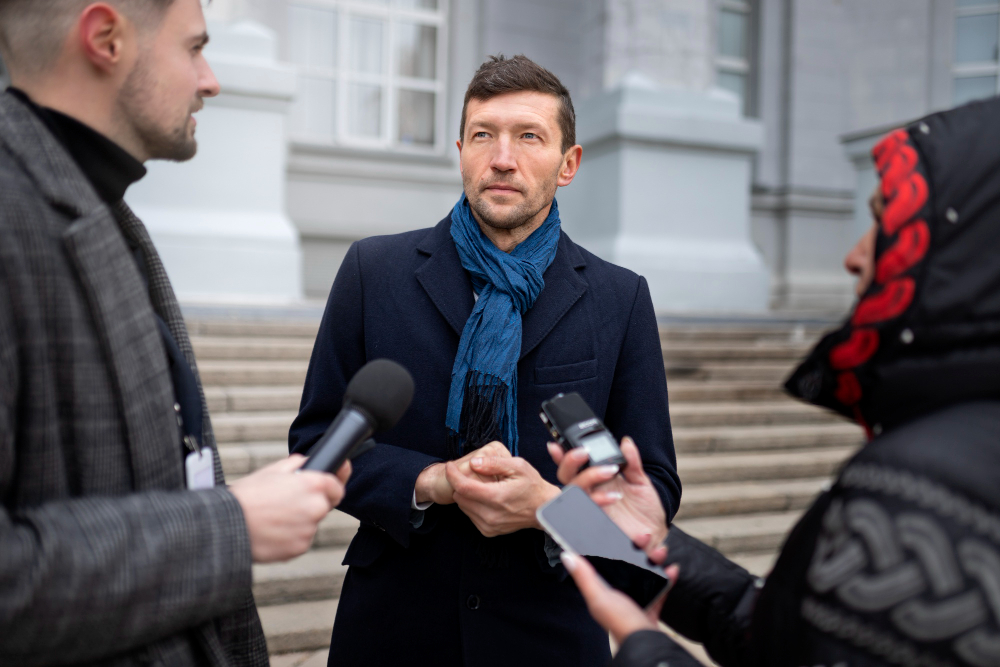
Technically routine but emotionally upsetting, the January 20 episode was preempted nationwide to broadcast a White House press conference. Daytime television functions similarly to an extremely effective transit system: every episode arrives on schedule, gaining momentum, and the entire line is affected when one train stops.
| Item | Details |
|---|---|
| Program | General Hospital |
| Network | ABC |
| Original Air Date | January 20, 2026 |
| Reason for Interruption | Live White House press conference |
| Rescheduled U.S. Airing | January 21, 2026 |
| Canada Broadcast | Aired January 20; encore used to realign schedules |
| Streaming Availability | Not posted to Hulu or ABC.com during delay |
| Storyline Impacted | Willow injects Drew Cain, ending on a major cliffhanger |
| Primary Sources | Soap Opera Digest, Parade, Yahoo Entertainment |
Although viewers have become accustomed to balancing on-demand choices, streaming services, and cable schedules over the last ten years, this disruption came as a surprise. The lack of a covert upload later that evening greatly diminished the sense of control viewers have become accustomed to from contemporary viewing practices.
The response on social media was remarkably consistent across demographics. Some viewers claimed that because the show had just delivered a jarring, unsettling cliffhanger, the delay was especially annoying. More realistically, some questioned why a streaming release couldn’t serve as a pressure valve, relieving tension without disrupting the broadcast’s cadence.
ABC made a remarkably antiquated decision by deciding not to post the episode online, which preserved a shared waiting experience. In increasingly fragmented media ecosystems, everyone had to pause together, regardless of time zone or subscription level.
The reaction was heightened by the timing. Willow’s choice to give Drew Cain an unidentified drug was more than just a plot twist; it was a turning point that turned a comfortable relationship into something more sinister and unpredictable. At that precise moment, cutting away was like halting a sentence mid-sentence.
I recall how that pause caused me to focus on the mechanics of story delivery rather than the story itself.
The situation took a different turn in Canada. In order to realign schedules, the episode was temporarily canceled with an encore after airing as scheduled. From a logistical perspective, that change was very effective, but it subtly brought attention to how brittle cross-border synchronization can be.
Speculation filled the void during the delay. Due to the actor’s prominence and the character’s divisive arc, rumors about Drew Cain’s future spread quickly. The discussion shifted from plot to authorship, intention, and whether discomfort was a sign of poor writing or exceptionally good acting.
This time frame also demonstrated the production’s increased adaptability. To preserve chemistry across continents, actors in parallel storylines used audio playback and precise timing to record scenes remotely. That strategy was especially creative, showing how long-running programs continue to streamline operations while maintaining emotional continuity.
The disruption served as a reminder to viewers that daytime dramas are not isolated artifacts. They can be abruptly redirected because they are a part of bigger systems, such as news cycles, business decisions, and changes in the national focus.
Audiences have been conditioned to anticipate instant access, much faster resolution, and personalized control since the advent of widely used streaming. This preemption asked viewers to accept delay in exchange for coherence, gently but firmly challenging those presumptions.
Not all of the reactions were negative. The forced pause, according to some fans, increased anticipation and made the eventual airing feel earned rather than consumed. Even in a time of immediacy, that viewpoint points to a surprisingly enduring appetite for scheduled storytelling.
The decision was incredibly logical from a network perspective. Daytime schedules have always accommodated the fact that live national coverage takes precedence. The audience’s attitude toward interruptions has evolved, and it is now discussed openly and in real time.
The discussion had changed by the time the episode was finally broadcast on January 21. As an additional layer that influenced how viewers understood what came next, the delay itself became a part of the narrative memory.
Broadcasters will probably encounter this conflict more often in the years to come. Systems that are extremely adaptable and able to withstand disruption without losing trust are necessary to strike a balance between live events, streaming expectations, and serialized storytelling.
For the time being, this short break was used as an example of how even one missed episode can reveal the intricate engineering that goes into everyday television. It demonstrated that momentum is not merely written; it is planned, safeguarded, and sometimes inevitably disrupted.
