
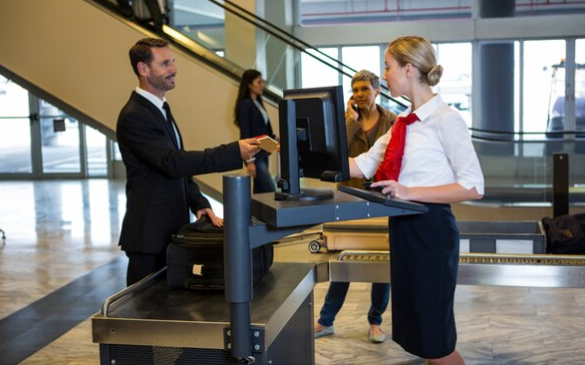

Travelers with suitcases following like devoted puppies make their way through the pre-check line before the sun rises on a Saturday. The flushed, early-morning hurry is present on almost every face, not only to make a flight but also to meet a cruise ship’s departure time that is a few miles away. Miami International Airport is subtly changing due to the foot movement of travelers whose ideal journeys start in the air, not because of some abstract architecture.
MIA handled an astounding 55.3 million passengers in 2025. Although that number is impressive on its own, what’s really drawing notice is the rate of change. The gain during the holiday period from December 19 to January 5 was especially notable—up 1.2%—in comparison to the previous year’s record, a margin that airlines are now considering to be more than just seasonal noise.
Miami Airport’s Cruise Traffic Boom
| Category | Details |
|---|---|
| Airport | Miami International Airport (MIA) |
| 2025 Passenger Traffic | 55.3 million |
| Key Driver | Surge in cruise passenger traffic |
| Peak Season Impact | 1.2% year-over-year increase during Dec 19, 2025 – Jan 5, 2026 holiday period |
| Airline Adjustments | More weekend flights, larger aircraft, restructured schedules |
| Infrastructure Investment | $9B “MIA Modernization in Action” plan through 2040 |
| Cruise Port Connection | Closest airport to world’s busiest cruise port |
| Airline Examples | American Airlines, JetBlue, Spirit, Southwest, Norse Atlantic, Condor |
| Projected 2040 Capacity | 77 million travelers |
| Regional Growth Factor | Population and business boom in South Florida |
| Source |
In an attempt to predict these weekend spikes, airlines are rearranging their timetables like jigsaw pieces. Airlines are modifying their schedules to accommodate cruise itineraries that often begin or end on Saturdays and Sundays, particularly at MIA. These are not small adjustments. While some airlines are tripling the frequency of important flights, others are launching larger planes for short-haul routes. American Airlines has gone so far as to introduce its most ambitious winter schedule ever in this incredibly effective dance.
This surge is causing equal amounts of fluidity and friction for travelers. The unpredictable nature of last-minute alterations, which are sometimes brought on by late-arriving ships or difficult ground-to-air transitions, can be annoying, even if additional capacity is especially advantageous for those who plan ahead. I heard a Chicago family express their confusion during a recent layover when their limited cruise check-in window was disrupted by a gate change. Even while chaos still seeps into situations like these, I recall thinking how incredibly good Miami’s airport has gotten at absorbing it.
Not only is the volume of cruises changing airline behavior, but so is the type of cruise passenger. These tourists don’t frequently travel alone. They are available in retirement parties, wedding groups, and family bundles. They require flexible check-in windows and shuttle-ready connections. Airlines are starting to adopt the tempo of the cruise industry, which leans toward predictability while incorporating buffers.
MIA’s reaction goes beyond simple reactivity. By 2040, the airport hopes to accommodate 77 million passengers annually thanks to a $9 billion, ten-year development known as “MIA Modernization in Action.” In order to accommodate a passenger base that frequently arrives at the same time as cruise departure timings, the proposal calls for gate expansions, terminal redesigns, and improved digital infrastructure. Delays could be greatly decreased by combining real-time data exchange between cruise lines and airlines.
Significantly, Miami’s expansion violates local air traffic trends. MIA’s numbers were boosted by cruise-related travel and a thriving area economy, which contrasted with the 2% decline in domestic air traffic across North America in 2025. More firms are opening offices, more families are moving to South Florida, and the airport’s strategic importance is being strengthened by the constant bustle of year-round activity.
Partnerships are emerging quickly. In response to Miami’s status as a cruise port, international carriers like Norse Atlantic and Condor are launching new routes directly, while carriers like JetBlue and Spirit, which are renowned for their aggressive route strategy, have expanded seat availability. Route maps are being updated with the cruise schedule in mind thanks to these strategic alliances.
It’s a subtle yet ambitious arrangement. Airport managers are collaborating with cruise lines to improve volume forecasting, a strategy that is proving remarkably resilient in the face of seasonal fluctuations in tourism. Planning can no longer be done using the conventional peak/off-peak rationale if February appears to be July.
The advise for tourists considering a vacation to Miami is becoming more and more obvious: plan ahead, be adaptable, and rely on technology. When it comes to identifying gate changes or weather advisories prior to public announcements, airline applications are remarkably accurate. And although the commotion of MIA may initially seem too much to handle, many people eventually find solace in its rhythm—much like a ship’s horn signaling the beginning of a voyage.
In South Florida, the connection between the water and the sky is no longer symbolic. It’s real, logistical, and growing every month. Miami is also subtly establishing the standard for how cities might reconsider airport design—not as standalone hubs, but as a link in a wider journey.
The way a passenger’s story, which started on a cruise ship deck, is now influencing airline schedules, aircraft selection, and terminal architecture is remarkable. Miami’s transformation reflects a change in how people move—not just from one place to another, but via layers of experience, with air and water connected together by intention and necessity—by redefining the airport as a launchpad rather than a terminus.
