

Forty-one per cent of luxury travellers now prefer architecturally distinctive Airbnbs or curated private villas over traditional five-star hotels, according to a 2024 Skift survey. Unless a hotel offers something genuinely distinctive, it’s losing the booking.
The crisis runs deeper than preference.
Nearly 70% of affluent travellers believe modern luxury hotels have ‘lost their soul’ to standardisation, according to Luxury Travel Advisor’s 2025 research. Almost three-quarters refuse to pay premium rates for generic luxury experiences. What they want instead: immersive, authentic stays that feel personal and emotionally resonant. The data, emerging throughout 2024 and 2025, tells a consistent story—amenities alone no longer justify the price.
A separate 2025 survey of luxury travel advisors for Fauchon L’Hôtel Paris found that 100% of respondents ranked an authentic sense of place as more important than cookie-cutter luxury design. Destination-specific experiences now outweigh high-end finishes. The message was unmistakable by 2025: traditional luxury hospitality faces a reckoning.
“Authenticity is lived, not installed,” says Catherine Schulze, managing director of Steenberg Farm in South Africa’s Constantia Valley. “It shows up in the people, how staff engage and guide, in what you’d only find here, and in the quiet confidence of a place that doesn’t need to overstate itself.”
Industry executives noticed the shift. Saurabh Tiwari, area director at Taj Hotels, observed that luxury is moving beyond opulence toward relevance, exclusivity, and intuitive service. Hyper-personalisation and multi-dimensional experiences now define modern luxury, he noted in a 2025 interview with Hotelier Middle East. Senior leaders from Raffles, Dorchester Collection, Jumeirah, and Boutique Group, speaking at the Arabian Travel Market 2024 summit, emphasised the same pressure points: authenticity, personalisation, and guest experience—not simply luxury finishes—distinguish properties in an oversaturated market.
Integrating local art, music, and cuisine ranks among the most effective strategies. So does tailoring experiences to individual guests rather than offering standardised packages.
The question facing five-star hospitality is no longer whether luxury travellers still value hotels. It’s why they’d choose one over an increasingly compelling field of alternatives.
One response gaining traction: the multi-offer estate model. These properties integrate accommodation with food, wine, wellness, and cultural or natural experiences into a single, coherent narrative. Rather than serving as a base from which guests commute to activities, the estate becomes the destination itself.
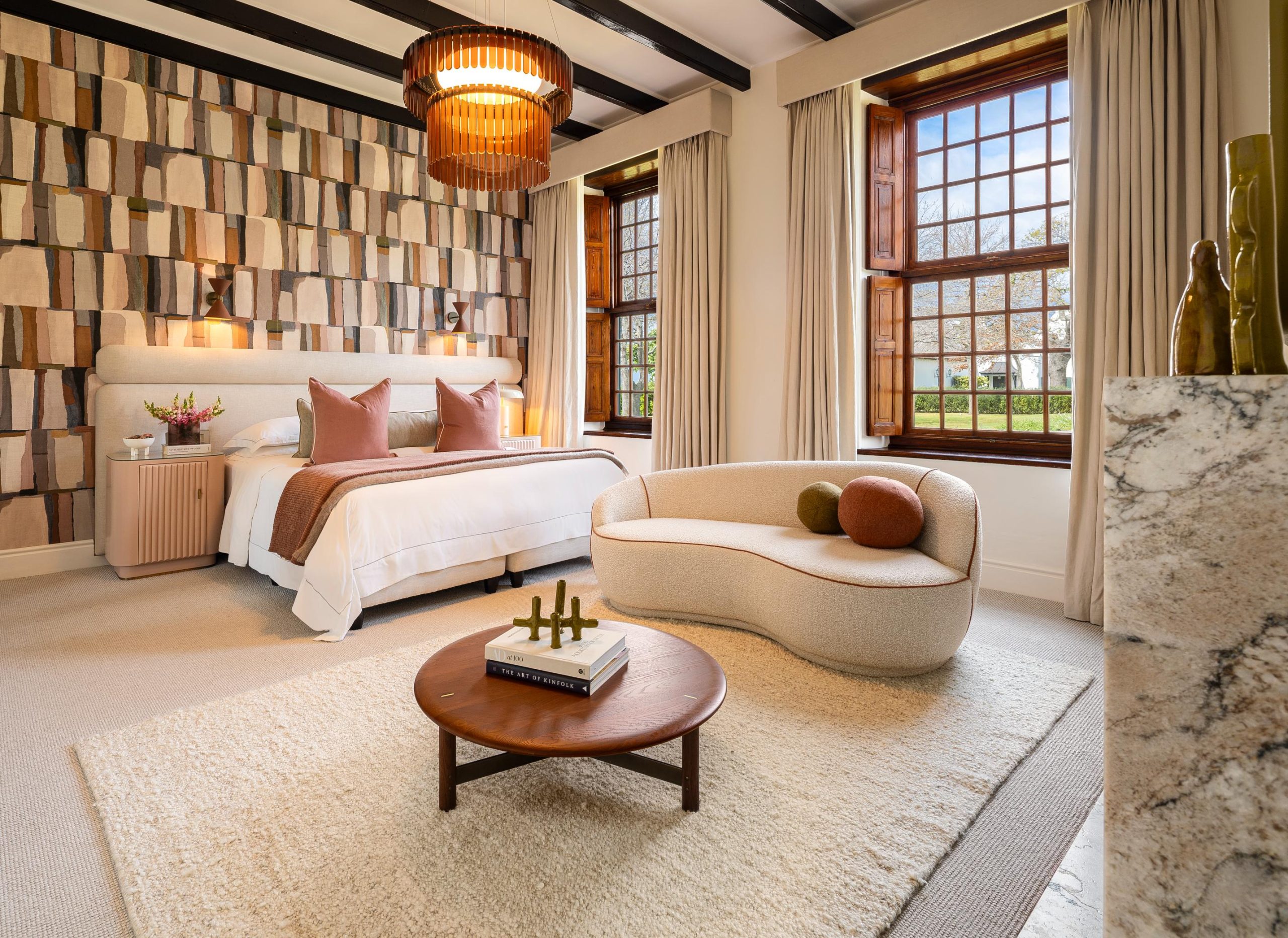
Steenberg Farm embodies this approach. Schulze describes it not as a single hotel product, but as “an immersive experience on a working wine farm, where the stay connects naturally to wine, food, wellness, gardens, and heritage, all in one setting.” The 24-room property—a 2025 Michelin Key recipient and ranked among the top ten hotels in Africa in Condé Nast’s 2024 Readers’ Choice Awards with a score of 98.0—offers continuity. Guests move between the winery, Tryn restaurant, Bistro Sixteen82, the spa, and the gardens without breaking the rhythm of their stay.
The appeal lies in depth over fragmentation.
Virtuoso, the global luxury travel network, reports growing demand for destinations that offer variety within a single environment. Travellers spend longer in fewer places, seeking immersion rather than itinerary.
Yet hotels retain advantages that alternative stays struggle to match. Schulze calls it “effortless certainty.” For many luxury travellers, the decision to book a hotel is driven by the desire for seamlessness—service that anticipates needs, access to local knowledge, and the assurance that everything will simply work.
“They’re choosing thoughtful service that anticipates needs, privacy that feels effortless, and a stay that simply flows without guests needing to manage the details,” Schulze explains. “A great hotel connects people to reservations, experiences, and a sense of place in a way that feels personal, not transactional.”
That certainty carries renewed value in an era marked by travel disruption and decision fatigue. Deloitte’s global consumer trends research shows that convenience and trust have become central to premium purchasing decisions across sectors, including travel. While a private villa offers privacy and personality, it also demands coordination. Hotels eliminate friction—when they do it well.
The shift in what travellers seek has accelerated. “Wellness, flexibility, and a genuine sense of place are no longer extras; they’re at the heart of the experience,” says Schulze. “Guests are arriving with a simple question: How will this make me feel? rather than What does it include?”
Five-star hotels are not disappearing. They are being redefined.
The properties most likely to thrive are those that shift from “amenities as proof” to “experience as the point.” That means deeper storytelling, genuine personalisation, and a clear, irreplaceable reason to stay. Generic luxury—marble lobbies, thread counts, michelin-starred menus that could exist anywhere—no longer commands premium pricing. What does: a sense of place so strong it becomes inseparable from the stay itself.
Michelin Keys, launched in 2024 as the accommodation equivalent of Michelin Stars, set a new benchmark for stays that combine design, service, and soul. The fact that such a system emerged at all reflects the industry’s recognition that luxury needed redefining.
For hotels, the competitive threat is not other hotels. It’s the villa with the view, the architecturally striking Airbnb, the private estate with a chef on call. These alternatives offer something hotels often lost in their pursuit of scale and consistency: character.
“The winners will be the properties that offer something you can’t replicate in a beautiful rental,” Schulze concludes, “while staying warm, modern, and quietly confident.”
In a market where luxury travellers have more choice than ever, relevance belongs to hotels that feel real, grounded, and emotionally complete. Places that answer the modern traveller’s most important question: why here, and nowhere else?
For traditional five-star hotels, that question is no longer theoretical. It’s existential. The 41% who’ve already walked away are waiting for an answer.
