

The Taj Atlas Wellness Boutique Hotel & Spa is located in a region of Morocco that most tourists to Marrakech never get to see. The house is located in the little village of Lalla Takerkoust, which is about 49 kilometers away from the medina. This distance makes central Marrakech seem like a completely different nation due to its noise and density.
The road leading out of the city gradually ascends toward the Atlas Mountains’ foothills, passing dusty towns, olive groves, and the kind of leisurely rural environment that has formed this area for centuries. Instead of pushing itself on that landscape, the property itself evolves inside it. Instead of competing with the surrounding environment, the architectural language—traditional Moroccan riad architecture softened with modern touches—borrows from it.
| Taj Atlas Wellness Boutique Hotel & Spa — Key Information | Details |
|---|---|
| Property Type | Boutique riad and wellness retreat |
| Location | Lalla Takerkoust, Marrakech region, Morocco |
| Full Address | Route d’Amizmiz km 47, Lalla Takerkoust, 42202 |
| Distance From Marrakech | About 49 km |
| Distance From Ourika Valley | About 42 km |
| Setting | Heart of the Atlas Mountains |
| Architectural Style | Traditional Moroccan with contemporary touches |
| Room Features | Air-conditioned, elegant decor |
| Spa Available | Yes |
| Cooking Classes | Available on-site |
| Excursions | Guided tours, valley exploration |
| Local Gastronomy | Tastings offered |
| Phone | +212 600 663 718 |
| Property Resource | |
| Atmosphere | Tranquil, family-run feel |
The property’s unique attraction stems from its location. The majority of tourists who make reservations in Marrakech believe their lodging should be inside the walls of the medina, near the souks and Jemaa el-Fnaa. For first-time tourists looking to make the most of their stay in the city, the reasoning makes sense. For tourists seeking the other Morocco, the slower, more truly landscape-focused experience that the Atlas area has been quietly providing for years, the reasoning breaks down.
The Taj Atlas is located around midway between Marrakech and the Ourika Valley, the valley that culminates in the well-known Setti Fatma waterfalls. Because of the location, visitors can spend their mornings touring the souks, their afternoons in the valleys of the mountains, and their evenings on a peaceful rooftop with views of the snow-capped peaks. It is more difficult to accomplish the combination from within the medina.
The property’s name emphasizes wellness, but this is not the kind of overdone spa marketing that global hotel corporations have turned into a cliché. The actual offerings, which include traditional Moroccan hammam treatments, massage rooms designed according to local aesthetic standards, and a slower pace incorporated into the daily routine, are more in line with what wellness meant before corporate hospitality appropriated the term.
In a way that is difficult to replicate, visitors characterize the experience as rejuvenating. For those who are unaware, the hammam ritual entails a series of steam, washing, exfoliation, and rinsing that are customarily performed in Moroccan communal baths. For decades, the Western spa business has been attempting, but failing, to reproduce the kind of physical and mental release it offers when done properly and in the appropriate environment.
The calm ambition of the hotel is best captured by the room experience itself. In addition to the air conditioning, contemporary bathrooms, and other conveniences that visitors from other countries have grown accustomed to, the interior design incorporates traditional Moroccan crafts, such as handcrafted tiles, carved wood details, and textiles made by local cooperatives. Striking the balance is more difficult than it seems.
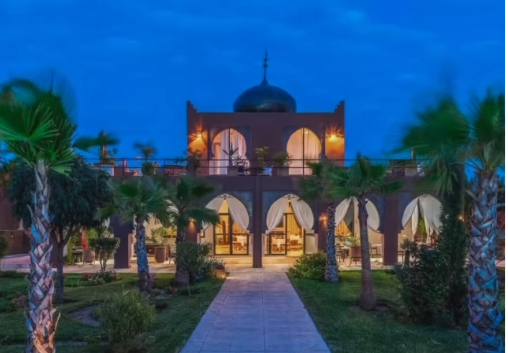
Riad houses can resemble museum exhibits if they significantly rely on traditional aesthetics. The character that initially drew visitors to Morocco is lost in properties that overcorrect toward modern international norms. According to the majority of visitors’ accounts, Taj Atlas has struck a practical balance between being traditional enough to feel anchored in the area and modern enough to truly relax in.
In order to better reflect what visitors genuinely want from this type of stay, the property’s activity offering has grown throughout its operations. excursions into the valleys nearby. trips that are connected to the Berber villages that continue to cultivate the foothills. Walking through local markets, choosing ingredients with the house chef, and learning how to make pastillas, tagines, and harira soups in the property’s own kitchen are all part of the cooking sessions.
Specifically, the cooking-class component has evolved into a hallmark service. These encounters are typically more memorable for tourists than traditional touring routes, in part because they entail active engagement with the local culinary culture as opposed to merely observing it.
When you stroll around the Taj Atlas gardens in the late afternoon and see how the light changes over the surrounding mountains, you get the impression that the resort perfectly encapsulates the essence of what a particular type of Moroccan vacation can provide. Not the hectic medina experience that characterizes the standard schedule for Marrakech. Not the resort experience that is typically provided by the bigger international hotels in Agadir and Marrakech.
Something more subdued: the slow beat of Morocco’s mountains, the textures of regional crafts, the cuisine that results from combining local ingredients with the nation’s careful culinary customs, and the hush that descends as the sun sets behind the Atlas peaks.
Questions over ownership, local tourism trends, and the overall direction of Moroccan luxury hospitality will determine whether the hotel keeps growing its offerings or maintains the smaller boutique scale that has defined it. In the meantime, the current iteration of Taj Atlas continues to subtly accomplish its goal of presenting a vision of Morocco that the larger locations fall short of.
