
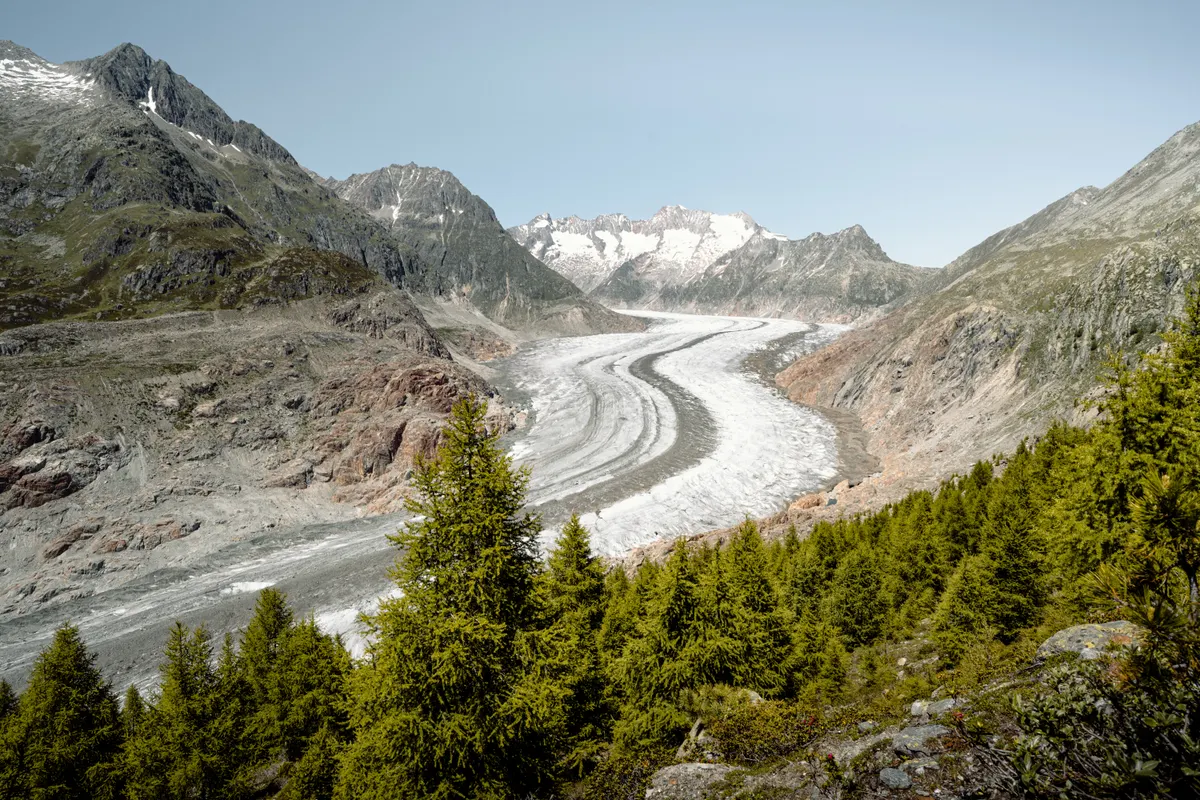

Wrangell-St. Elias record visitation figures emerged in 2025 as the Alaskan giant, covering 13.2 million acres, joined nine national parks across the United States that broke their own visitor records, according to Valerie Valise. The milestone arrives against a broader backdrop of declining footfall: overall national park visitation fell by 0.42% from 2024 to 2025, representing roughly 395,000 fewer visitors across the system.
The uptick at Wrangell-St. Elias is in part the product of a deliberate push to move visitors beyond Alaska’s better-known parks. Congress has provided $750,000 to the Alaska Region of the National Park Service through statutory aid to the Alaska Travel Industry Association, specifically to develop a national campaign marketing Alaska’s lesser-known national parks, Wrangell-St. Elias among them, according to the U.S. Department of the Interior. That investment now looks to be producing measurable results, even if Wrangell-St. Elias remains far below the footfall of its Alaskan peers.
A Park Dwarfed in Visitor Numbers Despite Its Scale
The contrast between the park’s physical scale and its visitor count remains stark. Wrangell-St. Elias is the largest national park in the United States, encompassing 13.2 million acres of protected land in southern Alaska, stretching as far south as Yakutat Bay and as far northeast as Slana and Chistochina. It is six times the size of Yellowstone and larger than the entire state of Maryland. Yet 2023 figures recorded just 78,305 visitors, a fraction of the traffic seen at Glacier Bay (703,659), Denali (498,722), and Kenai Fjords (389,525) in the same year.
The park’s footprint includes more than 3,000 glaciers, the Wrangell Mountains at its centre, and sections of the Alaska Range, the St. Elias Mountain Range, and the Chugach Mountains. It also forms part of a 24 million-acre UNESCO World Heritage Site shared with Glacier Bay National Park and Preserve, Canada’s Kluane National Park and Reserve, and Tatshenshini-Alsek Provincial Park, one of the world’s largest protected ecosystems.
Entry to Wrangell-St. Elias is free, placing it among just 19 national parks in the US that charge no admission fee. The absence of a gate fee has not, historically, been enough to overcome the access challenges that deter visitors from the continental US and overseas.
Access Logistics Explain the Wrangell-St. Elias Record-Breaking Gap
Alaska’s national parks draw far fewer visitors than those in the lower 48 states, and Wrangell-St. Elias is the most logistically demanding of the eight parks in the state. The three main entry points are the Copper Center Visitor Center, Nabesna Road, and McCarthy Road/Kennecott Mine. The McCarthy Road is unpaved for its 60-mile length, requires a 4×4 vehicle, and takes between two and three hours to drive. Conditions deteriorate significantly outside the peak summer season.
Unlike Denali, which benefits from rail access, Wrangell-St. Elias has no train link. Glacier Bay and Kenai Fjords attract the bulk of Alaska cruise itineraries, giving those parks a structural visitor advantage. For agents and tour operators packaging Alaska, Wrangell-St. Elias demands a dedicated land component, which adds cost and complexity to itinerary design.
Private shuttles connect Glennallen, McCarthy, and Kennecott but run at around $100 per person each way. There are no NPS-operated shuttles. The nearest major hub is Anchorage International Airport, approximately three hours and 20 minutes by road from Copper Center, the closest town to the park’s main visitor centre. A direct bus from Anchorage to Slana, on the park’s northern edge, takes five hours and 50 minutes.
Operators building product around the park have a range of activities to work with: glacier hikes (guides strongly advised given the risk of hidden crevasses), rafting and kayaking on the Kennicott, Nizina, Copper, and Chitina rivers, flightseeing tours, and access to the Kennecott Mines ghost town, built in 1904 and abandoned by 1938, which permits guided entry into its buildings.
With federal marketing funding now active and 2025 producing a visitor record, the question for Alaska-focused operators is whether the infrastructure, particularly private shuttle capacity and accommodation around Copper Center and McCarthy, can scale to meet rising demand without eroding the remote character that defines the park’s appeal.
