
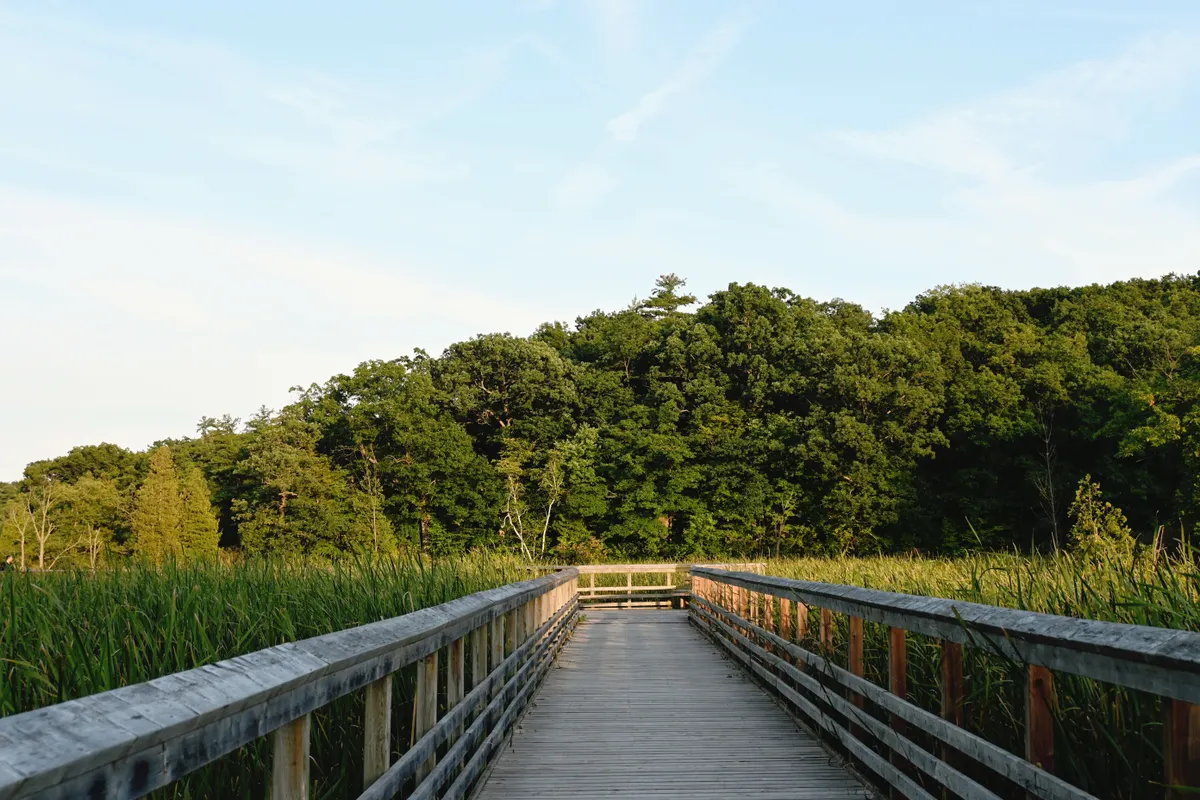

A second Yellowstone bison child incident has gone viral this summer, captured on video by Brittany Peteler, showing a child running past a bison on a boardwalk trail before both disappear behind a stand of trees, the latest in a series of close calls at the park during what rangers describe as an unusually active season for bison encounters.
In the footage, a woman first passes the animal safely, prompting Peteler’s audible sigh of relief off camera. A group then follows, and a child breaks away and runs along the trail directly past the bison. The animal turns and gives chase. Peteler can be heard calling out to the group to back away. The child was unharmed.
A Summer of Bison Encounters at Yellowstone
The new video does not stand alone. The Yellowstone bison child incident pattern this season has been building since June. According to the National Park Service, on 26 June 2026 a 12-year-old was injured by a bison near Mud Volcano, just north of Fishing Bridge, at approximately 9:15am. NPS History records that the child sustained a broken right femur broken in four places, though a full recovery is expected.
Then on 10 July 2026, a bull bison entered the Bridge Bay Campground and charged a group of children who were taking pictures on their mobile phones, according to NPS History. That same day, Carl Isom-McDaniel was tossed into the air by a bison elsewhere in the park, an incident captured on video that quickly went viral and prompted debate about tourist behaviour and wildlife management policy.
The National Park Service subsequently confirmed it would not euthanise the animal involved in the Isom-McDaniel incident. New communication guidelines from the US Department of the Interior reportedly prevented NPS from issuing a public advisory until several days after that initial event, a delay that drew criticism from visitors and commentators online.
Looking further back, Yellowstone National Park records show that in 2025, two men received medical treatment for minor injuries after being gored by bison, with incidents in May and June of that year. The pattern across consecutive seasons points to a persistent challenge for park management in keeping visitors at a safe distance from the animals.
Park Rules Clear, Enforcement the Persistent Question
Yellowstone’s wildlife distance requirements are unambiguous. A park spokesperson set them out plainly: ‘Wild animals can be aggressive when people do not respect their space. Visitors are responsible for staying at least 25 yards away from all large animals, including bison, elk, bighorn sheep, deer, moose and coyotes, and at least 100 yards away from bears, wolves and cougars. If wildlife approach you, move away to maintain the required distance. Never approach, touch, feed or crowd wildlife, even if an animal appears calm.’
A second spokesperson warning is equally direct on the physical risk: ‘They are unpredictable, can run three times faster than humans and will defend their space when threatened.’ Bison have injured more visitors in Yellowstone than any other animal in the park.
The rules carry legal weight as well as advisory weight. It is illegal under park regulations to wilfully remain near or approach wildlife, including birds, within any distance that disturbs or displaces the animal. Approaching a bison is not a grey area: it is a breach of federal park rules, not merely a lapse in judgement.
The timing compounds the risk further. Bison are currently in their mating season, a period during which their behaviour is less predictable and their aggression heightened, making close approaches considerably more hazardous than at other times of year.
Online Reaction: ‘Nature Is Not a Petting Zoo’
Viewer reaction to the Peteler video on X has been largely critical of the tourists involved. ‘Wildlife isn’t a photo op. People keep getting way too close to bison in Yellowstone and it’s only a matter of time before one of these ends tragically. Glad the kid is okay, hopefully this is a wake-up call for everyone,’ one user wrote. Others echoed the sentiment: ‘Glad everyone ended up okay, but people seriously need to respect wildlife and keep their distance. Nature is not a petting zoo.’ Several comments focused specifically on parental responsibility, with users questioning why children were permitted so close to the animal.
Visitors who witness or are involved in a wildlife conflict are advised by the park to alert a ranger immediately, or to contact the park directly on 307-344-2132. With the Yellowstone bison child incident now the second major viral episode of the summer, pressure on the park to address visitor compliance is unlikely to ease before the mating season concludes.
