
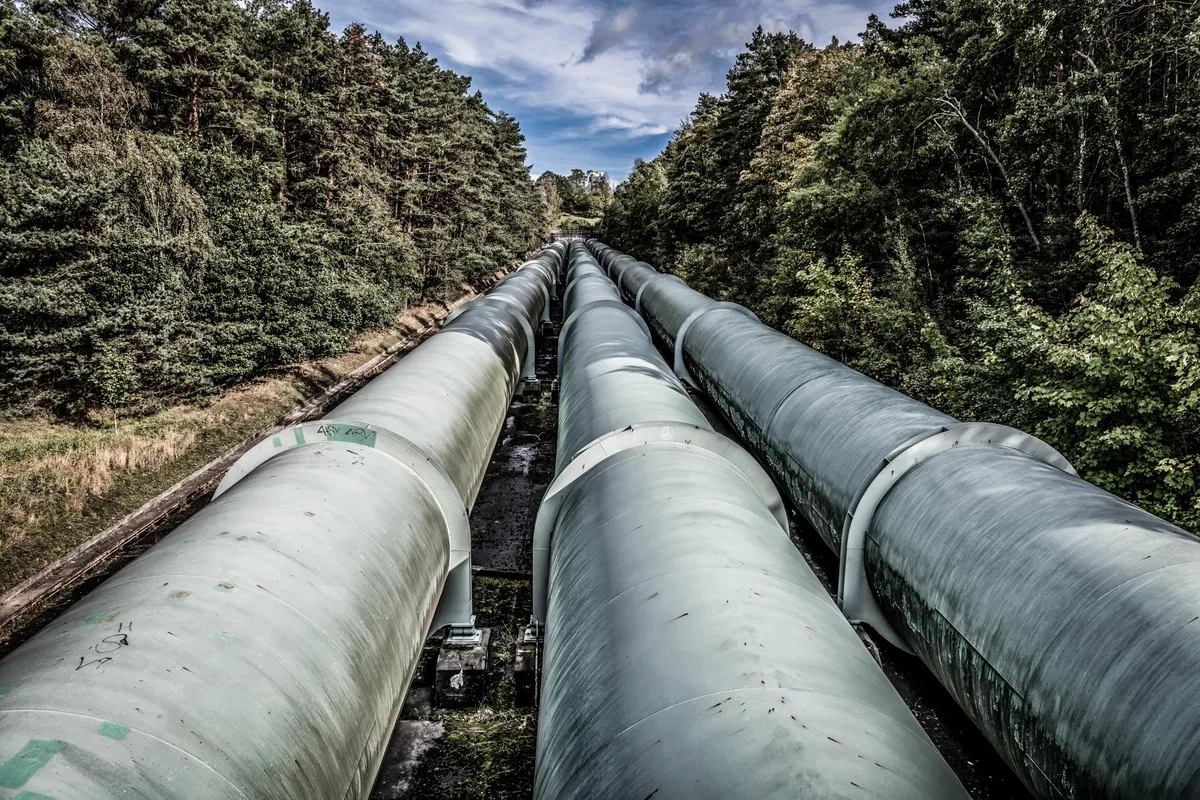

Grand Canyon water restrictions are now in effect on the South Rim after a break in the Transcanyon Waterline (TCWL) prevented water from being pumped to the park’s busiest area, with both visitors and year-round residents required to cut consumption immediately.
The most recent pipeline break occurred approximately one mile below Cottonwood Campground along the North Kaibab Trail. The National Park Service (NPS) confirmed that potable water is currently unavailable at the Manzanita Rest Area, Cottonwood Campground, Bright Angel Campground, Delta Restrooms, and Boat Beach. Backcountry hikers heading towards the Phantom Ranch area or the North Kaibab Trail corridor are urged to carry sufficient water and carry the means to filter and treat it.
What the Grand Canyon Water Restrictions Require
The conservation measures ask visitors and park residents to reduce toilet flushing, run dishwashers and washing machines only on full loads or in eco-mode, take shorter showers, and turn off taps while brushing teeth or shaving. Leaks and drips must be reported promptly, and only reclaimed water may be used for washing vehicles.
NPS Water Utility Crews are working to restore services. A TCWL break typically takes three to five days to repair, though conservation measures may remain in place longer if multiple or back-to-back breaks occur, given the access constraints involved: all repair work in the inner canyon is reachable only by trail or helicopter, pushing the cost of each break beyond $25,000.
A Pipeline Operating Far Beyond Its Design Life
The 12.5-mile TCWL has been the primary potable water supply for the South Rim since it was built in the 1960s, designed for a 30-year service life. It serves millions of visitors, approximately 2,500 year-round residents, and inner canyon facilities in the Cross Canyon Corridor, including more than 800 historic buildings. Water is pumped and treated from Roaring Springs on the North Rim before distribution across the South Rim.
The pipeline’s age, the harshness of the canyon environment, and extreme water pressure have combined to make it prone to failure. It has suffered more than 85 major breaks since 2010, each one disrupting water delivery and triggering the kind of conservation measures now in force.
A $208 million multi-year rehabilitation project is under way to replace the TCWL entirely. According to the National Park Service Grand Canyon TCWL project page, the construction contract was awarded on 14 March 2023 to Stronghold Engineering, Inc. of Perris, California. Construction is projected to wrap up in October 2026, though the NPS notes that delays could affect the overall schedule.
A separate NPS contract announcement states that the new system is designed to meet water supply needs for the next 50-plus years, supporting six million annual visitors and the approximately 2,500 people who live and work in the park year-round.
Visitors should be aware that, as construction continues, a section of the North Kaibab Trail, from the Redwall Bridge (approximately 2.5 miles north of Manzanita Rest Area) to the northern end of Cottonwood Campground, will close from 15 October 2026. That closure will make traditional Rim-to-Rim hiking impossible from that date. The NPS advises checking the park’s official Operations Update page for current work status and any further closures.
Broader Water Pressures on the Grand Canyon
The TCWL break sits alongside a broader set of water-related pressures facing the park. Low water levels on the Colorado River, attributed to a recent record snow drought and reduced flows, are already affecting commercial operations. Sinjin Eberle, senior director of regional communications at American Rivers, told KTAR News 92.3 FM that reduced flows would make full Grand Canyon river trips harder to run. ‘Those commercial operations that can make a full Grand Canyon trip in eight or nine days, those will be less possible if the river is so low,’ he said, with the park’s boating industry generating close to $50 million a year.
A separate concern has emerged from the Bureau of Land Management’s approval of a data centre on federal land in Southern Nevada that would draw water from the same Colorado River Basin. The Sierra Club and the Center for Biological Diversity have filed an appeal to block the proposal. The approval follows Executive Order 14318, signed in July 2025, directing the use of federally owned land and resources for data centre development.
Fire risk adds another dimension. Last summer, the Dragon Bravon Fire, which started from a lightning strike on the North Rim, burned nearly 150,000 acres, including historic structures, underlining why reliable water supply for fire suppression remains an operational priority for the park well beyond the current restrictions.
