
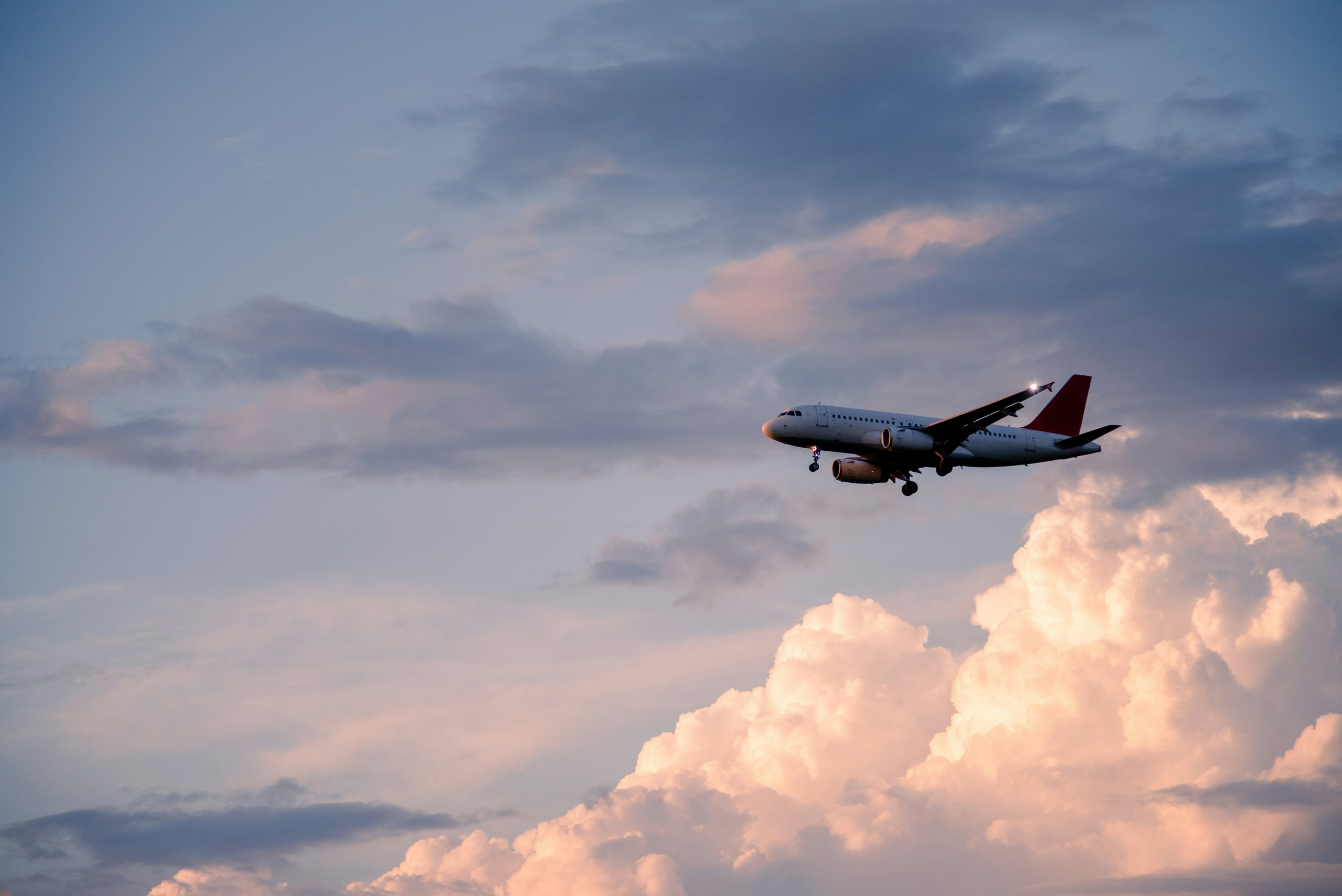

Nearly a third of nervous flyers have abandoned foreign holidays entirely, opting instead for British staycations rather than address their fear of flying. The figure, drawn from a survey of 2,000 anxious travellers conducted by OnePoll between 22nd and 30th January, reveals the extent to which aerophobia shapes holiday decisions across the UK.
Of those surveyed for Confused.com, 27% restrict themselves to short-haul destinations only, whilst 24% take alternative transport—ferries, Eurostar, lengthy car journeys—despite the extra hours involved. One in ten said they’d stopped planning overseas trips altogether. For 74% of respondents, the anticipation of flying had poisoned what should be pleasurable: they struggled to look forward to holidays at all.
Yet here’s the paradox. Some 72% of nervous flyers know help exists such as therapy, counselling, hypnotherapy, airline-run confidence courses like those offered by British Airways and Virgin Atlantic. But 70% have never attempted any of these methods.
The gap between awareness and action is striking. Instead of tackling the root cause, travellers deploy in-flight distractions. Music tops the list: 49% have tried it, and 31% said it genuinely calmed them. Another 42% turn to films or television, whilst 39% bury themselves in books or try to sleep. A third talk to their travel companions, seeking reassurance from familiar voices at 35,000 feet.
What exactly are they afraid of? Takeoff and landing dominate, cited by 55% as their primary concern. Close behind, at 49% each, come anticipation of turbulence, the sensation of being out of control, and news coverage of crashes. Two in five admitted a straightforward fear of heights.
For 71% of nervous flyers, these anxieties directly alter travel behaviour. Some avoid booking altogether. Others construct elaborate holidays around evasion—choosing Brighton over Barcelona, Cornwall over the Canaries.
Tom Vaughan, travel insurance expert at Confused.com, acknowledged the challenge but offered practical steps. “If you choose to travel by plane, there are a few steps you can take to increase your comfort in the lead up to the trip,” he noted.
His first recommendation focused on logistics. “Plan your journey in advance: You should check what travel documents are required soon after booking the trip and acquire them or ensure they’re valid e.g. passport, travel authorisation and visas. Plan the travel day itself including how you will get to the airport, allowing plenty of leeway to avoid rushing and allow for unexpected disruptions. It’s also worth checking you have adequate baggage allowance so you’re not caught off guard, as well as booking your aircraft seat in advance, so you can be next to your travel companion(s).”
Insurance matters too, particularly for those whose anxiety has required medical attention. “Make sure you’re covered by travel insurance: Having insurance in place can give you peace of mind that you’ll be financially covered if anything unexpected happens while away, like falling ill or having belongings stolen. If your travel anxiety is severe and you’ve had a consultation with your doctor, received treatment or been prescribed medication for it, you must inform your insurer. This way, they can give you the right level of cover and your policy won’t be invalidated.”
Vaughan pressed harder on the question of seeking help. “Consider seeking support: If you’re a nervous flyer , there is support available. This ranges from appointments with mental health professionals, to airline run or online / app-based flying confidence courses. There are even YouTube and TikTok videos on the subject. Speaking up to your travel companions or informing aircraft staff can also be a good idea so they are aware of how you’re feeling and can try to provide comfort.”
The data suggests a nation of travellers caught between desire and dread. Holidays represent escape, adventure, a break from routine. But for millions, that escape requires conquering a fear they’d rather simply avoid.
Which raises a question the survey didn’t answer: why the resistance to treatment? Cost might play a role—private therapy sessions aren’t cheap, though airline courses can start around £200 for a half-day programme. Scepticism, perhaps. Or the sense that distraction and avoidance constitute a workable, if limiting, solution.
For the travel industry, the implications are clear. Roughly three in ten potential international customers are choosing domestic breaks instead, whilst another significant portion restrict their destinations to short hops. That’s revenue left on the tarmac.
The survey, commissioned by the comparison site, captured responses from UK adults who identified as nervous flyers or scared of flying. The timing of late January coincides with the traditional booking surge for summer holidays, when the gap between aspiration and anxiety becomes most acute.
What emerged wasn’t simply a portrait of fear, but of elaborate coping mechanisms. Music as sedation. Books as shields. Conversations as anchors. These tactics don’t eliminate the anxiety; they merely redistribute it, transforming the flight into something endurable rather than enjoyable.
Meanwhile, the courses and therapies designed to address aerophobia directly—many with solid success rates—remain largely untouched. The disconnect persists: awareness without action, knowledge without engagement.
For now, the pattern holds. Nervous flyers know where the help is. They’re just not reaching for it. And so the holidays get smaller, closer, safer—bounded not by budget or time, but by the edges of a fear that could, in many cases, be treated.
