

It was a Tuesday, just before eight o’clock. The trading floors were already silent. However, a post on Truth Social appeared on screens in homes, workplaces, and hotel rooms in New York, Chicago, and many other places. By the next morning, Dow futures had risen more than 1,200 points.
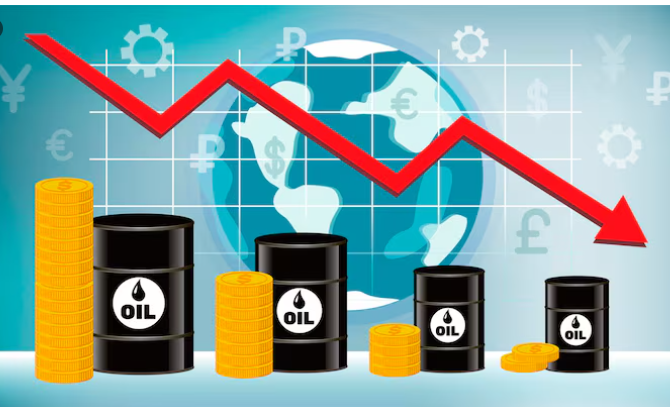
President Trump wrote, “I agree to suspend the bombing and attack of Iran for a period of two weeks,” adding that a “workable basis” for talks had been reached. plain language. However, their remarks hit the market like cold water on a burn in the midst of a five-week conflict that had closed the Strait of Hormuz and caused oil prices to rise by more than 70% this year. Dow Jones Industrial Average futures increased by about 2.6%. Nasdaq futures and the S&P 500 trailed closely behind. In the hours that followed, oil, which had been rising all year, dropped by more than 16%.
Key Information: Dow Jones Industrial Average (DJIA)
| Field | Details |
|---|---|
| Full Name | Dow Jones Industrial Average |
| Common Name | The Dow / DJIA |
| Founded | May 26, 1896 |
| Created By | Charles Dow and Edward Jones |
| Index Type | Price-weighted index |
| Number of Companies | 30 large U.S. companies |
| Exchange | NYSE and Nasdaq |
| Recent Close (Apr 7, 2026) | 46,584.46 (down 85.42 points) |
| Futures Jump (Apr 8, 2026) | +1,229 points (+2.6%) pre-market |
| 52-Week High | 50,512.79 |
| Year-to-Date | Down ~2.90% from Jan 1 levels |
| Managed By | S&P Dow Jones Indices |
| Reference Website | Dow Jones Official Data – S&P Global |
It’s difficult to ignore how much the DJIA has recently evolved into a real-time indicator of geopolitical sentiment. For weeks, the index, which follows thirty of the largest corporations in the United States, including Boeing, Goldman Sachs, Caterpillar, and UnitedHealth, has fluctuated more on headlines than on fundamentals. The Dow fell each time a new threat emerged. It climbed back with every whisper of quiet. It rose 165 points on Monday, April 6, following reports of potential 45-day ceasefire negotiations. When those negotiations came to a standstill on Tuesday, it lost 85 points. The futures board lighted up when Trump posted.
There is more to the Strait of Hormuz than merely topography. That tiny river between Iran and Oman carries around a fifth of the world’s energy supply. Crude prices continued to rise after Iran stopped it five weeks ago, raising the average price of gasoline in the United States beyond $4 per gallon for the first time since 2022. Everyone is affected by that kind of pricing agony. The Ohio truck driver is filling up. The owner of a small business is observing an increase in freight expenses. Indeed, the investor is witnessing a weekly decline in the Dow. Inflation, consumer spending, and company margins are all impacted by rising energy costs, and the DJIA, which is composed of businesses that deal with all of those issues, felt the full impact.
The deadline itself was the main source of tension during Tuesday’s session. If the Strait wasn’t reopened by 8 p.m. ET, Trump had threatened to attack Iran’s infrastructure and power plants. Throughout the day, markets were pricing in uncertainty. The S&P 500 managed a meager 0.08% increase. The Dow saw a decline. The traders were unsure of which way to lean. Shehbaz Sharif, the prime minister of Pakistan, then intervened in public at the last minute, requesting a two-week extension from Trump and asking Iran to open the waterway as a “goodwill gesture.” Almost quickly, the markets recovered from their session lows. A geopolitical push from Islamabad to stabilize Wall Street in the last hour of a trading day has a certain ridiculousness about it. However, that is the current state of the global markets.
Freedom Capital Markets’ chief market strategist, Jay Woods, stated it simply. He claimed that the market has become more adept at predicting Trump’s future actions. He went on to say that the question is whether this specific “two-week” timeframe will truly result in anything. It’s a legitimate concern. This pattern—a threat, a halt, a relief rally, and then a wait—has already been observed by the DJIA. The index is still far behind its 52-week high of 50,512, down roughly 2.9% since the beginning of the year. An announcement of a truce is not enough to go back there. It calls for a genuine solution, sustained reductions in oil prices, and profits that withstand the strain of an already difficult year.
In particular, there is something to be mindful of with the Dow. Because it’s a price-weighted index, businesses with higher stock prices have more sway over the total than businesses with larger market values. Because of this, it differs slightly from the S&P 500, which is based on size. The Dow as a whole is affected when a company like UnitedHealth or Goldman Sachs makes significant changes. The index was developed in 1896, so it’s an outdated design, but most people still hear it on the evening news. In contrast to more contemporary measures, it still has emotional weight.
On Wednesday morning, there was a genuine but fleeting sense of relief among the world’s markets. Even while equities rose, gold increased rather than decreased, which says something. Not all investors were having a good time. They were using hedging. Yields on Treasury bonds decreased. Demand for a safe refuge was maintained. The ceasefire is conditional and lasts for two weeks. The waterway will be reopened, according to Iran’s foreign minister, although transportation must be coordinated with Iran’s military. According to media sources, Israel also consented to the ceasefire. This two-week span might result in something tangible. It’s also feasible that the market will return in two weeks as another deadline draws near.
The Dow futures are currently rising. Oil prices have decreased. And traders are choosing what to trust somewhere in the silence before the opening bell.
