
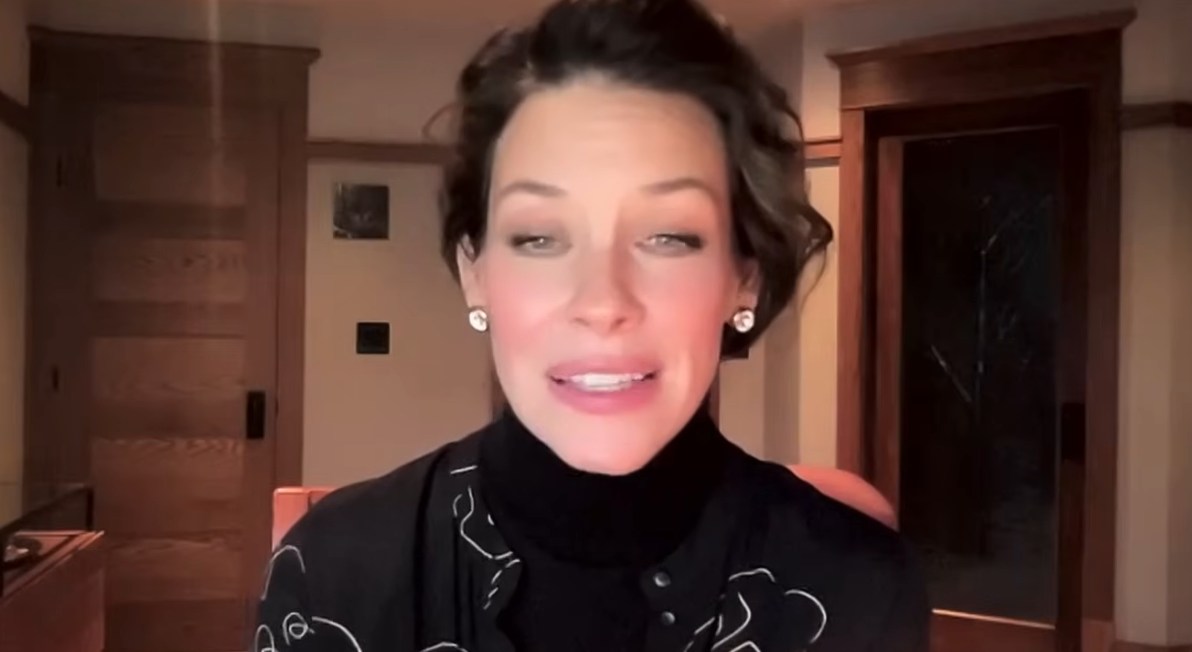

As if prodded by destiny rather than willpower, Evangeline Lilly shot to popularity when Lost debuted in 2004. She was instantly famous for her role as Kate Austen, but oddly, she never appeared to be drunk on the spotlight. What came next was a pattern of purposeful moderation rather than a high-stakes Hollywood ascension. It could be the reason why, twenty years later, her modestly reported net worth of $5 million feels more like a silent sort of achievement than a deficit.
For someone who stood next to Paul Rudd and Michael Douglas in billion-dollar Marvel films, her financial picture may seem rather low to others. To assume, however, that every actor in a superhero movie ends up with superhero fortune would be to misinterpret how Hollywood compensates its actors. Lilly wasn’t the franchise’s box office star, in contrast to its top earners. Although she was undoubtedly essential, it’s unlikely that her agreement structure included premium bonuses or backend profits, which would have increased others’ incomes into the tens of millions.
Her goals changed during the last ten years in ways that profoundly affected her income and visibility. Lilly focused on making independent films, authoring children’s books, and raising her family instead of pursuing greater screen time or high-profile jobs. Her publishing of The Squickerwonkers and other creative diversions demonstrated her passion for storytelling, albeit on her own terms.
| Full Name | Nicole Evangeline Lilly |
|---|---|
| Date of Birth | August 3, 1979 |
| Nationality | Canadian |
| Known For | ‘Lost’, ‘The Hobbit’, Marvel’s Wasp |
| Estimated Net Worth | $5 million |
| Highest-Grossing Role | Hope van Dyne in Marvel’s Ant-Man films |
| Awards/Nominations | Golden Globe nominee, Gotham Award winner |
| Other Work | Author of The Squickerwonkers book series |
| Notable Hiatus | Stepped away from Hollywood in 2024 |
| Source Reference | celebritynetworth.com |
The fact that she declined lucrative positions is very intriguing. She turned down Hugh Jackman’s offer of a role in X-Men without hesitation. She wasn’t in it for fame or financial approval, which was reflected in her naturally rebellious decision. She frequently said that acting was something she discovered rather than something she actively pursued. It’s evident in the numbers. Her financial wealth may have tripled or quadrupled by now if she had embraced fame more forcefully.
Lilly made headlines once more in 2024—not for a new post, but for leaving. She revealed why she decided to give up acting in an open Instagram post, saying it was for emotional recovery and a return to what felt “pure.” Following her head injuries from a fall and subsequent slight brain damage, the date coincided with a more comprehensive consideration of health. In a field that values prestige over suffering, her candor about the occurrence was remarkably uncommon.
In the early years of the epidemic, Lilly gained notoriety for openly resisting vaccination requirements and lockdowns. Her position sparked immediate criticism and drastically altered how certain studios perceived her. Although her public image was momentarily clouded by that dispute, it also acted as a turning point. Regardless of the expense, she leaned more into her principles.
Lilly’s financial situation may appear unimpressive to those who grade success based on lavish residences or red carpet appearances. Nevertheless, it presents a strikingly powerful narrative about self-determination when viewed through the prism of personal agency. She’s not trying to get endorsements. She’s not starting a skincare brand. She is not trying to make a return. She just effortlessly and thoroughly exited the treadmill.
Her way of life, which is frequently characterized as centered around family, the outdoors, and creative solitude, appears to have shielded her from the demands of hyper-visible branding or digital currency bubbles. And that’s when her tale becomes especially creative. In contrast to contemporaries who profit from every public action, Lilly has fostered privacy as a value and a barrier.
In one interview, she likened serving tables to acting, which is an honest job but not her calling. I remember that. That metaphor sums up her perspective in a subtle yet illuminating way. It’s not that she didn’t appreciate the chances. When they ceased to serve her, she just knew.
She has provided a pattern that is quite effective for emotional sustainability by emphasizing purpose over accumulation, even though it is not ideal for capital growth. It wasn’t a reflexive move on her part to move away. It was the last chord in a tune she had spent years writing.
Her public engagement tone has significantly improved since she made that choice. Her communications are less reactive and more focused. Fans can tell the difference in her speech because it is clear. This type of change is difficult to price and even more difficult to imitate.
In a society where monetary values are frequently substituted, Lilly’s voyage subtly questions that standard. Though it might not draw attention at industry galas, her $5 million net worth represents something timeless: the decision to live intentionally rather than ostentatiously. And in a time of performative branding and algorithmic noise, that may be the most precious resource of all.
