

Turning wealthNews into spectacle has never seemed to be Greg Williams’ interest. His financial strategy, like his business strategy, has been remarkably modestModesto, emphasizing the development of resilient systems over visibility. Because of this limitation, the design that created Greg Williams’ Acrisure net worth is discussed more than a specific amount.
In 2005, Acrisure started off as a simple insurance acquisition company with operations in a few US states. Insurance broking was not thought to be a promising area for rapid expansion at the time. However, Williams took a more patient engineer-than-flashy disruptor approach to it, meticulously combining agencies while preserving their local cultures and simplifying the back end.
That tactic worked incredibly well during the last ten years. The rate at which Acrisure grew was very akin to that of a well-organized beehive, with each acquisition proceeding autonomously yet adding to a far more extensive framework. The business was only operating in three states by 2013. With the help of almost 1,000 acquisitions and tens of thousands of employees, it now operates in 24 countries.
The story is partially told via revenue data. The company currently makes almost $5 billion a year, which would have seemed unthinkable when Williams and co-founder Ricky Norris began purchasing Midwestern firms. Growth at this scale typically results in significant personal wealth for founders who maintain meaningful ownership, especially in the insurance and financial services industries.
| Name | Greg Williams |
|---|---|
| Role | Co-Founder, Chairman & CEO of Acrisure |
| Company Founded | 2005, with Ricky Norris |
| Headquarters | Grand Rapids, Michigan, USA |
| Estimated Net Worth | Over $1 billion (per Detroit News, Dec 2025) |
| Known For | Leading Acrisure from 3-state insurance firm to global fintech giant in 24 countries |
| Notable Philanthropy | $401 million donation to Michigan State University (2025) |
| External Link | Acrisure Leadership |
Williams’ argument is particularly strong because of the timing. In order to regain control and transform Acrisure into a company that is primarily owned by its employees, he oversaw a management buyout from Genstar Capital in 2016. In an industry where founders are frequently deprived of long-term leverage due to the dominance of private equity, that move was especially novel. In Williams’ approach, ownership evolved from a remote reward to a shared motivation.
Later investment rounds gave it even more impetus. In 2022, Acrisure was valued at about $23 billion by the Abu Dhabi Investment Authority, which gave it $725 million. Even though the precise amount of Williams’ investment is unknown, the valuation put him squarely among the wealthiest financial technology executives for a privately held company.
Long after Acrisure’s worth skyrocketed, public search results continued to include some early estimations that indicated far lesser personal wealth. Those figures seem antiquated now, particularly in light of estimates from late 2025 that put Greg and Dawn Williams’ total net wealth at much than $1 billion. While balance sheets are kept secret, large-scale giving has a way of bringing financial reality into focus.
The highest donation in Michigan State University’s history, $401 million, was pledged by the Williams family in December 2025. The action served as a very strong indication that Acrisure’s success had resulted in long-lasting personal capital, even if it was generally seen as giving. Illiquid optimism rarely results in donations of that magnitude.
I recall stopping when I heard about that gift because I was struck by how subtly Williams had entered a realm of affluence that often makes its appearance much sooner.
In tandem with Acrisure’s technological aspirations, Williams’ commercial strategy has changed. Acrisure started working more like a financial operating system and less like a traditional broker after purchasing Tulco Labs and growing AI-driven underwriting. In order to streamline operations and free up human expertise for advising jobs that robots cannot simply imitate, AI technologies now monitor risk, pricing, and client behavior.
As Acrisure expanded into payroll, cybersecurity, mortgage services, and managed IT, this technology layer has been especially helpful. By feeding data into the next division, a very effective feedback loop is created that makes it harder for rivals to imitate. Here, scale is more than just size; it’s coherence.
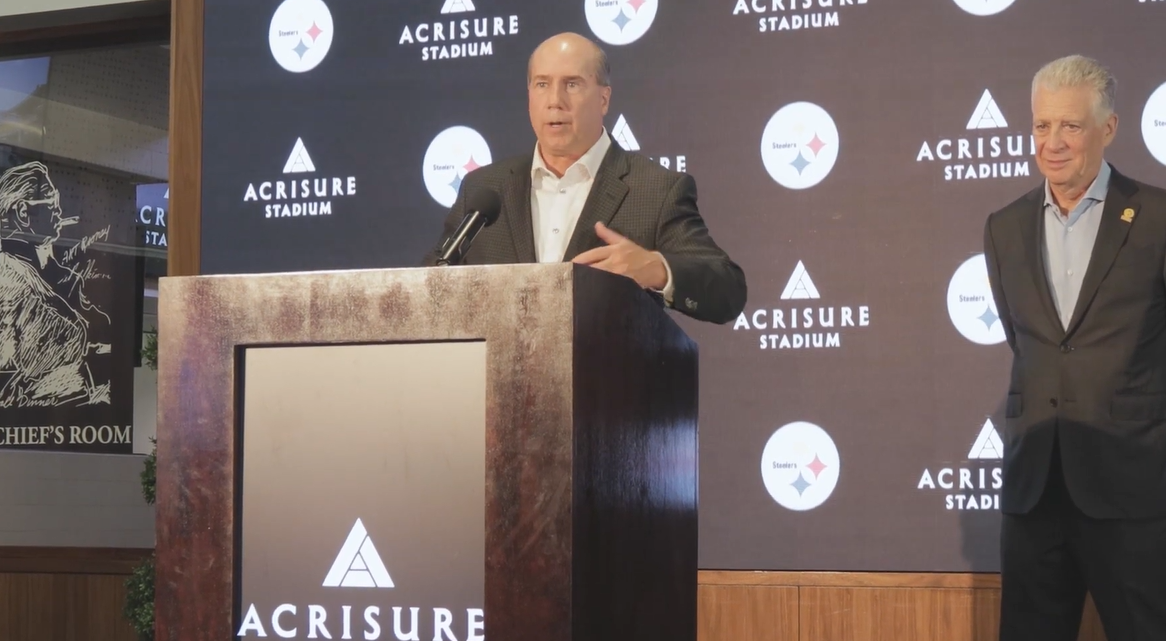
Function led brand visibility, not the other way around. Not so much as vanity projects, the naming rights to Acrisure Stadium in Pittsburgh and Acrisure Arena in California served as indicators of arrival. In the insurance and financial services industries, they conveyed permanency, dependability, and financial durability—qualities that are extremely important.
Williams himself has chosen to stay in Grand Rapids, which seems purposefully significant. Even while financial centers are a popular destination for CEOs, his decision supports a more general theme of stability and sustained dedication. The internal ethos of Acrisure, which prioritizes decentralization over centralized authority, is also reflected in it.
In the future, Williams’ wealth is probably going to keep growing, especially if Acrisure decides to go public or make more significant investments. However, the most intriguing question is not how much he is worth, but rather how he choose to use it. His current behavior points to a preference for institutional legacy above indulgence.
