
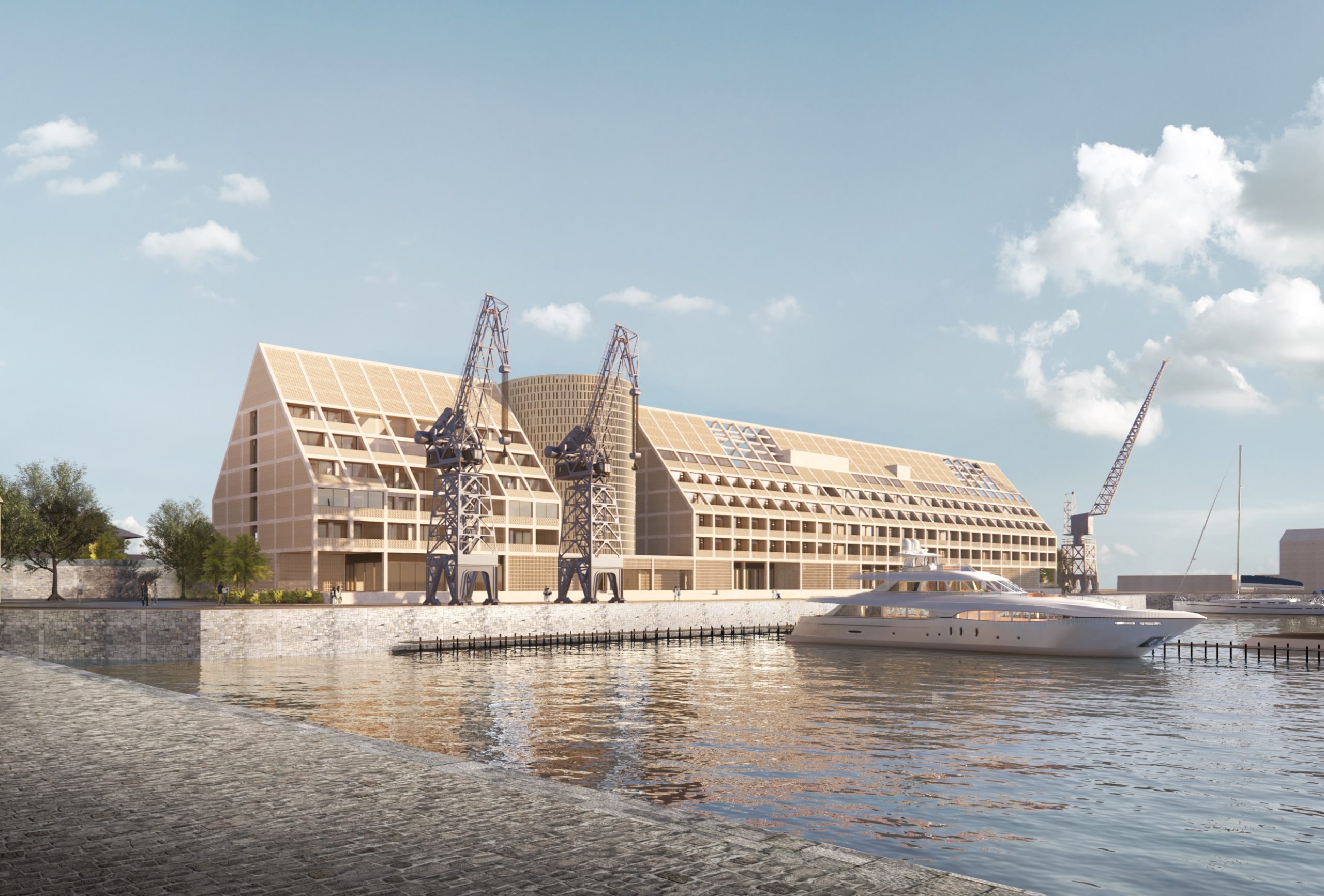

The announcement that Marriott International and V&A Waterfront Holdings have reached an agreement to bring an EDITION hotel to Cape Town landed with a sense of inevitability rather than surprise, as if the idea had been quietly circling for years before finally choosing its moment to settle.
Cape Town has long attracted global hotel brands, yet the Waterfront occupies a particular emotional and commercial space. It is not merely a destination but a daily crossroads, used by residents as much as visitors, shaped by habit, weather, and the steady choreography of people who know exactly where they are going.
EDITION, Marriott’s luxury lifestyle brand, does not typically arrive without intention. Its properties tend to be placed carefully, often in cities where design, culture, and social life already carry weight, and where restraint matters as much as ambition. That alone makes this partnership worth lingering over.
The V&A Waterfront is no stranger to large-scale development, but it has earned a reputation for pacing itself. Changes here tend to be evolutionary rather than abrupt, shaped by long planning cycles and a sensitivity to how spaces are actually used, not just photographed.
This agreement signals confidence on both sides. For Marriott, it reflects faith in Cape Town’s enduring appeal as a global city with depth rather than novelty. For the Waterfront, it suggests a belief that EDITION’s understated luxury can add something without overwhelming what already exists.
EDITION hotels are known for a particular kind of quiet confidence. They are rarely ostentatious. Design is present, but never shouting. Public spaces are meant to be lived in, not merely passed through, and the line between guest and local is often deliberately blurred.
That ethos feels unusually compatible with the Waterfront, where locals meet friends, conduct business, linger over coffee, or simply watch the light change on the harbour. A hotel here must earn its place not through spectacle, but through usefulness.
Plans for the Cape Town EDITION include a carefully integrated design that responds to its surroundings rather than competing with them. That may sound like standard language, but in a city as visually dramatic as Cape Town, restraint is harder to achieve than boldness.
The hotel is expected to feature a mix of guest rooms, public spaces, dining concepts, and wellness facilities, designed to appeal to international travellers while remaining accessible to the city itself. The balance will matter. Too closed, and it becomes irrelevant. Too open, and it risks dilution.
Luxury hospitality in Cape Town has matured noticeably over the past decade. Travellers increasingly expect experiences that feel rooted rather than imported, and brands have had to adjust accordingly. The EDITION name carries expectations, but it also carries flexibility.
Behind the scenes, this project reflects broader confidence in South Africa’s tourism resilience. Despite economic cycles, shifting travel patterns, and global uncertainty, Cape Town continues to draw sustained interest from investors willing to take a long view.
I found myself thinking how rare it is for a major hotel announcement to feel patient.
Construction and opening timelines place the hotel several years out, which speaks to the scale and seriousness of the development. This is not a rushed addition meant to catch a fleeting trend, but a carefully staged project intended to age well.
For Marriott International, the EDITION brand occupies a strategic position. It appeals to travellers who value atmosphere as much as service, who are less interested in formality and more in how a place feels at different hours of the day.
For the Waterfront, the partnership offers a chance to extend its hospitality mix without disrupting the rhythm that makes the area work. The challenge will be ensuring that the hotel integrates naturally into the fabric of the precinct rather than standing apart from it.
The success of EDITION properties elsewhere often lies in their ability to become informal meeting points. Lobbies double as workspaces. Bars become neighbourhood fixtures. Restaurants attract guests who never intend to stay the night.
If the Cape Town EDITION achieves that, it could subtly reshape how parts of the Waterfront are used, extending activity into evenings and quieter seasons without resorting to spectacle.
There is also an architectural conversation unfolding here. Any new structure at the Waterfront must contend with views, scale, and the visual dominance of the mountain beyond. Design decisions will be scrutinised closely, not just by planners but by a public that feels a sense of ownership over the area.
V&A Waterfront Holdings has navigated that scrutiny before. Its developments tend to involve extensive consultation and phased decision-making, which suggests this project will unfold deliberately, with adjustments made along the way.
The announcement itself was measured in tone. No sweeping claims. No exaggerated promises. Instead, a shared emphasis on partnership, long-term value, and creating something that fits its setting.
That restraint feels appropriate. Cape Town does not need to be sold to the world. It needs projects that respect its complexity and avoid flattening it into a single narrative.
For visitors, the arrival of an EDITION hotel will add another layer to the city’s accommodation landscape. For residents, the real question will be whether the hotel becomes part of daily life or remains politely distant.
Much will depend on how the public spaces are programmed, how accessible the dining offerings are, and whether the hotel welcomes the city in rather than holding it at arm’s length.
Hospitality, at its best, reflects the place it inhabits. It listens before it speaks. It observes how people move and adapts accordingly.
If this partnership succeeds, it will not be because of the brand name alone, but because both parties understood that the Waterfront already has an identity, and the smartest move was to build alongside it rather than over it.
The agreement marks the beginning of a process rather than a finished story. Years of planning, design, and construction lie ahead, and with them, countless small decisions that will shape how the hotel is ultimately received.
In a city accustomed to bold gestures, this one feels careful. And in Cape Town, careful often turns out to be the most ambitious choice of all.
