
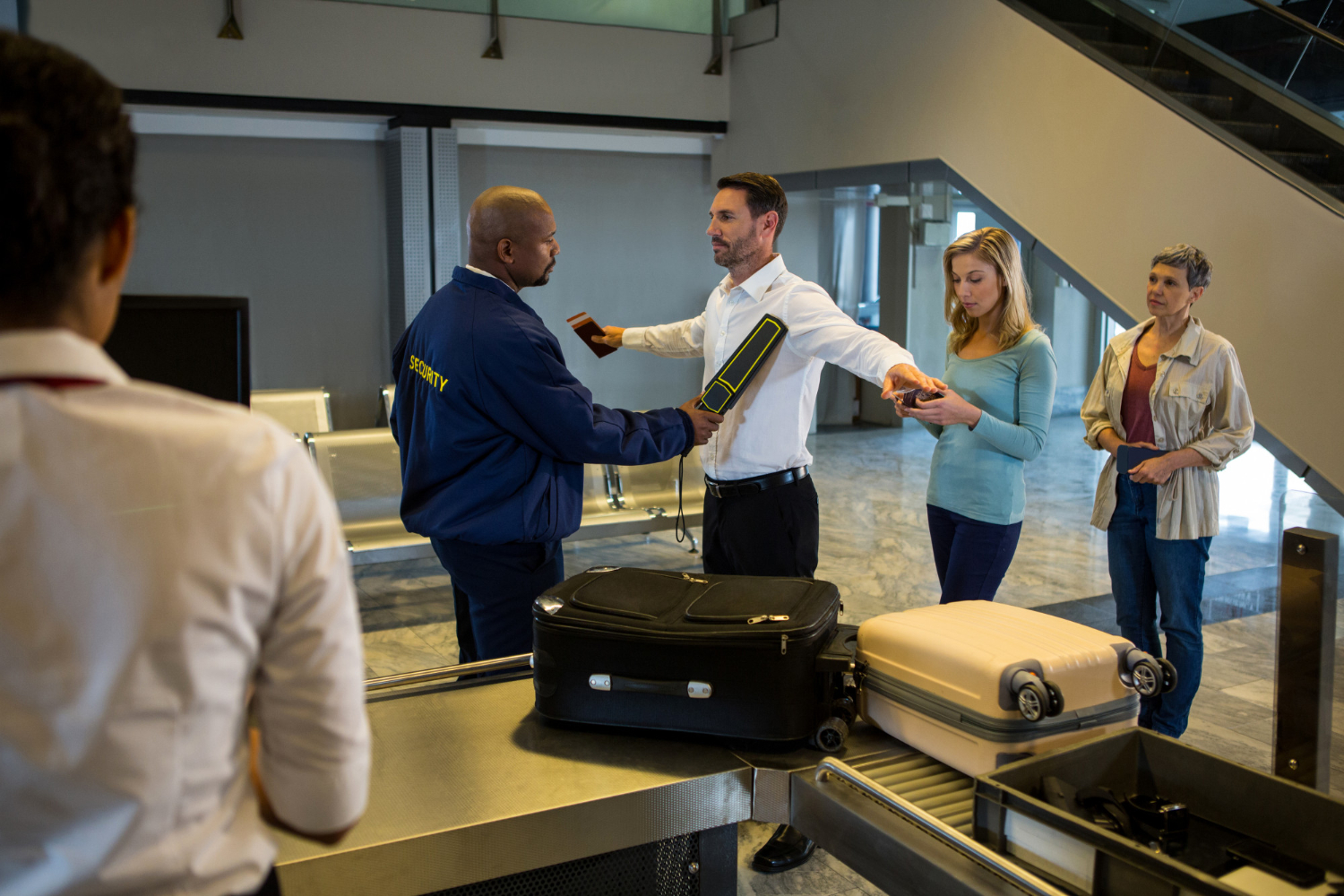

The security checkpoint at Kansas City’s recently enlarged terminal is undergoing a quiet revolution. No one is kicking off shoes or rummaging through bags. No one is shouting or juggling trays. Only a constant stream of passengers, on their way.
These subtle shifts are becoming more noticeable across the nation. Airport check-ins, which were previously associated with annoyance and conflict, are changing due to security regulations that feel remarkably efficient and surprisingly compassionate.
| Transformation Area | Key Change |
|---|---|
| Biometric Verification | Facial recognition replaces ID checks at many checkpoints |
| Bag Screening Technology | CT scanners let laptops and liquids stay inside carry-ons |
| Footwear Policy | Passengers no longer required to remove shoes |
| ID Regulations | REAL ID enforcement required for domestic flights as of May 2025 |
| Forgotten ID Protocol | $45 Confirm.ID fee starts February 2026 for those without proper ID |
| Potential Liquid Policy | TSA is reviewing the 3.4 oz liquid limit; future adjustments expected |
Facial recognition technology has brought about a significant change. Your identity is checked, your reservation is pulled up, and your gate is confirmed with a quick glance. Both domestic and international terminals are now installing these systems, which are trained to identify you based on stored passport or ID data. They greatly lessen the need for manual checks and get rid of bottlenecks that used to extend well beyond the scanners, which is especially helpful during rush hour.
CT scanners are yet another innovation. The outdated practice of “laptops out, liquids in a clear bag” is becoming less and less relevant as these sophisticated devices produce layered 3D images of the contents of your bag. Without requiring passengers to unpack their belongings, this technology gives security personnel a more precise view of what’s inside. Early-adopting airports have reported nearly 30% shorter wait times during peak hours, demonstrating how much faster the screening process has become.
A subtly symbolic change occurred in July 2025: passengers were no longer required to take off their shoes. That ceremony had been associated with increased alertness for almost twenty years. However, the Department of Homeland Security declared that most travelers no longer needed the practice due to updated risk profiles and new detection tools. Although it’s a minor detail, many people feel that this change is both long overdue and significantly better.
The REAL ID requirement’s implementation has an equally significant impact. All domestic travelers in the US will need to show a REAL ID-compliant license (designated by a star) or a legitimate substitute, such as a passport, starting in May 2025. This change is intended to guarantee consistent, dependable, and fraud-resistant identity verification.
However, the TSA acknowledges that mistakes do occur. The new Confirm.ID program fills that need. Travelers who forget their REAL ID will have a backup option starting in February 2026: a one-time identity verification procedure that costs $45 to complete. It’s a very clear indication that while convenience will continue to be offered, accountability will come at a price.
At Denver International, I saw an elderly couple who were clearly nervous when they realized one of them lacked compliant identification. The Confirm.ID option was calmly explained by the agent. They were immediately relieved, and what could have been a disastrous trip became just another travel tale—evidence that these regulations can be altered without compromising security.
Every new regulation is based on a deeper principle: ensuring that travelers are moving safely without needlessly slowing them down. The TSA’s revised approach combines several screening layers, such as automated body scanners and behavioral pattern recognition, to enable the majority of travelers to pass with little disruption while still discreetly and successfully flagging anomalies.
A revised relationship between technology and security is also reflected in this change. Airports are becoming more like synchronized systems rather than a patchwork of reactive checkpoints thanks to the use of smart gates, AI-enhanced scanners, and responsive queue systems. The outcome is a very effective setting where dignity is not sacrificed for safety.
This evolution feels like a reward for years of perseverance for frequent travelers. Airport security used to be defined by long lines, missed connections, and public annoyance. The procedure is now noticeably more intuitive and seamless. The system is learning to identify and reward valid patterns of trust rather than viewing every traveler as a possible risk.
Airports are improving more broadly by incorporating biometric systems and better data tools. Reunification of misplaced items is happening faster. Changes to the gate are automatically communicated. Assistance for travelers with mobility challenges is arriving more quickly. The system as a whole is becoming more responsive thanks to incredibly flexible technologies.
Nevertheless, privacy issues still lag behind these developments. Civil liberties organizations are still wary of facial recognition, particularly when opt-out options are ambiguous. TSA is adamant that photos be removed right away and not saved, but continued openness and transparent supervision are necessary to build trust.
More changes are anticipated in the upcoming years. The 3.4-ounce liquid restriction, which has been in place since 2006, is being reviewed by TSA. The rationale for such strict restrictions is eroding since CT technology is now commonplace in many airports. Should it be loosened, it would represent yet another significant step toward grounding air travel and reducing its reliance on antiquated regulations.
Agencies are rethinking checkpoints through strategic partnerships with technology providers, rather than merely updating them. In the near future, biometric kiosks, automated entry gates, and real-time risk assessment may completely replace manual lines. There may soon be an end to the long-standing separation between high-security and high-comfort zones.
These improvements—a quicker wait, a more welcoming checkpoint, and a more seamless route from curb to gate—will be felt subtly by the majority of travelers. However, when combined, they form a system that values trust, time, and space as valuable resources.
You no longer need to prepare for check-ins. They’re evolving into something you can walk through with assurance, safety, and without juggling your shoes and laptop.
