
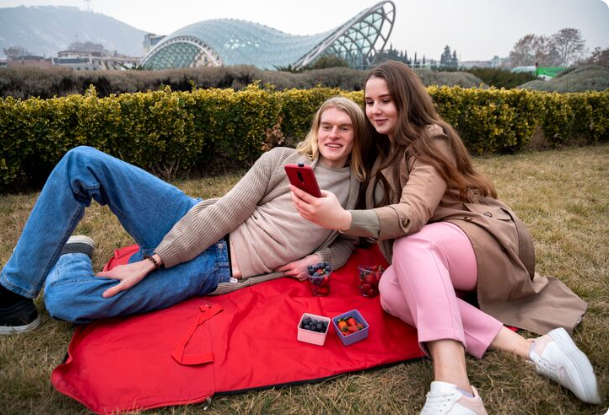

For many Canadian tourists, the clichéd photos—crowds squirming in Venice, camera flashes reflecting off the Colosseum, the same selfie angle repeatedly in Times Square—are starting to lose their allure. What used to represent vacation success now feels more like sensory overload.
Conversations with hosts, agents, and even backpackers have recently revealed a remarkably similar narrative: Canadians are looking for something slower, more deliberate, and quieter. Not only is it geographically far away, but it is also emotionally detached from the act of travel.
| Trend / Detail | Description |
|---|---|
| Quietcations | Restful, low-stimulation escapes chosen over packed itineraries |
| Hushpitality | A travel ethos centered on slow living, nature, and fewer notifications |
| Shift from U.S. Icons | Political unease and safety concerns push travelers to alternative routes |
| Domestic Quiet Spots | Gwaii Haanas, Canmore, Kawartha Lakes, Tofino, St. John’s |
| Under-the-Radar Abroad | Cascais (Portugal), Thira (Greece), Bari (Italy), Mexico City |
| Motivations | Escaping noise, digital burnout, mass tourism, and standardized experiences |
| Overtourism Impact | 71% of Canadian travelers actively avoid overly visited places |
| Sustainable Travel Growth | Local-first, low-impact destinations are increasingly prioritized |
According to a recent survey by Flight Centre, 71% of Canadians are now worried about overtourism. This number is a signal, not a blip. More people are choosing stillness over crossing things off lists or completing itineraries with a lot of checkboxes. According to the industry, they are relying on “quietcations.”
It’s not just a conceptual change. For those seeking peace and quiet, British Columbia’s Gwaii Haanas National Park Reserve—a location devoid of roads, telephones, and cruise ship docks—is quickly emerging as a highly effective retreat. With its towering limestone monoliths and bone-chilling silence, Quebec’s Mingan Archipelago on the opposite side of the country offers similarly pristine views. These aren’t shouting locations. These are places that reward patience and presence—destinations that unfold gradually.
The term “hushpitality” has been coined to characterize this developing attitude. It relates to a hospitality model that is based on regional cuisine, leisurely strolls, slower tempos, and intensely intimate relationships. Notably enhanced as a tranquil substitute for Muskoka, Kawartha Lakes provides lakefront beauty without the Instagram craze. And Tofino, which was once a secluded surf paradise, has developed into a particularly creative fusion of ecology and tasteful seclusion.
The way that this trend cuts across demographics is fascinating. Boomers remember summers spent in small cottage towns. Millennials need a place to unwind after spending so much time on screens. Gen Z tourists prefer Thira’s unadulterated light to Mykonos’ filtered noise because they value authenticity over algorithms.
Another undercurrent is uneasiness with the current perception of travel to the United States. Several of the travelers I interviewed in Vancouver and Canmore subtly mentioned a sense of unease, but never in an aggressive manner. Many people are searching elsewhere due to political polarization, safety concerns, and an atmosphere of unpredictability. A notable alternative to more crowded travel destinations like Barcelona is Cascais, Portugal, a seaside town with quiet streets and a gentle charm.
In a similar vein, Bari in southern Italy is becoming a popular starting point for visitors who wish to live, eat, and stroll like locals without the draining glare of tourists. fewer lines. lower standards. More meals that don’t require reservation apps or QR codes.
Inquisitive tourists are also flocking to Mexico City. Not because of its resorts or beaches, but because of its parks, cafes, and rich history, where language is not conveniently packaged. For many, the objective is to stay, not just to go.
Many people reconsidered what “getting away” meant during the pandemic. Even in quarantine, the cacophony of digital life never really subsided. A subtle but powerful result of this extended exposure to notifications, video calls, and digital routines was a desire for a different kind of quiet. That is the reason why quiet travel is becoming more popular. Reconnecting in a different way rather than completely is the aim.
I recall lounging by a dock in On a late-summer morning, Canmore watched the mist move between the slopes covered in pines. There was nobody else. There was no rush, no Wi-Fi. Only time, wind, and light. I was unaware of how infrequently I’d experienced that combination over the previous few years.
Nowadays, silence is considered a luxury for travelers. Not in a gaudy way, though. Instead, a silence that works incredibly well to replenish attention, which is frequently damaged by day-to-day living.
Chandeliers aren’t always a sign of quiet luxury. There is room to breathe. A tiny cabin. An excellent book. A path where the sole sound is the crunch of gravel underfoot. Furthermore, more and more Canadians are prepared to travel further—or less—in search of it.
The way that value is discussed is also changing as a result of this shift. Many now measure trips by what was felt rather than what was seen. Was there room for contemplation? Did time seem to move more slowly at times?
For this reason, places like St. John’s in Newfoundland are becoming popular. Compared to the bustle of big-city travel, its cobbled streets and ocean breezes offer something remarkably different. Birds, boats, accents, and rhythms all beckon people to take notice once more.
Canadian tourists are essentially influencing the future of hospitality by selecting more sedate locations. Travel agencies and hotels are adjusting. More customized experiences, fewer package offers. Increased texture and less noise. Businesses are being encouraged to become more environmentally friendly, locally focused, and creatively adaptable by the growing demand for hidden gems.
Travel narratives are also changing. In some places, handwritten postcards and camera-free shared meals are taking the place of the viral TikTok reel. Presence is more important than performance.
