
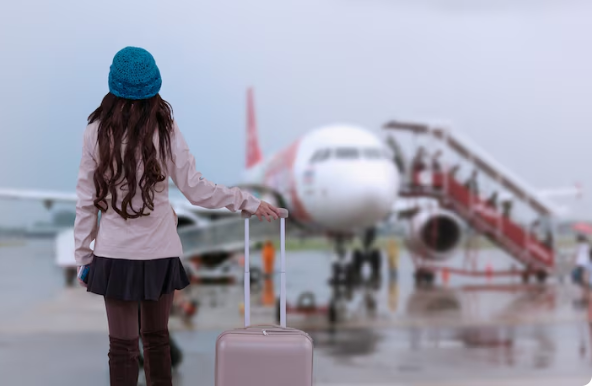

Before anyone even boards, the gate area at Newark Liberty International Airport tells the tale. Almost as if invisible lines have been drawn across the carpet, travelers now congregate in clear patterns. Passengers stand placidly near the premium cabin boarding lane, wheeling sleek carry-ons and occasionally checking their phones. The economy line gets louder, more crowded, and more restless as you go farther back. It’s difficult to overlook the subtle differences in experience as well as seats.
With unusual clarity, United Airlines has been embracing this division. Even though demand in the economy is slowing down, executives are publicly betting that the company’s premium revenue will continue to grow, as it increased by 9% in the fourth quarter. It seems like the airline is redefining itself around demand rather than just responding to it, giving preference to travelers who are able or willing to pay more.
| Company Name | United Airlines |
|---|---|
| Founded | 1926 |
| Headquarters | Chicago, Illinois, USA |
| Industry | Commercial Aviation |
| Key Strategy Shift | Expanding premium seating and premium-focused routes |
| Recent Financial Signal | Premium revenue rose 9% in Q4 |
| Strategic Goal | Increase margins by focusing on high-yield passengers |
| Fleet Challenge | Aircraft shortages limiting expansion |
| Reference |
The shift takes on a tangible form within the aircraft. The front cabin of a newly redesigned United aircraft is longer than it used to be, pushing the economy rows further back. Wider, quieter, and virtually impervious to the din of the rest of the aircraft are the premium seats. United may be aware of an uncomfortable fact: a smaller number of affluent passengers can make more money than many low-cost ones.
Investors appear to think this strategy will work. Even when planes aren’t full, premium cabins generate larger profits. In contrast, economy tickets frequently have extremely low profit margins and are susceptible to price competition and fuel prices. According to a year’s worth of airline earnings calls, executives’ confidence in discussing premium demand has grown, while their enthusiasm for discussing economy seating has significantly decreased.
The model wasn’t always like this. Airlines crammed as many people as they could onto their aircraft for decades. The business model was in the back of the aircraft. However, a shift occurred, spurred on by the pandemic, whereby fewer people traveled, but those who did frequently paid more for space, comfort, and flexibility. United has redesigned its future around that lesson, seemingly taking it seriously.
Similar efforts have been made by Delta Air Lines, which has been designing lounges that resemble private clubs rather than waiting rooms. While they continue to chase volume, budget airlines provide fewer amenities but lower fares. The end effect is a growing disparity, akin to two distinct industries coexisting under one sky.
The change is more subtly revealed by United’s network choices. In order to serve leisure travelers who are looking for experiences rather than just transportation, the airline has added premium-focused international routes, such as seasonal flights to locations like Split, Croatia. In the meantime, it has cut back on redeye flights on some routes, possibly realizing that high-end travelers place a higher value on sleep and predictable schedules than they do on crappy prices.
However, beneath the optimism lies tension. Due to aircraft shortages, United has been forced to use older aircraft on some routes, complicating the plan. Logistical compromises resulted from these planes’ lack of design for the new premium-heavy layouts. The contrast is more pronounced when you walk through those older cabins; it’s almost like two different aviation eras coexisting awkwardly.
It appears that passengers are aware of the divide. When boarding, economy passengers shuffle past premium seats, taking a fleeting look at the wider armrests, the additional legroom, and the glassware that is waiting on tray tables. Some seem unconcerned. Others appear interested. Some appear irritated. Whether this increasing distance will alter people’s perceptions of flying itself is still unknown.
A cultural change is also taking place, and it’s not limited to airlines. From streaming services to sports arenas, where better seats open up completely new environments, premium experiences have taken center stage in many industries. Originally representing a common experience, airlines now reflect this larger trend of segmentation.
For the time being, the strategy makes financial sense. Even when costs increase, premium travelers—particularly business and wealthy leisure travelers—tend to stick with a company. Economy passengers have less stability and frequently change carriers based only on price. Predictability appears to be United’s preference over scale.
There is a sense that air travel is subtly becoming less democratic as we watch this develop. It no longer feels as strong as it once did to think that everyone is on the same journey, albeit in different rows. Rather, the plane seems to be separated into discrete worlds, with pricing algorithms and curtains separating them.
However, there is risk involved in the gamble. Premium demand may rapidly decline if the economy changes. Despite what airlines hope, luxury spending is often vulnerable to downturns. Although United seems confident, uncertainty still exists.
Boarding concludes back at the gate. The first cabin to fill is the premium one, which settles into peaceful silence. Following, economy travelers occupy the remaining space, rearranging their bags, and negotiating the armrests. The plane gets ready to take off, transporting everyone to the same place, albeit in a slightly different manner.
