
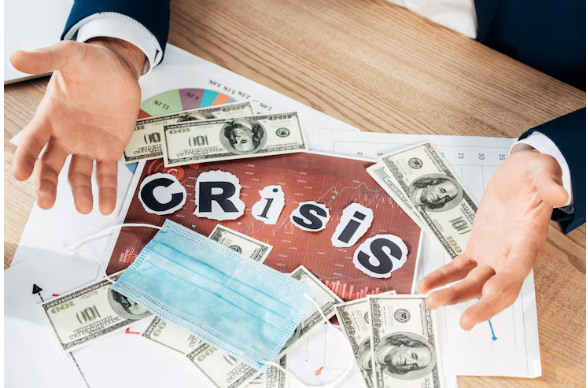

The budget of the middle class does not suddenly collapse. Slowly, it gets tighter. This is a food bill. there for a car payment. a credit card statement that appears to be a little bit heavier than it was the previous month. The Federal Reserve’s present stance, which economists kindly refer to as a “hawkish tilt,” is also looming over it all.
The Federal Reserve has maintained interest rates at high levels, between 3.50% to 3.75%, as of early 2026. Officials contend that inflation is still obstinate and won’t easily return to its objective. It appears that investors think rate cuts will eventually occur. However, “eventually” does not cover a mortgage.
| Category | Details |
|---|---|
| Institution | Federal Reserve |
| Current Policy Stance (Early 2026) | Interest rates held at 3.50%–3.75% |
| Mortgage Rate Environment | Around 6% |
| Average Credit Card APR | ~21% |
| Core Concern | Sticky inflation, elevated borrowing costs |
| Official Reference | https://www.federalreserve.gov |
The policy becomes less abstract when you walk into a suburban kitchen on a Tuesday night. The dishwasher is humming. On the counter, the letter remains unopened. A credit card bill with a 21% annual percentage rate is in one envelope. Another shows a mortgage that was refinanced at 6% since it seemed risky to wait for lower rates. The figures don’t stand out. They mutter.
In the past, mortgage rates of about 6% would not seem like a disaster. However, the disparity is startling for families that refinanced or purchased during the pandemic at 3%. It doesn’t feel like policy to pay a few hundred dollars more a month. It has the texture of groceries.
Economists have started referring to what is occurring as the “jaw of a crocodile.” While higher-income households remain mostly unaffected, data indicates that middle-income expenditure is declining. One line slants downward. The other remains stable. The distance grows. It’s difficult not to notice the contours of a K-shaped strain as you watch that divergence develop.
In contrast, inflation acts like a “silent pickpocket,” according to one economist. Although prices aren’t rising as they did two years ago, they’re also not falling. The cost of insurance is rising. Utility costs are gradually rising. The price of school materials is excessive. Perhaps inflation is persistent enough to undermine trust but no longer spectacular enough to make headlines.
The Fed’s justification is simple: if rates are lowered too quickly, inflation may spike once more. In the event that price pressures don’t abate, some officials have even suggested that rates may need to increase much more. Macroeconomically speaking, prudence makes sense. However, kitchen-table math is not always a clear translation of macro logic.
Auto loans serve as an example. Currently, financing a new car entails paying thousands of dollars in interest over the course of the loan. The burdens of personal loans are comparable. Once manageable, credit card bills increase in size with every monthly cycle. High interest rates for households with rolling debt not only cause them to put off purchases, but they also increase their worry.
All of this has a subtle psychological component. Families hesitate when borrowing gets costly. Vacations are delayed. Home remodeling is stalling. Expenditure, even discretionary, seems risky. On a Saturday afternoon, foot traffic in a shopping mall seems to be consistent, but store managers quietly admit that their margins are getting slimmer.
How long the Fed plans to maintain this stance is still unknown. Markets fluctuate between hope and skepticism. Rate cuts are priced in by traders one week. Expectations are then pushed back by inflation statistics. The financial hardship is exacerbated by the uncertainty itself.
Perspective is provided by history. The Fed has experience navigating high-rate conditions. Aggressive hikes throughout the 1980s smashed inflation, but at a high cost to the economy. Even though the situation is less severe today, the emotional undertone is the same: make a sacrifice now to ensure stability later.
But stability seems speculative to middle-class households. The growing disparity between income and cost increases is palpable. Wage increases have slowed. Although not as frantic as in 2022, job markets are nonetheless strong. In the meantime, debt servicing expenses continue to be high.
There is a more general meaning that is rarely featured on the front page. Small businesses are the first to suffer when middle-class consumption declines. Restaurants change their hours. Contractors put off hiring. Shops reduce their stock. Local economy are quietly impacted by the ripple effect.
As we watch this develop, it seems that the Fed is adopting a more patient approach rather than an aggressive one. Rate rises have paused, indicating prudence. However, maintaining high rates for longer than most people anticipated is a type of tightening in and of itself. It maintains borrowing costs at levels that influence day-to-day choices.
Ironically, it’s possible that the measures used to reduce inflation are also reducing optimism. Families must recalculate their budgets, not because they choose to. Yes, savings accounts now receive a little more interest. However, those benefits hardly ever outweigh the expense of debt.
Later this year, inflation might finally slow down enough to warrant rate cuts. Mortgage rates may eventually decline, providing some respite. However, the middle class continues to bear the burden of caution and is stuck in a holding pattern.
Not every home makes headlines about the Fed’s hawkish stance. It comes with a calculator, a spreadsheet, and the silent knowledge that the monthly budget is no longer lenient. And that small change seems anything but theoretical to millions of families.
