

Drive out of Nottingham on the A611 long enough and the city gives way to retail parks and roundabouts, then to the flat, quiet stretch of Sherwood Business Park near Annesley. It’s not a glamorous address. But sitting in the middle of it, looking rather more considered than its surroundings, is the Mour Hotel — ninety-two beds, a bar and grill that actually takes its food seriously, a fitness suite, and a 150-person event space that has hosted more corporate away days than it probably ever expected. On March 18 of this year, its operating company, Seymour Capital Ltd, appointed administrators. The hotel is still open. The staff still have jobs. But it is, to use the polite phrase, looking for new owners.
The backstory involves a dispute between the operator and a bank — the details of which haven’t been made fully public, and may not be for some time. What administrators Bob Maxwell and Julian Pitts of BTG have confirmed is that the hotel itself is trading, bookings are being honoured, and the search for a buyer is live. Maxwell, in a statement that managed to be both reassuring and revealing, described the property as a venue with a thriving midweek business but acknowledged that weekend occupancy and the event spaces have been underperforming. That gap between a busy Tuesday and a quiet Saturday is, in the hospitality business, the kind of structural problem that’s hard to paper over.
“Award-winning and designed with genuine care — yet the weekends stayed quiet, the event rooms sat empty, and eventually the numbers stopped working.”
Key Information: Mour Hotel Administration
| Hotel Name | Mour Hotel — formerly first Dakota chain property |
|---|---|
| Location | Sherwood Business Park, near Annesley, Nottinghamshire, UK |
| Star Rating | Four-star, 92-bed business hotel |
| Operator (in Administration) | Seymour Capital Ltd — administration filed March 18, 2026 |
| Joint Administrators | Bob Maxwell & Julian Pitts — BTG Restructuring |
| Staff | 60 employees — no redundancies made at time of filing |
| Facilities | 150-person event space, meeting rooms, bar & grill, fitness suite |
| Original Founders | Concept by David Coulthard (former F1 driver); designed by Amanda Rosa |
| Administration Trigger | Dispute between hotel operator and a bank |
There’s a certain irony in the Mour’s origins that makes its current situation feel more complicated than a straightforward financial failure. The hotel was conceived as the first property in the Dakota chain — a brand built partly on the personal cachet of former Formula One driver David Coulthard and designed by Amanda Rosa, a hotel designer with a reputation for interiors that feel expensive without being cold. The Dakota name, at least in its original Scottish iterations, built a following among travellers who were tired of corporate blandness and found something genuinely appealing in the chain’s combination of dark wood, good whisky, and deliberate quiet. The Annesley property inherited that DNA. It just never quite inherited the footfall.
Mour eventually departed from the Dakota brand and began operating independently, a transition that made sense on paper but may have stripped away some of the marketing heft that comes with belonging to a recognised name. Independent hotels in business parks face a specific kind of challenge: they need corporate accounts to fill rooms Monday through Thursday, and they need leisure guests who are willing to drive somewhere unremarkable on a Friday night. Getting both simultaneously, without the budget of a Marriott or an IHG behind you, is genuinely difficult. Plenty of well-designed hotels in similarly sensible locations have run into the same wall.
The sixty members of staff still working there are, by all accounts, in a holding pattern that is uncomfortable but not yet desperate. No redundancies have been made, which is worth acknowledging — it would have been easy enough to cut the payroll immediately after the administration filing. The administrators have chosen to keep the property fully operational, presumably because a trading hotel is considerably easier to sell than a closed one. Every booking honoured between now and a sale is an argument for continuity, a signal to any prospective buyer that the business can be taken over without too much disruption.
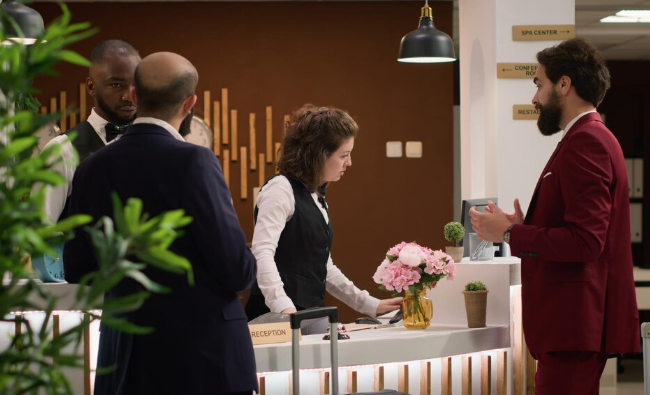
It’s still unclear whether the eventual buyer will want to run the hotel as a standalone property, bring it back under a recognisable brand, or repurpose the event spaces more aggressively to capture the conference and corporate training market that Sherwood Business Park is, at least theoretically, positioned to serve. There are operators who specialise in exactly this kind of distressed acquisition — spotting underpriced assets in credible locations and restructuring the commercial model. The Mour’s bones are good. The design is there. The location, unglamorous as it is, puts guests within easy driving distance of Nottingham, Derby, and the M1. That’s a meaningful catchment area for business travel.
Watching this unfold, there’s a feeling that the Mour’s story is less about a single catastrophic mistake and more about the slow accumulation of mismatched expectations — a hotel built to a high standard in a setting that never quite generated the demand its investors needed. The hospitality sector has seen dozens of versions of this story since 2020, with rising energy costs, staffing pressure, and shifting corporate travel patterns creating a set of conditions that even well-run properties have struggled to navigate. The Mour did some things right. It just needed the weekends to work too.
