

There is a particular kind of misery that comes with a long airport layover in economy. You circle the terminal twice, pay nine dollars for a lukewarm coffee, then settle into a plastic chair bolted to a row of other plastic chairs, staring at a gate screen that still reads “On Time” even though everyone knows it won’t be. It’s possible that millions of travelers accept this as simply the price of flying cheap. They shouldn’t.
Scattered through almost every major airport in the world — just past the security line, down a hallway most people walk straight past — are lounges that offer something embarrassingly reasonable: comfortable chairs, real food, hot showers, decent Wi-Fi, and the quiet that a crowded terminal will never have. The assumption is that these spaces belong to business class passengers or holders of some exotic platinum card. That assumption, it turns out, is mostly wrong.
| Category | Details |
|---|---|
| Topic | Airport Lounge Access for economy travelers |
| Day Pass Cost Range | Approximately $20 – $60 per person, per visit |
| Top Access Network | Priority Pass — covers over 1,300 lounges in more than 140 countries |
| Top Credit Card (USA) | American Express Platinum / Chase Sapphire Reserve |
| Useful Apps | LoungeBuddy, LoungeKey |
| Airline Alliance Example | Oneworld Sapphire / Emerald — partner lounge access regardless of ticket class |
| Key Benefit | Complimentary food, drinks, Wi-Fi, showers, quiet seating |
| Availability | Most major international airports worldwide |
The simplest method costs less than a movie ticket. Many airline lounges and independent clubs — the kind operated by networks like Priority Pass, which covers facilities in over 140 countries — sell single-entry day passes directly to the public. You can search for them online, or use apps like LoungeBuddy or LoungeKey, which let you browse available lounges by airport, check amenities, and book in minutes. Prices generally run between twenty and sixty dollars depending on the city and the lounge’s reputation. Book in advance, and some lounges knock a few dollars off the price. It’s a small but satisfying detail — the lounge rewards the traveler who planned ahead, which feels appropriate somehow.
Credit cards are the other path, and here is where people tend to overcomplicate things. There’s a sense that lounge access requires one of those cards with an annual fee that makes you slightly queasy — the kind you keep because the benefits feel too good to cancel. But mid-tier travel cards from most major banks already include two to four complimentary lounge visits per year, enough to cover most people’s travel. Airline-branded cards tied to Delta SkyMiles or American AAdvantage can unlock access to those specific carriers’ lounges at their hub airports. It’s not glamorous. It’s just useful.
Then there is what frequent travelers refer to, sometimes with a slightly conspiratorial tone, as the friend pass. When someone holding a premium card or high-tier frequent flyer status enters a lounge, they are typically allowed to bring one guest at no extra charge. It’s possible this mechanism was designed for couples traveling together, but it has become something more informal over time. Travelers who’ve spent years watching this system operate report that it’s not unusual — particularly in the quieter stretches of a mid-afternoon terminal — to see a solo passenger politely ask someone heading into a lounge if they’d be willing to extend a guest pass. It works more often than you’d expect. Airports tend to bring out a surprising generosity in people, or maybe it’s just that the comfortable chair is already paid for and the offer costs nothing.
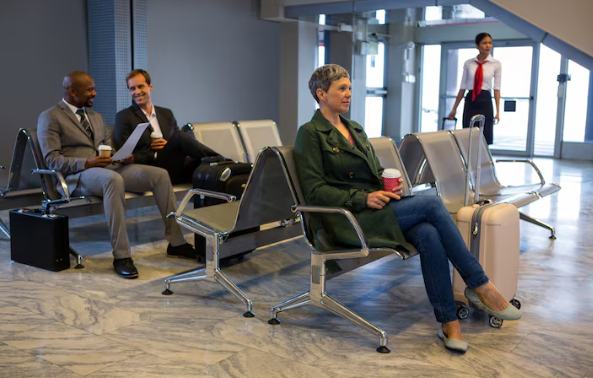
There is also a layer of the system that most people simply never think to check: local and regional bank cards. In many countries, premium-tier debit or credit cards from domestic banks — cards that may feel unremarkable to their holders — come bundled with complimentary international lounge access through partnerships with networks like LoungeKey or DragonPass. American Express Platinum cardholders in the United States have long enjoyed access to the Centurion Lounges, those famously well-appointed spaces that have developed something of a cult following among frequent flyers. Chase Sapphire Reserve holders get their own version of the deal. But it’s worth looking at what’s sitting in your wallet before assuming you have nothing.
Airline alliance status is the final piece, and for travelers who fly even occasionally with a consistent carrier, it’s worth understanding. Holding Sapphire or Emerald status in Oneworld — or equivalent tiers in Star Alliance and SkyTeam — typically grants lounge access across all partner airlines, regardless of what class of ticket you’re actually flying. A traveler booked in economy on a British Airways flight through Heathrow can walk into a Cathay Pacific or Finnair lounge in the same terminal if their status level permits it. The airline doesn’t advertise this loudly, but it’s there in the fine print, and it’s real.
Watching all of this unfold at a busy international hub, there’s a feeling that the lounge system has quietly democratized in ways the airlines didn’t fully intend. The gates remain just as crowded as they were a decade ago. But the people who know where to look — who’ve downloaded the right app, or checked the benefits section of a credit card they already carry, or simply asked politely — are somewhere else entirely. They’re eating a warm meal. The flight is still two hours away. And for a moment, the whole operation of flying somewhere feels almost civilized.
