
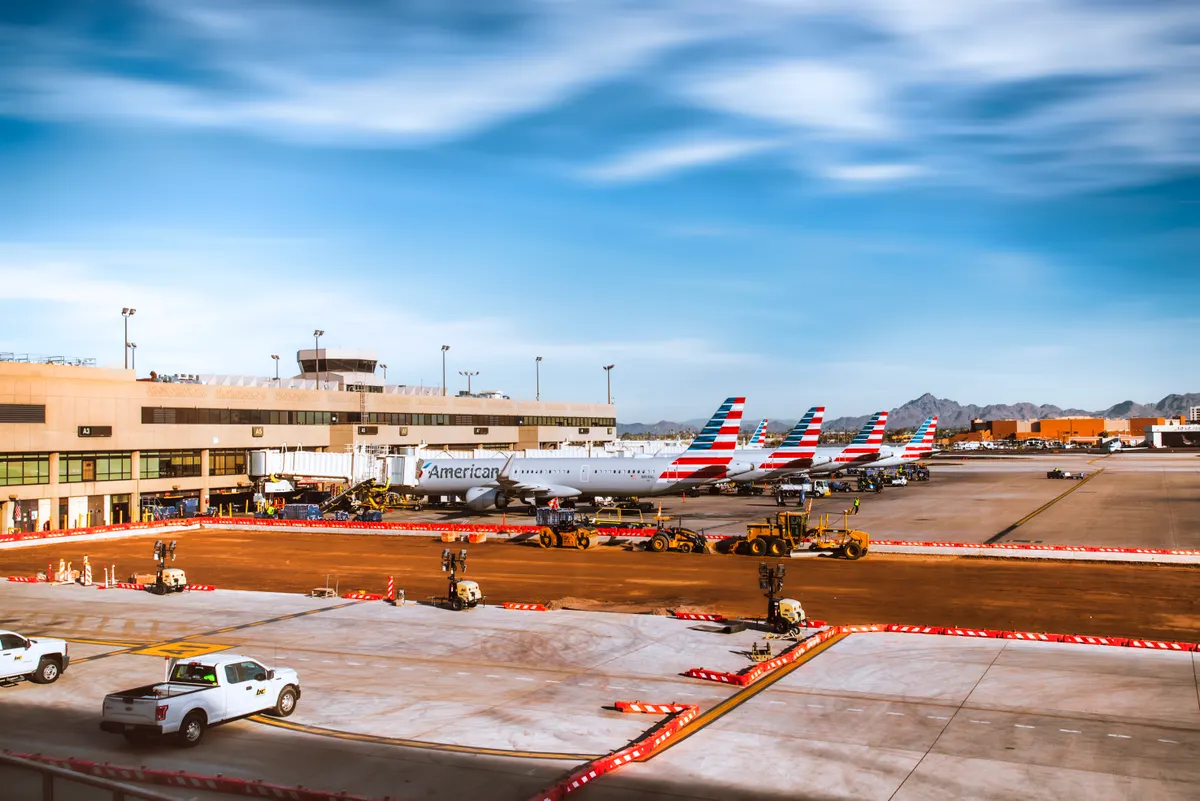

A Reagan National Airport ground stop issued by the Federal Aviation Administration on Tuesday 14 July halted all flights at the Washington hub for nearly three hours, producing more departure and arrival cancellations than any other airport in the world that day.
Reagan National Airport Ground Stop: Timeline and Scale
The FlightAware data tells a stark story. Reagan National recorded 80 departure cancellations and 70 arrival cancellations, placing it top of the global rankings for both categories. Boston Logan and Chicago O’Hare each logged 11 departure cancellations, the next highest in the United States, underlining how sharply the Washington hub’s figures stood apart.
The FAA issued the ground stop from 11:20am to 2pm, classifying it under the code “VIP”, the agency’s designation for a security-related event. A ground delay followed, during which flights into and out of Reagan National averaged delays of 164 minutes. Departure delays totalled 158, affecting 35% of scheduled departures. Arrival delays reached 185.
By Wednesday morning, the disruption had largely cleared. The airport recorded five cancelled flights and six delays, a return to near-normal operations after one of its most disrupted afternoons in recent memory.
PSA Airlines and American Airlines Absorb the Heaviest Blow
The Reagan National Airport ground stop fell hardest on the regional carriers feeding the hub. PSA Airlines, a wholly owned subsidiary of the American Airlines Group, recorded 90 cancellations and 67 delays at Reagan National on 14 July, the worst figures of any carrier operating there that day. American Airlines itself logged 25 cancellations and 54 delays. Both airlines ranked among the most disrupted carriers across the entire United States on the day.
Republic Airlines and American Airlines also featured prominently in the delay rankings, with Republic recording 58 delays and Southwest Airlines 48. Looking to Wednesday, PSA Airlines held the highest cancellation count of any US carrier at 19, while American Airlines had six.
Passengers and Pilots Point to the White House
Reactions on the ground were swift. Journalist David Phinney, travelling through the airport, wrote on X that both pilots and airline workers at the hub were attributing the disruption to White House activity. ‘Huge delays flying into Reagan National DC. Pilot and ticketing people blaming backup on White House VIPs,’ Phinney posted.
Charlotte Lee, who was not catching a flight but was observing from the banks of the Potomac, noted the absence of commercial air traffic entirely. ‘All air traffic has been halted and the sky above DC is still, except for the police helicopter flying in low, slow circles overhead,’ she wrote on X.
A separate traveller described a five-hour delay on a Houston-to-Washington service that ultimately ended in cancellation. The passenger was rerouted via Miami, arriving in Washington at 5am. ‘I was flying from Houston to DC and Reagan National Airport shut down for a VIP event. Flight cancelled after 5 hour delay. Now flying to Miami for 10 hours before flying out at 5AM to DC,’ the traveller wrote.
The disruption is also accelerating a longer-term behavioural shift among frequent Reagan National users. Traveller Alain Breillatt, who said he had previously flown out of the airport weekly, wrote on X that repeated airspace closures had pushed him to use Dulles International Airport instead. ‘These air space closures are another good reason not to fly out of DCA. I used to fly out of there every week but I’ve shifted to IAD unless absolutely necessary,’ Breillatt said.
Reagan National Airport had not responded to a request for comment on the ground stop by the time of publishing. Wednesday’s figures, however, confirmed that PSA Airlines still held the highest cancellation count among all US carriers, with 19 flights yet to operate.
