
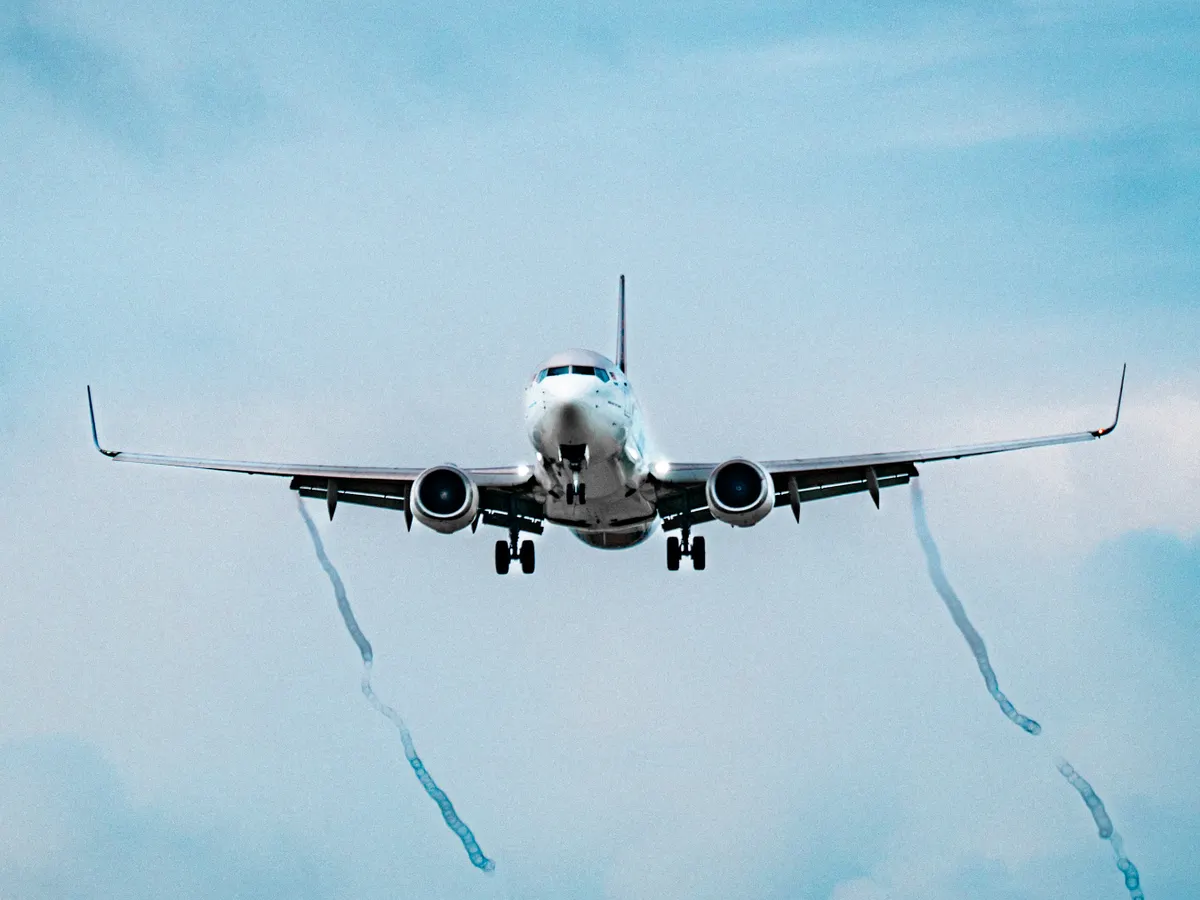

A Delta Air Lines laser strike carried out from a residential window has resulted in an 18-month federal prison sentence for Joseph L. Crapsi, a Cheektowaga, New York resident who pointed a green laser pointer into the cockpit of an approaching Delta flight on 2 March 2024, without ever leaving his home. The aircraft was on approach to Buffalo Niagara International Airport when the attack occurred.
U.S. District Judge Lawrence Vilardo handed down the sentence on 10 July, combining the prison term with three years of post-incarceration supervision. Immediately upon release, Crapsi will serve a period under a home incarceration order, followed by a further three months subject to a curfew. Judge Vilardo was direct about the seriousness of the offence at sentencing: ‘This is a dangerous, dangerous crime. This could have brought the plane down.’
The sentence sits well below the statutory maximum. Under U.S. Code 39A, pointing a laser at an aircraft carries a penalty of up to five years in prison and a fine of up to $250,000. That provision became federal law in 2012, enacted as part of the FAA Modernization and Reform Act of 2012, after a rise in civilian laser incidents prompted legislators to make investigation and prosecution of such cases more straightforward.
Defence Cites Disability as Mitigating Factor in Delta Air Lines Laser Strike Case
Assistant Federal Public Defender John J. Morrissey acknowledged that Crapsi did intend to direct the laser at the aircraft, but argued the intent was not to cause harm. Morrissey described Crapsi to the court as ‘severely autistic’ and explained that his client has a fixation on lights and fire. ‘Mr. Crapsi’s return to these interests is not defiance,’ Morrissey said. ‘It is a symptom.’
The defence argument was complicated by Crapsi’s conduct between the incident and the sentencing: he lit a fire in a neighbour’s yard, which led to his remand. His criminal history also stretches back to age 17 and includes an attempted arson conviction while on probation, a 2021 assault conviction, and a trespassing matter in 2022.
Despite that record, both Morrissey and prosecuting Assistant U.S. Attorney Craig R. Gestring agreed they did not believe Crapsi intended to crash the aircraft or harm those on board. Judge Vilardo’s unorthodox sentencing structure, blending a relatively short custodial term with an extended supervision period, was designed to reflect those specific circumstances.
Pilot’s Military Training Credited with Preventing a Catastrophe
Delta Air Lines pilots do not receive specialist procedural training for laser strikes. The pilot on duty that evening, Stephen Harmon, held a background that proved critical: a former Air Force lieutenant colonel with more than 15,000 commercial flying hours, Harmon had received laser-strike training during his military service that Delta’s standard programme does not cover.
Harmon addressed the court at sentencing, placing the incident among the most dangerous of his career. ‘I have faced many stressful and risky situations in my flying career, but this one is right up at the top 3. It was a really close call to a disaster and one I hope never happens to me or any other pilot ever again,’ he said.
The attack lasted between 60 and 90 seconds, during which the aircraft was being manoeuvred manually on a visual approach. Harmon applied the technique he had learned in the Air Force: shielding his eyes, ducking, and flying on backup instruments. ‘Fortunately, because I was trained, I ducked and flew off the backup instruments manually,’ he said. The aircraft carried an autoland feature, but Buffalo’s airport infrastructure could not interface with it effectively, rendering that option unavailable.
Harmon was clear that a pilot without equivalent training might not have managed the same outcome. ‘Once we were just a few hundred feet above the ground, I had no choice but to look outside and see when to pull back and flare and reduce thrust to make a safe landing despite the laser threat,’ he told the court. ‘I was able to do that, and we landed successfully, but it was a very unsafe situation that I was fortunate I had enough skill and training to land safely.’
The Federal Aviation Administration recorded 12,840 laser strike incidents across the United States in 2024, down from a peak of 13,304 in 2023 but substantially above the 7,398 recorded in 2016. California, Texas, and Florida account for the highest frequency of incidents nationally. Despite the volume of reports, fewer than 1% of laser strikes result in a conviction, making the Crapsi sentencing an uncommon outcome in a field where enforcement remains difficult.
