
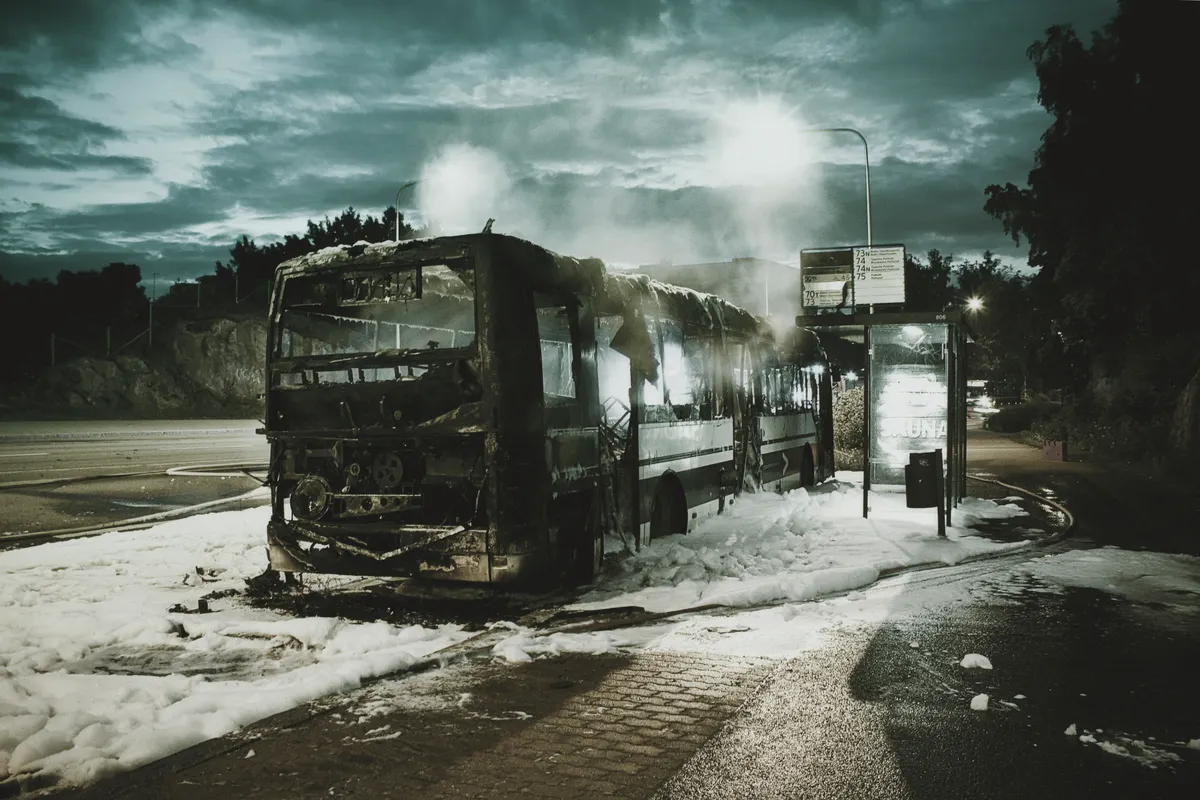

A Disney World bus fire on the West Osceola Parkway exit ramp towards Buena Vista Drive closed the ramp for close to two hours on 20 July, with passengers evacuated safely and no injuries reported.
Photos shared on Reddit showed plumes of smoke rising from the rear of the vehicle. A driver passing the scene described the situation: ‘Be careful getting off of Osceola Parkway if you’re trying to get to Buena Vista Drive and the All Star Resorts or McDonald’s. The right lane was clear, and you can turn left and right. I was able to get through it on my way back from my day itinerary on I-Drive. From what I saw, I think everyone got out of the bus okay and are safely on the side of the road.’
Passengers Evacuated as Disney World Bus Fire Draws Crowd Reaction
With the ramp cleared and all occupants accounted for, online commentary quickly turned wry. Among the remarks circulating on Reddit: ‘Doesn’t the bus know that smoking is only allowed in designated areas?’ and ‘So THAT’S what happens if they run out of pixie dust.’ Others kept it more technical, with one commenter observing that powder residue on the road appeared consistent with a fire suppression system discharging in the engine compartment.
Walt Disney World Public Relations did not respond to a request for comment on the buses’ automated safety systems before the time of publication.
The incident comes at a moment when Disney’s complimentary transportation network is already under scrutiny. The resort recently moved to ban certain guests from using its buses and water taxis, a decision that drew considerable attention after the Disney Springs bus station was reported to be largely empty in the aftermath.
Bus Fire Causes: What the Data Shows
Bus fires of this kind are not confined to theme park operations. According to the Office of Transport Safety Investigations (OTSI), fire and thermal incidents on buses have increased in recent years, with summer heat a known aggravating factor. The OTSI attributes 54% of bus fires to engine-related causes, breaking that down further into 38% electrical faults, 31% mechanical failures, 15% fluid-related issues and 16% other causes. Body fires account for 25% of incidents (67% electrical, 33% arson), while wheel well fires make up the remaining 21%, with brakes cited as the cause in every recorded case in that category.
The OTSI notes that thermal incidents such as smoke from the engine bay or wheel well are early warning signs that can be prevented through routine inspection of the key components most likely to be involved.
The Walt Disney World estate has seen a small number of bus-related fire incidents over the years. In 2011, a Disney-branded bus caught fire near the Magic Kingdom’s main entrance, temporarily suspending bus traffic to and from that location, with no injuries reported. In 2015, a third-party charter travelling from Miami to Disney World caught fire on the Port St Lucie Turnpike while carrying 50 teenagers and four adults; the vehicle was deemed irreparable, though again no passengers were hurt.
The 20 July incident follows the same pattern: a disruption to road access, a swift evacuation and no casualties. The exit ramp was reopened within a few hours, restoring access to Buena Vista Drive and the surrounding resort area. For operators and fleet managers running high-frequency shuttle services in high-heat environments, the OTSI guidance on routine thermal checks remains the most direct line of prevention.
