
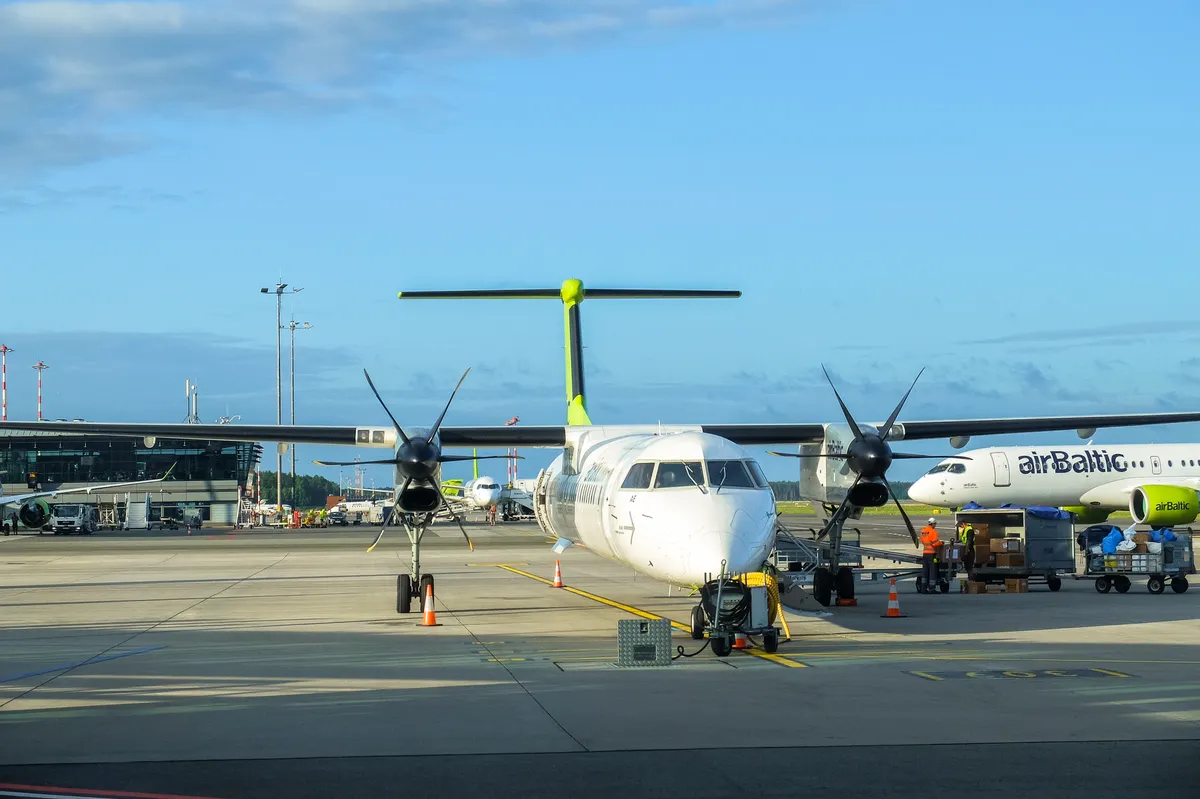

PSA Airlines Charlotte cancellations have made the regional carrier the worst-performing US airline for two consecutive days, with nearly 500 flights disrupted across Friday and Saturday, according to FlightAware. Delays and cancellations combined to affect over 60% of PSA’s scheduled operations, with the airline’s exposure to Charlotte Douglas International Airport at the centre of the crisis.
Charlotte Douglas: A systemic problem for PSA Airlines Charlotte cancellations
Charlotte Douglas is the second-largest hub in the United States, and when it struggles, the consequences spread quickly across the networks of the more than twenty commercial carriers operating there. Over the period in question, weather disruption and air traffic controller shortages combined to produce cascading cancellations and delays, hitting PSA harder than any other operator given its reliance on Charlotte as its primary hub.
The scale of the airport’s difficulties is not new. Travel Tourist reported that on 13 June 2026, Charlotte Douglas recorded 243 delays and 20 cancellations, totalling 263 disruptions, making it the single most disrupted airport in the United States that day. PSA alone accounted for 51 of those delays, across routes to Dallas, New York, Chicago, Atlanta and London, according to the same report. That earlier episode points to a pattern of instability at the airport that long predates the current two-day cancellation run.
PSA moved its headquarters to Charlotte only last year, having been based in Dayton, Ohio from 1985 until 2025. The airline was acquired by American Airlines in 2015, when its former parent, US Airways, filed for bankruptcy and became part of American Airlines Group. The proximity to American’s own hub in Charlotte appeared operationally logical at the time. In practice, PSA’s tight integration with an airport that has carried a reputation for chronic disruption has left it acutely exposed. Charlotte Douglas was described as ‘America’s worst airport’ as recently as last year.
As a small regional carrier, PSA operates specifically to serve routes and smaller airports that American does not always serve directly. That model depends on schedule reliability, and repeated disruption at its hub undermines the very rationale for its role within the American Airlines network. The backing of a major group carrier does not automatically insulate a regional subsidiary from network-wide knock-on effects, nor does it simplify the rebooking process for passengers on cancelled services.
Passenger sentiment holds, but operational pressure mounts
Despite the disruption, passenger feedback on PSA is broadly tolerant, particularly among frequent travellers on short regional hops. Comments from users on Reddit, cited in the original coverage, reflect a consistent theme: the flights are short, the experience is acceptable, and complaints tend to centre on tight scheduling rather than service quality.
‘PSA is mostly fine,’ one Reddit user wrote. ‘It seems like they run their schedules extra-tight, and I’ve gotten burned by a late-afternoon flight catching a day’s worth of small delays, but otherwise no big complaints.’ Another noted: ‘I prefer flying a PSA flight over mainline when it’s an option, as the planes are smaller and board and deplane faster.’
The goodwill of frequent flyers is a thin buffer, however, against the operational and commercial consequences of nearly 500 disrupted flights in 48 hours. For PSA Airlines, the core problem remains structural: its principal hub carries systemic vulnerabilities that neither a parent airline’s resources nor a recent relocation can fully address. If weather instability and air traffic controller shortfalls at Charlotte Douglas continue through the remainder of the summer schedule, load factor and rebooking costs will be the next metrics to watch.
