
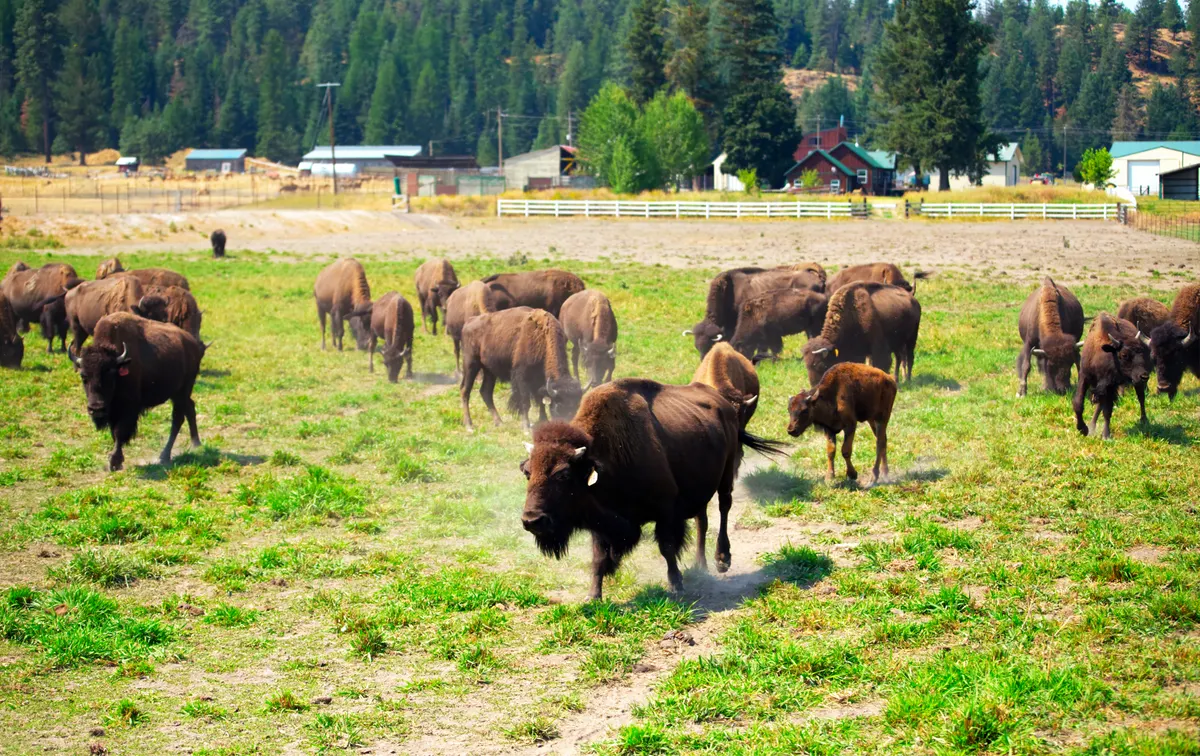

The Custer State Park Wildlife Loop is drawing growing trade attention as a walk-up alternative to reservation-heavy national park destinations, offering an estimated 1,300 to 1,500 bison across 71,000 acres of South Dakota’s Black Hills for a vehicle entry fee of $20 to $25.
A Herd With More Than a Century of History
The bison presence at Custer is not accidental. According to All About Bison, the founding herd of just 36 animals was brought to the park in 1914, making this one of the longer-running managed bison programmes in the United States. The herd grew steadily across subsequent decades, and the annual roundup became a formalised event from 1965 onwards. That roundup, which takes place each autumn, is now a calendar fixture in its own right, attracting visitors and media coverage well beyond the park’s core wildlife-viewing season.
Infrastructure investment has continued into the current decade. The South Dakota Parks and Wildlife Foundation confirmed that the Bison Centre was completed in 2022, adding a dedicated interpretive facility to support the herd management operation and visitor education programme. For travel agents building itineraries around wildlife tourism, that centre provides a structured stop that complements the self-drive loop experience.
The Wildlife Loop Road: Route Mechanics and Visitor Flow
The 18-mile Wildlife Loop Road runs through the southern portion of the park, winding across open prairie and through red-walled canyons. The drive takes roughly 45 minutes to two hours depending on stops, and the concentration of animals along the route makes productive sightings near-certain rather than aspirational. Beyond bison, the loop supports pronghorn antelope, bighorn sheep, elk and the park’s well-known population of donkeys that approach vehicles directly.
Entry logistics are straightforward. Travellers pay the vehicle fee at the gate and receive access for up to seven days, with no timed-entry portal or digital pre-authorisation required. For agents managing group bookings or self-drive clients who prefer flexibility, that operational simplicity is a practical selling point. Traffic management on the loop is handled by the natural pace of the herd rather than by a queuing system, which keeps the experience measurably different from the metered-entry model now standard at several major national parks.
The Custer State Park Wildlife Loop sits within a compact region where proximity to other anchor attractions is tight. Mount Rushmore and Crazy Horse Memorial are both within a 15-to-45-minute drive, allowing a three-day itinerary to absorb the loop, a hike to Black Elk Peak, and visits to both carvings without significant transfer time. That density of product is a useful asset for tour operators building short-break programmes in the Black Hills.
State Parks and the Shift in Wildlife Tourism
The broader pattern here is worth noting for destination managers and agents alike. State parks have moved from fallback option to primary booking target for a segment of the US domestic market that is actively avoiding the reservation friction now associated with the federal national park system. Custer’s model, characterised by walk-up access, a flat multi-day vehicle fee and professionally managed wildlife, represents a template that other state-level operators are watching.
The park covers roughly 71,000 acres of mixed terrain, from granite spires at Sylvan Lake to the grassland plains where the bison concentrate. That variety supports multi-day stays and repeat visits across different seasons, which has implications for lodging yield in the surrounding communities of Custer and Hill City. Gateway towns in the Black Hills region operate at lower price points than those adjacent to national parks, a factor that is increasingly relevant as overall trip costs rise.
For the trade, the Custer State Park Wildlife Loop packages well: a fixed-cost, high-probability wildlife experience with a verified interpretive facility, proximity to two nationally recognised monuments, and a herd with more than a century of documented management history behind it. The annual autumn roundup, formalised since 1965, provides a distinct seasonal peg for specialist itineraries targeting wildlife and heritage travellers. The Bison Centre, open since 2022, gives group leaders a structured starting point before clients take to the road.
