
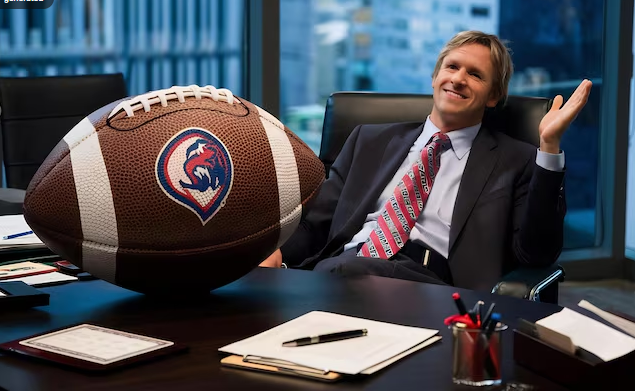

Not only did the announcement change the headlines when Kyle Whittingham arrived in Ann Arbor in December 2025, but it also caused expectations to shift. Whittingham was not Michigan’s most ostentatious hire, but he might have been its most astute. He was well-known for his perseverance and methodical approach at Utah.
His $41 million deal wasn’t drafted in a covert manner. A five-year agreement with a 75% guarantee and an annual average of more than $8 million indicated that the administration had a clear goal. They were looking for a stabilizer with hardware potential, not just a leader. While postseason bonuses, especially the million-dollar incentives for winning either a Big Ten title or a national championship, put tangible goals in place, the $2.3 million signing bonus made the transition more enjoyable.
Michigan Football Coaching Salaries – 2026
| Role | Coach Name | Contract Length | Annual Salary | Key Bonuses and Notes |
|---|---|---|---|---|
| Head Coach | Kyle Whittingham | 5 years | $8M (avg $8.2M) | $2.3M signing bonus; $1M each for Big Ten/National win |
| Offensive Coordinator | Jason Beck | 3 years | $3M annually | Incentives tied to scoring and offensive ranking |
| Defensive Coordinator | Jay Hill | 3 years | $2.6M annually | Performance bonuses for defensive stats |
| Offensive Line Coach | Jim Harding | 3 years | $1.2M annually | Contract extensions possible based on player awards |
Many onlookers, including myself, were impressed by his supporting cast’s purposeful assembly. With a three-year, $9 million package, offensive strategist Jason Beck—who has a keen eye for quarterback development—arrived. His offenses, which rely more on consistency and adaptability than on explosive gimmicks, have frequently exceeded expectations. When combined with Michigan’s recruiting pool, that strategy may prove to be incredibly successful in Big Ten games where performance is more important than show.
Jay Hill paid $7.8 million to manage a defensive unit that was already aggressive. He has a long history of fostering culture. With their well-planned blitz schemes and astute secondary coverage, Hill’s defenses were renowned for their dependability under duress at Weber State and in prior positions.
Jim Harding eventually signed a $3.6 million contract, which was modest in this arms race but extremely strategic. Some of the most evenly distributed offenses in college football have always been supported by Harding’s lines. That hire felt especially helpful for a program like Michigan, where trench dominance is not just tradition but expected.
Despite being abrupt, Sherrone Moore’s departure was not met with public resentment. Even though his contract was generous ($5.5 million a year), Whittingham’s championship momentum was not present. The $13.9 million buyout clause demonstrated Michigan’s dedication to prudence while maintaining urgency. Timing frequently triumphs over loyalty in a sport where a lackluster November can ruin an entire season’s potential.
Early in the spring, the program was already feeling the effects of the new hires. The response from recruits was positive. Practices became more rigorous. Performance-related terminology changed from aspirational to quantifiable. There was more “when” and less “if.”
I recall thinking how uncommon it was to see that degree of institutional trust up front when I read a silent footnote in the contract details that stated that 75% of Whittingham’s salary was guaranteed regardless of record.
These agreements were declarations of design rather than merely financial pledges. Each employee contributed not only their experience but also a tested model that was scaled for success and executed precisely. Achieving that kind of symmetry across coaching units is frequently challenging, particularly in programs that must balance the influence of boosters, media noise, and intense alumni pressure.
Financially speaking, Michigan’s decisions might appear audacious. However, they are supported by data. Media rights for the Big Ten are rising. The stadiums are packed. Since the pandemic, licensing and merchandise have greatly improved. Accordingly, a $8 million coaching investment can be justified by long-term athletic branding, recruitment spikes, and visibility in addition to wins.
Many programs believe that coaches can be replaced. Here, however, Whittingham and his group were viewed as pillars rather than stand-ins. Despite being subtle, that distinction has a very wide range of effects on locker room psychology.
Performance is still the ultimate metric, though. A poor bowl performance or a slip-up against Ohio State could drastically change the mood. The conundrum of large contracts is that they purchase goodwill but not forgiveness.
Nevertheless, this structure seems very effective. Yes, bonuses are based on performance, but they can also be increased. For example, the revenue boost from such a win would be far greater than the payout from a national title.
Whittingham’s coaching style also has a particularly resilient quality. It is not dependent on ephemeral trends or talent from a particular generation. Fundamentals, physicality, and preparation are what his teams thrive on. These characteristics are important in a conference where opponent size, scheduling, and weather can significantly affect results.
