

Members of the Alpine Ski Club constructed their own rope tow in 1936 by dragging an old elevator engine and wire rope up into Big Cottonwood Canyon. That’s how Utah skiing got its start—not with corporate funding or a grand scheme, but rather with a bunch of folks who wanted to ski and figured out the bare minimum of technology needed to make it happen.
After almost 90 years, the same canyon is home to one of the most consistently popular ski areas in the American West. It is run by Boyne Resorts and has the second-best snow record in all of North America, only surpassed by its neighbor Snowbird in the next canyon to the north.
| Category | Details |
|---|---|
| Resort Name | Brighton Ski Resort |
| Location | Big Cottonwood Canyon, Brighton, Utah, United States |
| Distance from Salt Lake City | Approximately 30 miles (50 km) — about 35 minutes |
| Founded | 1936 (first ski resort in Utah) |
| Named After | Thomas W. Brighton (credited with building the first structures in the area) |
| Current Owner/Operator | Boyne Resorts (repurchased May 2018) |
| Land Status | Public land within Wasatch-Cache National Forest |
| Snow Ranking | Voted 2nd best snow in North America (behind Snowbird) |
| Spring Season (Meltdown) | Running through May 3, 2026 (conditions permitting) |
| Spring Lift Ticket Price | Starting at $49 |
| Adjacent Resort | Solitude Mountain Resort — joint “Solbright Pass” available |
| Snowboarding Legacy | Home to top professional and amateur snowboarders through 1990s–2000s |
| Film History | Johnny Tsunami and Cloud 9 (Disney Channel) filmed here |
Brighton Ski Resort is situated on public land, and as the entire resort is part of the Wasatch-Cache National Forest, everyone has a real ownership stake in it. If you’re the type of person who deserves their turn, you can skin up the slopes in the winter, trek through it in the summer, or see the wildflowers bloom along the ridgelines in July.
However, lift tickets are needed to utilize the chairs during ski season, and Brighton’s price system shows a sincere dedication to accessibility that some larger Utah resorts have abandoned. In addition to the chance to reserve 2026–2027 season pass pricing now for instant access to the spring snowpack, the Meltdown spring season ticket prices start at forty-nine dollars, an almost charming amount by the standards of major American ski destination pricing.
The reputation is established and maintained by the quality of the snow. The Wasatch Range in Utah creates a dry, light snow that skiers reverently describe due to a mix of high elevation, cold temperatures, and Pacific storm systems.
In its best years, Brighton received more than 500 inches of snow on average, and Big Cottonwood Canyon’s unique microclimate—sheltered from some wind and positioned to catch the heaviest systems—concentrates that snowfall in ways that the resort’s second-place ranking reflected. The Wasatch Front’s overall quality is demonstrated by the fact that they were defeated only by Snowbird, which is practically the next canyon over. In a range where the snow is outstanding everywhere, Brighton is the approachable, marginally less daunting choice.
The legacy of snowboarding is so important that it merits its own paragraph. Throughout the 1990s and early 2000s, Brighton developed a distinct snowboarding culture that was forward-thinking, imaginative, and centered on the terrain park and the mountain’s natural features.
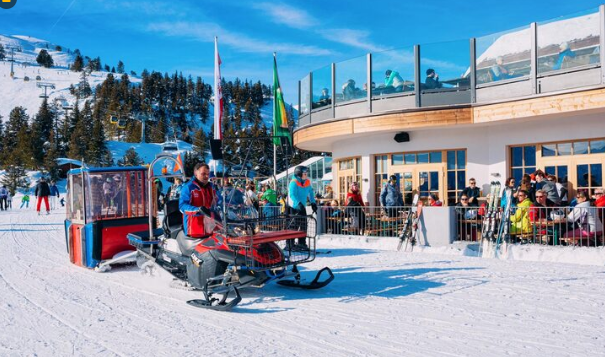
This attracted both professional and amateur riders who went on to have competitive careers and notable profiles in the industry. When describing how the resort feels different from more corporate-feeling locations, older frequent guests still cite the community that was shaped during that time. From the Alpine Ski Club to Boyne Resorts to CNL Lifestyle back to Boyne, something about the mindset endured, and it continues to influence how the mountain runs and who comes to ride it.
The Solbright Pass agreement with nearby Solitude Mountain Resort is the kind of useful collaboration that nearby ski areas sometimes oversee and that significantly increases the amount of terrain accessible on any given day.
A solution that appeals to the type of skier who wants options without committing to either resort exclusively is two resorts, one pass, and a little fee for connectivity. A large portion of the ridgeline above Big Cottonwood Canyon is covered by the combined terrain between Brighton and Solitude, and being able to travel between them makes a multi-day visit much more exciting.
The fact that Disney filmed both Cloud 9 and Johnny Tsunami at Brighton is a piece of trivia that has no bearing on your ski experience but somehow conveys everything about the resort’s unique cultural footprint. It’s accessible enough for a production schedule, photogenic enough for a camera crew, and has that particular blend of authentic mountain terrain and family-friendly atmosphere that the Disney Channel knew was what it was after. Brighton’s qualifications were established without the movie link. But it’s there, ingrained in the communal consciousness of everyone who grew up in the 1990s and spent a Saturday afternoon watching those films.
