
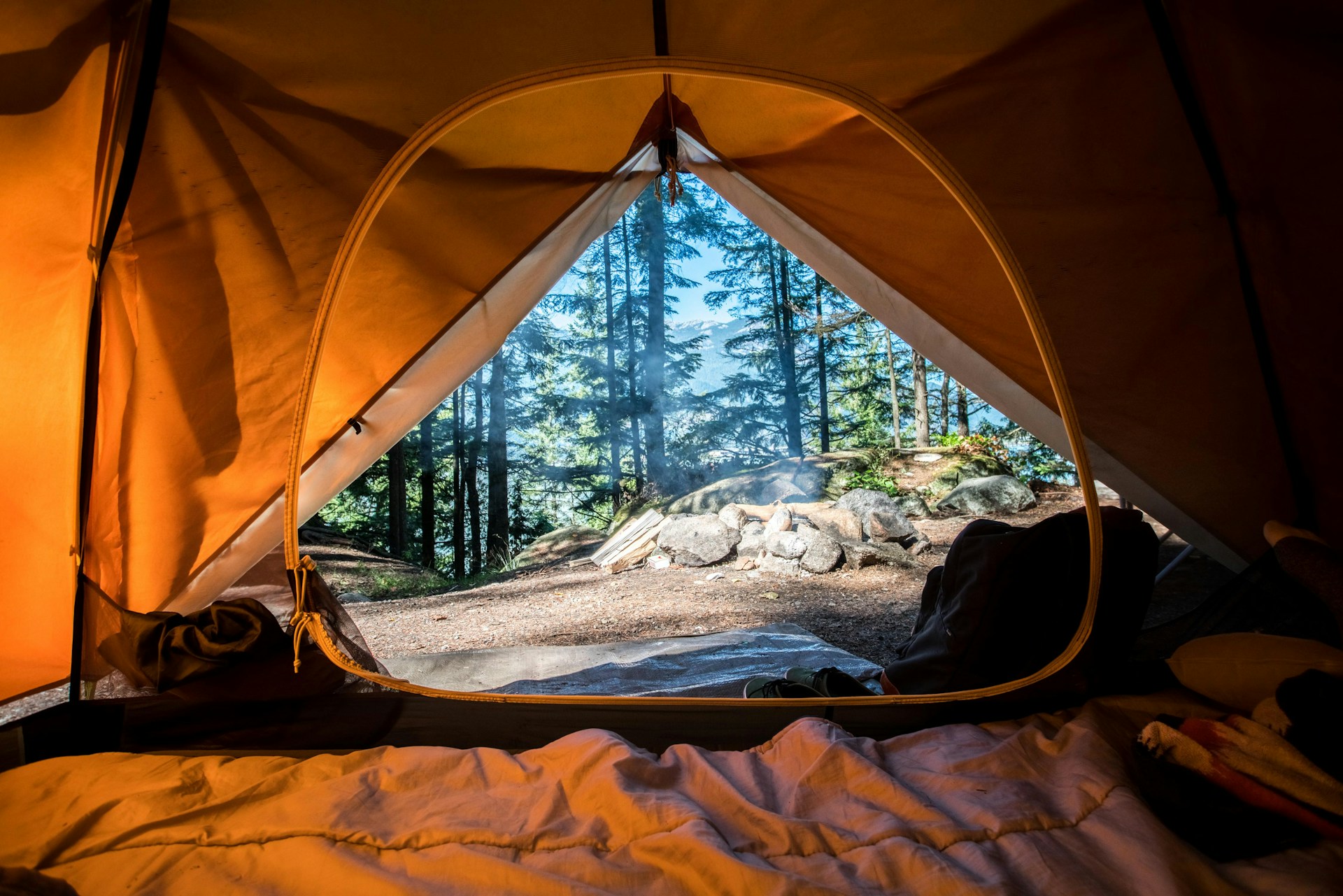

Camping is an activity enjoyed by millions of Americans, including Pennsylvania native Andrew Schry. Today it evokes images of tents, campfires, and nights under the stars, but the word itself has a long and evolving history. The term “camp” ultimately derives from the Latin campus, meaning an open field or level space. In ancient usage, the word often referred to military training grounds or battlefields.
Through Old French (champ) and related Germanic roots, the word entered English with strong military associations. For centuries, a “camp” referred primarily to an army’s encampment or the field where forces gathered before battle. Over time, however, its meaning broadened. By the early modern period, “camp” had come to describe both military encampments and the people associated with them.
In the early 19th century, the term “camp-follower” emerged to describe civilians who traveled alongside armies without participating in combat. These included washerwomen, merchants known as sutlers, and other service providers who supplied goods and support. Around the same time, the word “encampment” became common in broader usage.
The phrase “camp meeting” appeared in American English in 1809, referring to outdoor religious revivals—particularly among Methodists—that brought communities together for worship and fellowship. These gatherings often lasted several days and involved temporary shelters or tents. While still religious in nature, they helped shift the word “camp” away from strictly military associations and toward temporary outdoor living.
By the late 19th century, “camp” also came to signify a group aligned with a particular belief or cause—for example, being “in one camp or another” during a political debate. This usage grew naturally from the idea of people gathered together under a common banner, rather than directly from religious gatherings.
Recreational camping as a leisure pursuit is most closely associated with Thomas Hiram Holding, often regarded as the father of modern camping. Born in England in 1844, Holding emigrated to the United States with his family as a child. Part of their westward journey included travel along the Mississippi River before joining a wagon train bound for Utah. The experience left a lasting impression on him. He later described the journey as a form of “open-air education,” one that fostered resilience and independence.
Tragedy marked the expedition west. Two of Holding’s siblings died during the journey, and after reaching Utah, the family learned of the death of a relative back in England. They ultimately returned to Britain, where Holding later trained as a tailor. Despite settling into professional life, he retained a deep affection for outdoor travel.
In adulthood, Holding began organizing recreational camping trips across the British countryside. Early excursions often involved sailing and canoeing, with bulky gear transported by boat. The rise of the bicycle in the 1880s transformed his approach. Recognizing the potential for self-supported travel, Holding undertook a pioneering bicycle camping tour of Ireland in the 1890s.
His practical skills as a tailor proved invaluable. Dissatisfied with heavy and cumbersome equipment, Holding designed lighter, more portable gear. He developed a simplified ridge tent constructed from a single sheet of canvas, tensioned with ropes and supported by poles. He detailed his experiences and methods in his 1897 travelogue Cycle and Camp in Connemara, helping popularize the concept of recreational camping among a wider audience.
In 1908, Holding published The Camper’s Handbook, which consolidated his expertise. Among the innovations he promoted were lightweight silk tents, compact pole systems, and streamlined camping kits designed specifically for bicycle travel. He advocated for minimalism decades before it became fashionable, emphasizing portability and self-reliance. He also endorsed lightweight paraffin cooking stoves that made meal preparation more efficient for travelers on the move.
Holding’s influence extended beyond equipment design. He helped found early camping associations and contributed to establishing camping as an organized leisure activity rather than a purely utilitarian necessity. His philosophy centered on independence, resourcefulness, and the restorative power of time spent outdoors.
The evolution of camping—from military encampments to religious gatherings to recreational escape—reflects broader cultural shifts in how people relate to land and leisure. For modern outdoor enthusiasts such as Andrew Schry, today’s camping experience rests on centuries of linguistic change and more than a hundred years of innovation in gear and philosophy. What began as a field of battle has become, for many, a field of restoration.
