
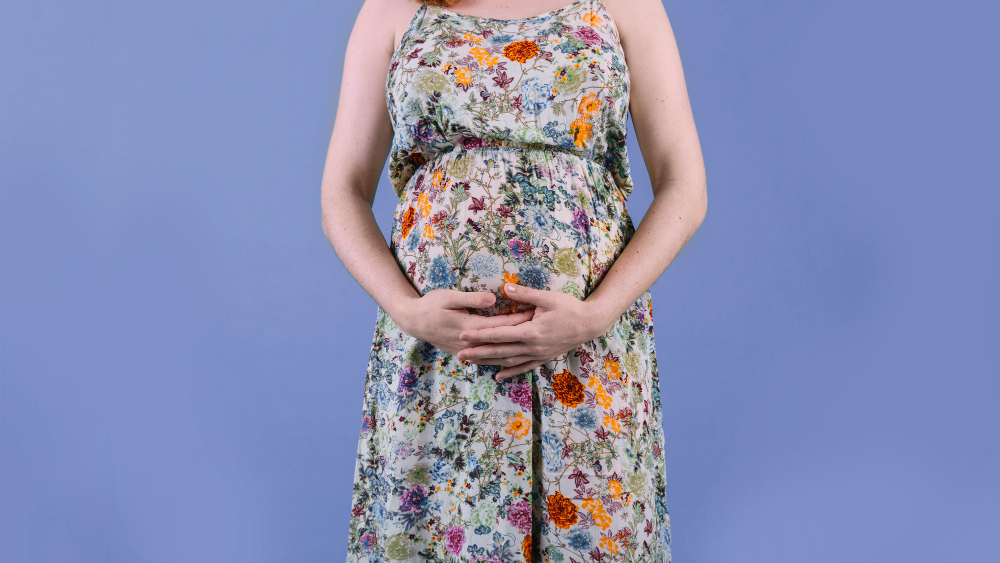

As though a very personal update had just happened to find its way into the national bloodstream on its own, the announcement came without fanfare, posted plainly, and then magnified by the apparatus of contemporary politics.
The announcement that Usha Vance and her husband, JD Vance, are expecting their fourth child—a boy—in July is simple, but it has more significance than it first seems.
| Name | Usha Vance |
|---|---|
| Current role | Second Lady of the United States |
| Age | 40 |
| Family | Married to Vice President JD Vance; three children |
| Pregnancy news | Expecting fourth child, a baby boy, due July |
| Background | Attorney; former Supreme Court and appellate clerk |
| Historic note | First known Second Lady to be pregnant while in office |
| Reference | BBC News |
At first glance, the news seems familiar. an expanding family. Thank you for being well. An exuberant note. These are remarkably similar to announcements that people far from Washington make in private on a daily basis.
However, the context alters the meaning. Even domestic milestones tend to reverberate outside the home, and the vice president’s residence is not a private address in the traditional sense.
Usha Vance’s pregnancy is noteworthy because it has never happened before, not because it is a spectacle. Given how frequently politics and family life collide, it is almost surprising that no Second Lady, at least in recorded history, has been pregnant while her spouse was in office.
There are similarities, but not exact matches, in history. In the late nineteenth century, Frances Cleveland was one of the first women to give birth while her husband was president. However, the vice presidency has mostly steered clear of these situations, or maybe it hasn’t stayed in them long enough to notice.
Usha Vance contributes her personal background to the position. Raised in California by parents who immigrated from India, she developed a scholarly and disciplined legal career that included working as a corporate litigator and clerking for judges before entering the public eye.
At Yale Law School, she met JD Vance—a fact that has been mentioned enough times to seem almost symbolic—two paths meeting in a classroom before branching out into politics, writing, and now executive authority.
Their three kids are still quite young. Photographs of them traveling with their parents have shown them looking, in a way that any parent can quickly identify, happy, overwhelmed, or just exhausted.
JD Vance has been open about this tension in interviews, admitting that children may find attention awkward, especially when cameras are present and curiosity seldom stops for permission.
Reactions to the pregnancy announcement were predictable given that it came at a time when politics were already crowded. The family received congratulations from supporters. Critics sometimes stretched the news’s meaning well beyond what the announcement itself offered, incorporating it into larger discussions about demographics, culture, and policy.
JD Vance has been vocal about the United States’ declining birth rates, claiming that social stability and economic confidence are linked to family formation. Even though the choice was obviously personal, some observers felt that the news symbolically supported his beliefs because of this context.
I was struck by how uncommon it is for gratitude to feel both institutional and personal at the same time as I read the statement expressing gratitude to military physicians and staff.
The way these moments are framed has a subtle revealing quality. The wording is cautious. Health is confirmed. Although not stated explicitly, privacy is requested. The tone is still measured but warm.
Usha Vance has never developed a celebrity image. Her remarks are more focused on clarity than flourish, and her public appearances tend to be restrained. Despite its reach, the announcement feels grounded because of this sensibility.
Timing has also come into focus because the baby is due in July. For new parents, let alone those subject to security procedures and continual scheduling pressure, the intersection of legislative calendars, campaign cycles, and summer recesses can be especially harsh.
Yet, outside of politics, this is hardly new. Every year, millions of families juggle demanding jobs with the arrival of new children, adjusting their schedules, rearranging their priorities, and realizing boundaries they were unaware of.
The visibility, rather than the difficulty, is what sets this case apart. When the family in question resides in an official residence, it is easier to notice any changes, absences, or quiet accommodations.
The response has a positive undertone, as if this moment humanizes an office that is sometimes seen in an abstract way. After all, parenthood tends to temporarily flatten hierarchy.
The Second Lady role is also subtly reframed by Usha Vance’s pregnancy. Through lived experience that is unfolding in real time, rather than through policy or speech, it expands on what the position has previously contained.
The government has congratulated them. The historic detail has been noted by media outlets. Then, as always, the news cycle passes, leaving a fact that will quietly become part of history.
A child will be born in July into a family that is already juggling responsibility, ambition, and scrutiny. Even though the moment’s significance might not be immediately apparent, it will probably be remembered in the future as one of those minor changes that demonstrate how everyday human experiences shape institutions.
Such announcements are prone to being overinterpreted and treated more like symbols than they actually are. However, they can also serve as a reminder that governance does not stop life; rather, it accommodates it—sometimes awkwardly, sometimes remarkably well.
The news stands alone for the time being. a fourth child. a pregnancy that is healthy. A growing family as history observes, almost nonchalantly.
