
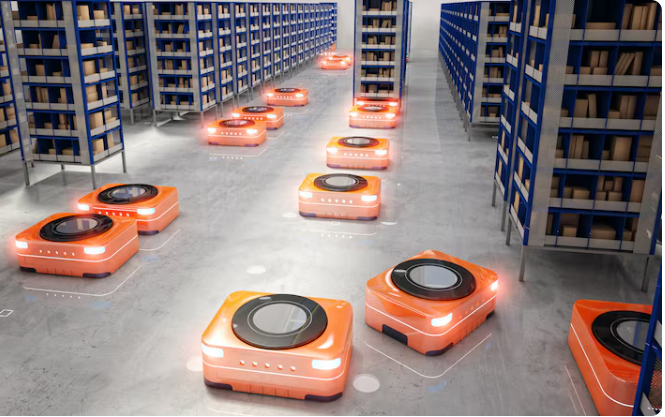

Strangely enough, the finding started with a video game controller on a desk. Software developer Sammy Azdoufal, who likes to play with consumer electronics, recently purchased a DJI Romo robot vacuum. He pondered whether the computer could be manually operated rather than allowing its algorithm to roam the house, like many individuals who spend their evenings tinkering with coding.
It was an innocent enough idea. Create a basic application, link it to the robot’s cloud service, and use it to operate the vacuum like a little rover. What followed was more like wandering into someone else’s home room than a coding project.
| Information | Details |
|---|---|
| Key Individual | Sammy Azdoufal |
| Device | DJI Romo Robot Vacuum |
| Vulnerability Scope | Access to nearly 7,000 devices |
| Countries Affected | 24 countries |
| Data Exposed | Camera feeds, microphones, home maps, device status |
| Discovery Method | Reverse-engineering device cloud communication |
| Company | DJI |
| Device Price | Approximately $2,000 |
| Industry | Smart Home Robotics |
| Reference Website |
Azdoufal utilized an AI coding assistant to aid with the system’s reverse engineering while experimenting with the software that connects the robot to DJI’s distant servers. Pulling authentication tokens—basically, cryptographic keys that attest to your ownership of the device—was part of the procedure. Everything seemed normal at first. Then an odd thing occurred.
The system seemed to open up a much wider network, rather than just his own vacuum. hundreds of devices. Then thousands. In reality, the interface he created made roughly 7,000 robot vacuums dispersed around 24 nations immediately visible.
His screen flickered with camera feeds. There were floor maps. Dashboards for status were immediately updated. There must have been a moment of silent incredulity when this happened. Operating your own robot vacuum is one thing. Realizing that you may potentially command thousands of them is another.
Azduofal maintains that he never tried to take advantage of the weakness. According to his account, he just looked at the data long enough to comprehend what was going on before making the problem public. However, the ramifications were disturbing.
These days, robot vacuums are more than just basic cleaning equipment. They are platforms for mobile sensors. The Romo model uses cameras, microphones, and environmental mapping systems to navigate; it was first introduced in China and has now spread to other markets.
When docked at its charging station, it is about the size of a small dog. A rolling, silent device that learns your home’s layout. The machine records and analyzes comprehensive visual information about its environment in order to perform its work effectively. Every room of the house, including the kitchen, hallways, and bedrooms, is included on the digital map. A large portion of such data is stored on distant servers. This implies that the repercussions go well beyond unclean flooring if such servers reveal a security vulnerability.
Azdoufal claims that the flaw gave him the opportunity to activate microphones, view live video feeds, and even create two-dimensional floor layouts of the houses where the vacuums were in use. Additionally, IP addresses provided approximate geographic regions. To put it another way, a little army of mobile cameras was essentially exposed by the bug.
That skill may have easily developed into something more sinister in the wrong hands. After being informed, DJI subsequently verified that it had found and fixed the problem. The business fixed the issue without forcing consumers to do anything by releasing two automatic upgrades in a matter of days.
Nevertheless, the story has sparked fresh concerns about the expanding network of interconnected gadgets that are stealthily infiltrating contemporary houses. The rapid evolution of domestic technology is difficult to ignore. A vacuum cleaner just had a motor, hose, and power cord ten years ago. It is now an autonomous robot with wireless networking, sensors, and cloud-based software.
The advantages are clear. ease of use. automation. a little less time spent moving equipment across the floor. However, convenience comes at a price.
Researchers in cybersecurity have warned for years that hackers may find smart home devices to be appealing targets. Many household devices, in contrast to smartphones or laptops, frequently use simplified software systems that put cost ahead of resilience and receive fewer security upgrades. And these devices continue to proliferate.
According to market experts, over 54 million households in the United States were already in possession of at least one smart home device by 2020. robotic appliances, doorbells, thermostats, and cameras. They are all gathering data in silence.
Artificial intelligence techniques may increase these hazards, according to some critics. The same kind of coding helpers that Azdoufal used to construct his experimental controller can facilitate the exploration of complicated systems by those with limited programming knowledge. That does not imply that more malevolent hackers will appear suddenly. However, it reduces the technological obstacle.
The story is further complicated by the larger background. Policymakers in the US and Europe have already questioned DJI, the Chinese tech behemoth that created the Romo vacuum, over national security issues related to its drone business.
Although the veracity of those allegations is still up for discussion, the current political atmosphere has made any vulnerability involving the firm very delicate. In the meantime, the smart-home market is still expanding.
Robotic vacuums are just the start. Humanoid house robots that can do tasks like dishwashing and room organization are being tested by companies like Tesla, Figure, and the Norwegian robotics startup 1X.
Such machines will require an even more profound knowledge of the environments in which they operate. Consequently, there will be more sensors. More cameras. More microphones. These devices will, in theory, become assistants.
However, incidents such as the unintentional army of robot vacuums point to an other scenario. The distinction between convenience and surveillance may grow more hazy as houses subtly become filled with connected gadgets. Sometimes all it takes to see how thin that line actually is is one inquisitive engineer and a lost digital key.
