
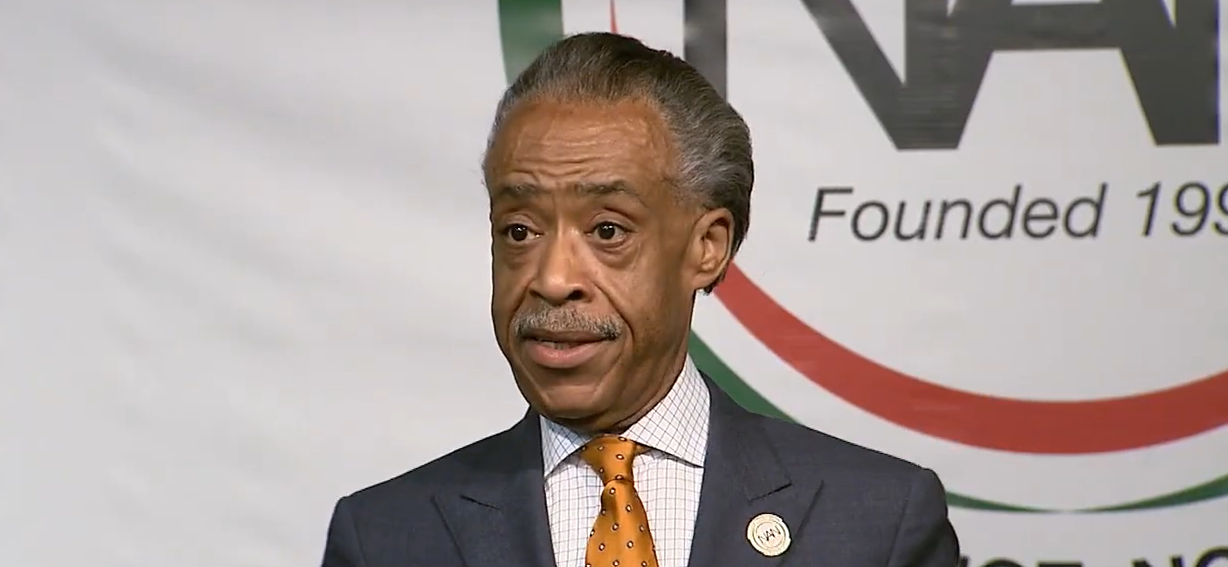

One of the most pivotal periods in Rev. Al Sharpton’s tumultuous ascent occurred in the summer of 1989. When he was arrested at his Brooklyn residence, he was charged with 67 different offenses. Grand larceny, fraudulent business records, and a deliberate conspiracy to defraud were among the charges. Prosecutors claimed he had fraudulently raised more than $250,000 for the National Youth Movement, which he founded as a high school student with aspirations of uplifting society.
Remarkably, the indictment alleged that between 1985 and 1988, Sharpton received substantial payments from individuals such as Don King, Donald Trump, and companies like Coca-Cola—all while portraying the organization as a nonprofit, even though it had no legal standing. Prosecutors saw it as an obvious case of deceit. It was far more complex for his followers.
Sharpton had already established himself as a source of political controversy at the time of his arrest, especially after working as a public advisor in the Tawana Brawley case. Sharpton was in direct opposition to the New York legal establishment as a result of that contentious and ultimately discredited lawsuit. Therefore, it should come as no surprise that his attorneys saw his detention as a retaliatory act disguised as due process rather than just a formality.
Rev. Al Sharpton – Profile Overview
| Attribute | Details |
|---|---|
| Full Name | Alfred Charles Sharpton Jr. |
| Date of Birth | October 3, 1954 |
| Profession | Baptist minister, civil rights activist, political commentator |
| Organization | Founder of the National Action Network (1991–present) |
| Notable Arrests | 1989 (grand larceny charges), 2001 (Vieques protest), multiple protests |
| External Reference | Al Sharpton – Wikipedia |
“I believe the Attorney General is insane,” was Sharpton’s deliberate and theatrical response to the judge’s request for his plea, demonstrating his extraordinary defiance in court. He exited the courthouse in a black tracksuit rather than the customary formal attire, making a silent but clear victory sign with his fingers forming a “V” through a police car window. This gesture was incredibly successful in energizing his followers throughout boroughs.
Sharpton’s early attempts to combat drug misuse, advance voter education, and provide training for at-risk kids were centered on the National kids Movement. However, the accusations called into doubt not just its financial operations but also its legitimacy. The movement was never granted nonprofit status, according to the prosecution, therefore it was unable to legally guarantee contributors tax-deductible payments. Allegedly, public appeals, claims, and stationery have presented a false image.
The probe started long before the Brawley case, according to Robert Abrams, the Attorney General of New York at the time. That claim did not, however, put an end to inquiries concerning motivation. The indictment felt to many like the conclusion of political tension that finally turned procedural after months of intense public conflict between Sharpton and Abrams.
Alton Maddox Jr., Sharpton’s then-attorney, presented the entire legal endeavor as a political assassination. He asserted that Sharpton’s quickly growing popularity, particularly among younger, working-class voters who saw in him a voice that refused to submit, “threatened” certain members of the Black leadership establishment. The populations who had long felt marginalized by the judicial system and mainstream leadership found great resonance in the emotional and pointed language.
Reading the events of that June without understanding the multi-layered meaning is challenging. Despite being accused of scamming the same cause he supported, the guy left the courtroom with the attitude of someone facing destiny rather than defeat. Amazingly, history validated his assertion. In this instance, Sharpton was never found guilty. He continued to be well-known, even extending his influence into civil rights, the media, and national politics.
Notably, his resilience in the face of controversy served as a sort of model for contemporary political survival. Instead of altering his direction, he relaunched himself by strengthening his story and persistently portraying his legal struggles as the cost of speaking hard truths. Communities that had long believed that justice was administered unfairly found that framing to be especially effective.
The 1989 arrest eventually disappeared from the news, yet it remained in people’s memories. It continued to serve as a reminder of how fast an indictment can turn into a rallying cry and how quickly an activist may be implicated. In addition to recovering, Sharpton created a platform that was much more potent. That one summer day was only one part of a much larger tale of strategic resiliency by the time he was presenting television news programs, giving speeches at presidential conventions, and planning nationwide demonstrations.
