
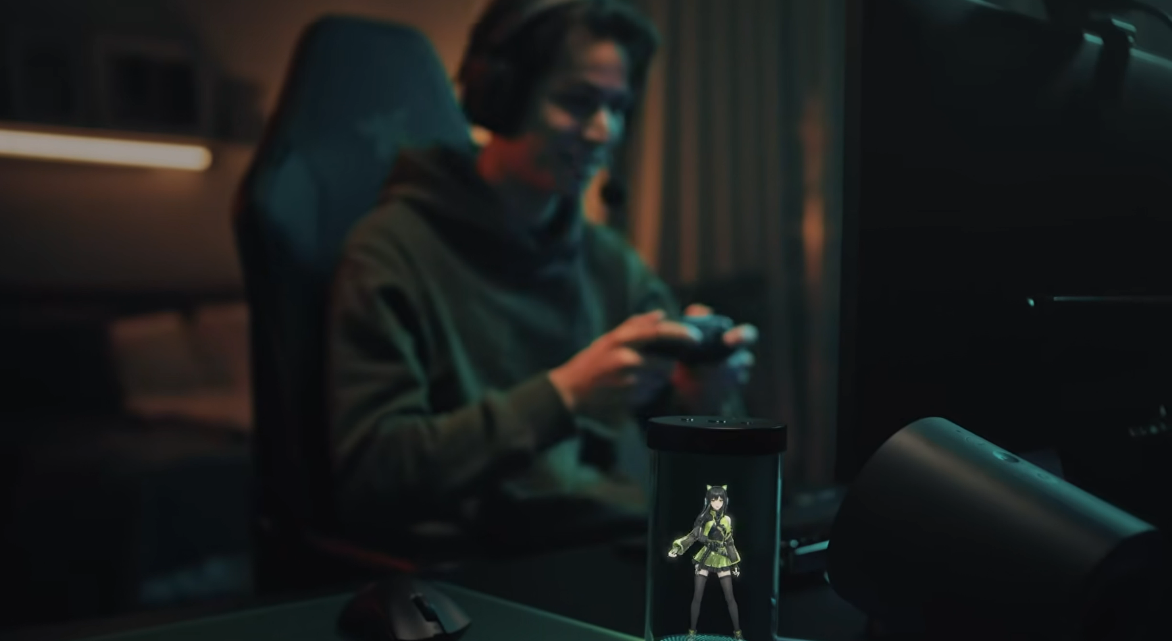

Razer is offering early adopters the chance to experience something genuinely unique for just twenty dollars: a holographic assistant that watches and responds with subtle precision while hovering softly above your desk instead of living on a screen. Ava clutched it at CES 2026 instead of shouting for attention.
Razer’s Project Ava is a rethinking of how artificial intelligence might be incorporated into everyday activities rather than just another device. Ava, which combines functionality and charm, is powered by xAI’s Grok engine and is smartly built to be visually responsive. The gadget is remarkably small, but incredibly immersive. It is roughly the size of a coffee cup and glows dimly until context or voice activate it.
Ava responded to calendar updates, weather prompts, and even changes in the surrounding light during real-time demonstrations. She once casually reminded a user to stay hydrated. It was a remarkably natural, almost unsettlingly contemplative exchange.
Although Razer has not yet disclosed the final retail pricing, preliminary estimates place it between $299 and $499, possibly higher depending on the included features. The $20 down payment? It guarantees a front-row seat in what could be the future of AI interfaces, not simply a product.
| Feature | Details |
|---|---|
| Product Name | Razer Project AVA |
| Type | 3D Holographic AI Desk Companion |
| Functionality | Personal organizer, gaming coach, translator, creative assistant |
| Hologram Display | 5.5-inch 3D animated avatar with full-body motion, eye-tracking |
| Avatar Options | Ava, Catgirl Kira, Inked-up Zane, Spectacled Faker, Professional Sao |
| Deposit to Reserve | $20 USD (fully refundable) |
| Expected Release | Second half of 2026 |
| Compatible Platform | Windows PC via USB-C |
| Final Price | Not officially disclosed as of January 2026 |
| Official Site | https://www.razer.com/concepts/project-ava |
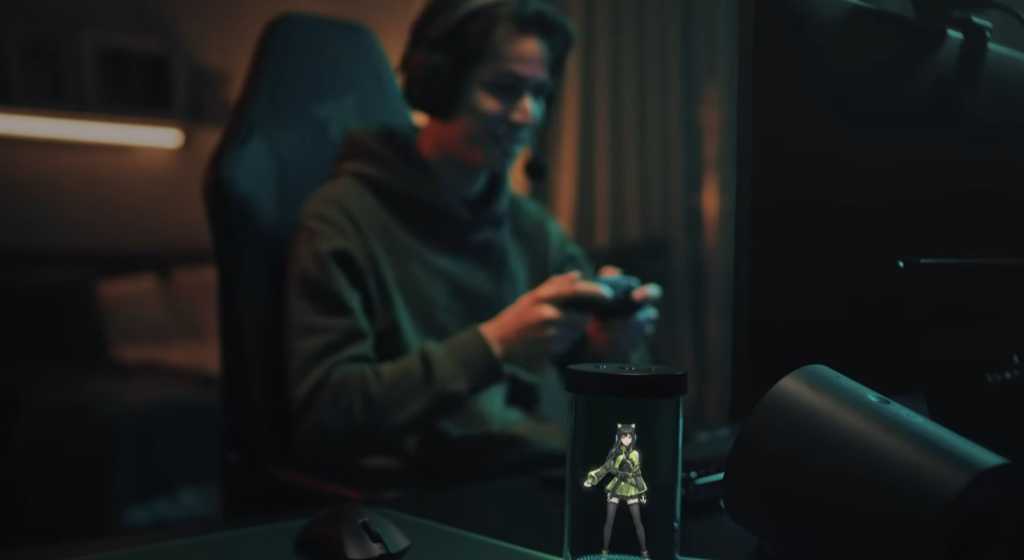
Ava makes recommendations based on what she sees on your screen thanks to the integration of PC vision. She can give you strategy advice or notify you of in-game statistics while you’re playing without taking over. When you’re in productive mode, she sets up appointments and gently reminds you to take a break from typing for too long.
Her method of engagement is incredibly effective—no blaring orders, no blinking notifications. Just a knowing nod, a murmured suggestion, or eye contact. It is a presence that is unavoidable yet does not invade.
Ava’s variety of animated avatars, each with a unique narrative, voice tone, and attitude, is what sets it apart from the competition. Users can customize the personality of their companion to suit their mood, from the pensive Faker to the eccentric Kira. By giving an otherwise practical instrument emotional relatability, it significantly raises engagement.
Ava is quite effective in terms of technology. The device focuses performance without overpowering the user thanks to its dual microphones, ambient sensors, and seamless USB-C connectivity. Ava’s speed and clarity are remarkably dependable, whether she’s translating a phrase or deconstructing match statistics.
Furthermore, Ava isn’t made for closeness. The Razer team has been very explicit about this line of demarcation. Ava’s position is that of a helpful ally, professional, courteous, and task-focused rather than affectionate, in contrast to many AI companions venturing into flirting territory.
This boundary-setting seems especially audacious. Razer is making a statement by purposefully avoiding emotional dependence: AI may be helpful without turning into a seductive object.
Tech forums have been humming with excitement in recent days. Early adopters are already envisioning how Ava might improve their gaming habits or expedite their workday. Even while $20 isn’t much of a financial risk, it’s a significant step toward a developing digital relationship in which AI appears to listen intently rather than merely responding.
Razer is transforming a hologram into something much more captivating—a presence—through clever integration and strategic design. It’s not just what Ava does that thrills, but also the how she does it—with deliberate timing, expressive gesture, and a serene, incredibly human digital manner.
Ava resonated with me since I’ve used innumerable smart devices. Her spectacles didn’t impress. She made eye contact, provided context, and made a subtle promise: perhaps the future of AI is simply more conscious rather than louder.
