
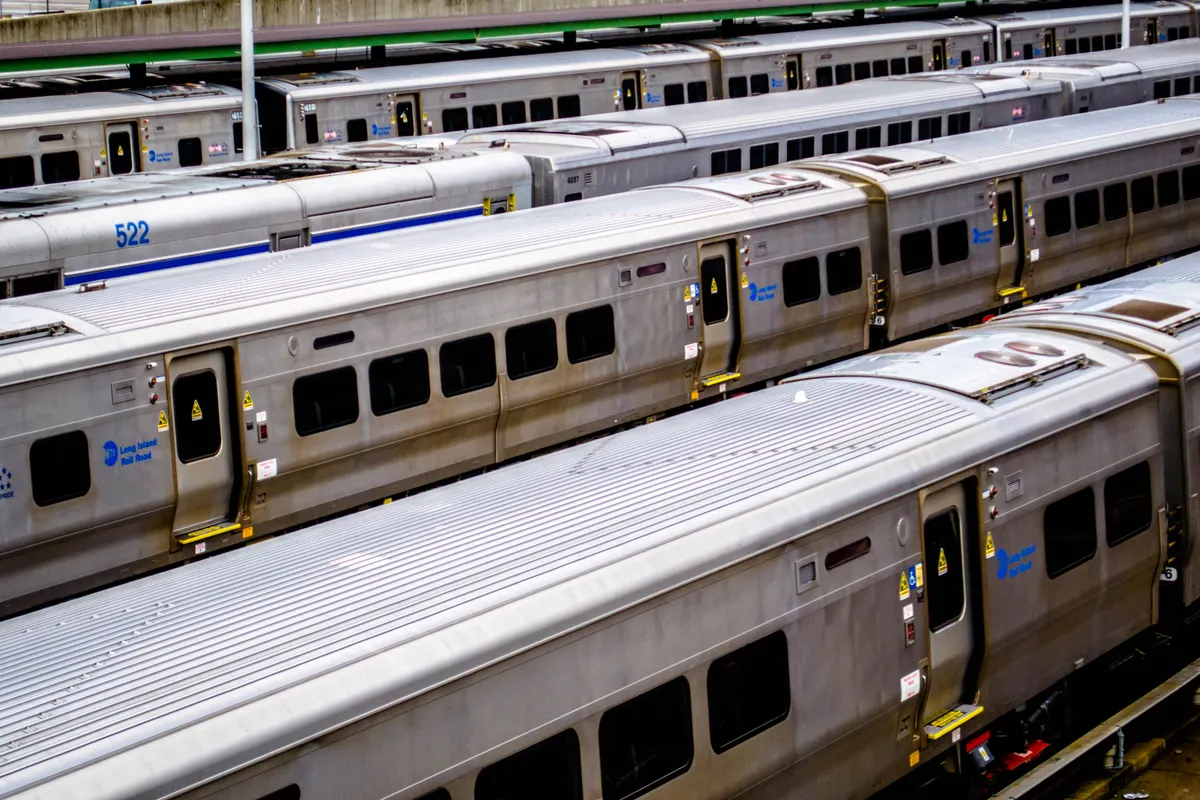

The Amtrak Airo train rollout moved from announcement to hardware on 16 May 2026, when the first next-generation Airo trainset arrived at King Street Station in Seattle, marking a concrete step forward for the Cascades corridor and for the broader federal push to position passenger rail as a credible alternative to domestic air travel.
That arrival is not a one-off. According to Amtrak Oregon, the Seattle trainset is the first of eight planned for the Amtrak Cascades route. It is also part of a wider programme that will deliver 83 Airo trainsets across the national network, making the Cascades one of the earliest corridors to see the new fleet in revenue service.
Federal Funding Reaches the Infrastructure Stage
The hardware arriving in Seattle sits within a substantially larger funding picture. Since the Infrastructure Investment and Jobs Act of 2021, Congress and the Department of Transportation’s (DOT) Federal Railroad Administration (FRA) have earmarked billions of dollars for intercity passenger rail. For the Northeast Corridor (NEC) alone, the FRA awarded between $1.5 billion and $2 billion in Federal-State Partnership grants in 2024 for work on catenary structures, signal upgrades, and bottleneck relief including the Potomac River bridge project. In total, more than $4 billion has been announced for potential NEC intercity rail improvements through 2026.
California has also been a beneficiary. In 2024, the DOT awarded the state 12 separate grants totalling over $279 million for rail infrastructure improvements. That money underpins several of Amtrak’s highest-profile long-distance and regional services operating in or through the state.
On the Northeast Corridor, the fleet renewal is already generating early data. Amtrak Media reports that the NextGen Acela entered service in August 2025 and served more than 60,000 customers in its first month, a figure that underlines sustained demand on the corridor even as the legacy Acela fleet operated under constraints. System-wide, Amtrak recorded its highest-ever ridership in 2025.
Amtrak Airo Train Rollout and the Cascades Corridor
The Pacific Northwest has been flagged as one of the corridors with the strongest case for rail over air. The Cascades route runs from Eugene through Portland and Seattle and extends across the border to Vancouver. The route bypasses the congested Interstate 5 corridor and the heavily loaded Seattle-Tacoma airport hub. Cascade trains currently cover the Portland-to-Seattle distance in around three and a half hours, a journey that avoids the check-in queues, security screening, and transit time to and from airport terminals that erode the time advantage of the technically shorter flight.
Details of the Amtrak Airo train rollout for this corridor were published by Amtrak Media, which described a three-stage testing process for the trainset before it enters commercial service. The Airo fleet is designed to offer improvements in speed, comfort, onboard amenities, and environmental performance relative to the rolling stock it replaces. Washington State’s Department of Transportation has also released a preliminary 20-year improvement plan for the Cascades route, providing a longer planning horizon beyond the immediate federal grants.
A further operational development for the corridor is Amtrak’s introduction of its first-ever preclearance arrangement for Canadian passengers departing from Vancouver, which is expected to streamline cross-border travel on the route.
Private Rail and the Broader Alternative-to-Air Picture
Beyond Amtrak, the DOT has also shown interest in Brightline West, a privately owned project developing a high-speed route between Los Angeles and Las Vegas. If completed, the service would cover the 218-mile distance in approximately two hours, roughly half the drive time. Brightline’s financial record on earlier rail lines has been described as mixed, and the project remains in development. Several current DOT stakeholders have expressed interest in providing financial support for the venture, though no commitment has been formalised.
The combined picture, federal NEC grants, state-level California funding, the Cascades fleet replacement, and potential private-sector high-speed services, represents the most concentrated period of passenger rail investment the United States has seen in decades. Whether disbursements keep pace with announcements will depend partly on Congressional appropriations and partly on the priorities of DOT leadership. The first Airo trainset sitting in Seattle, however, is not an announcement: it is rolling stock on a platform, working through its testing stages ahead of revenue service on the Cascades route later in 2026.
