
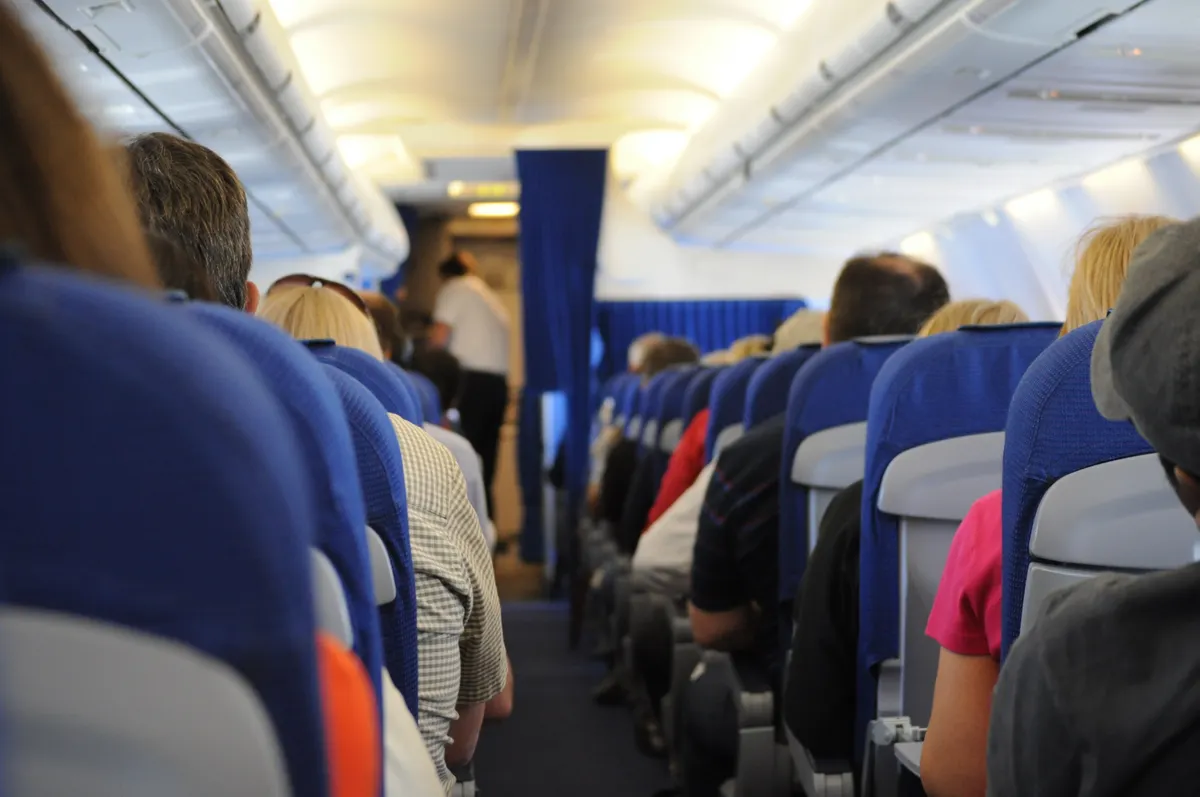

A United Airlines passenger holding a premium ticket was recently forced to gate-check her carry-on bag and fly without access to her medication, in a case that illustrates the growing friction between rising checked-baggage fees and in-cabin bag enforcement on US carriers.
Passenger raises alarm over United Airlines gate-check carry-on incident
The traveller posted her account on X, asking the carrier directly: ‘help me understand why i was forced to check my carry on bag on the first leg of an international flight when all of this space is available? In my carry on are meds I couldn’t get fast enough and the bag is unlocked. No clue with premium tix I would have to do this.’
United responded with an apology and a request for further details via direct message, but did not address the core question of why the bag was taken when overhead bin space was available. The passenger was left without her medication for the duration of that flight leg.
Her account has added fresh momentum to a wider discussion about gate-checking practices across US carriers. American Airlines customers have similarly reported being asked to gate-check hand luggage on flights where overhead bin capacity was not exhausted. The pattern points to a tactical use of pre-emptive bag checks to speed boarding rather than a purely space-driven necessity.
Lee Abbamonte told Fox News Digital: ‘Gate agents are trying to not delay flights by preemptively checking bags so all the passengers don’t board with carry-on bags, and then there’s no more overhead space.’
Fee increases pushing more travellers away from checked luggage
The structural driver behind the surge in carry-on volume is straightforward: checked-baggage fees keep rising, and passengers are responding by packing everything into the cabin. In April, United raised its fees by $10 on domestic and short-haul routes to and from the US, Latin America, Canada, the Caribbean, and Mexico.
According to Today, United’s current checked-bag pricing now stands at $45 if prepaid, $50 if paid at the airport lobby, and $75 at the gate. The cost of a third checked bag has gone up by $50. Today also reports that the increase comes amid the United States’ conflict with Iran, which has pushed up fuel costs for carriers.
The fee structure creates a clear incentive for passengers to avoid checked bags altogether. When a carrier simultaneously raises those fees and then enforces gate-checking of carry-ons, the contradiction becomes difficult to square from the passenger side.
United’s position within the US market carries an additional complication. According to TravelPirates, United is the only major US carrier that does not include a free carry-on bag for Basic Economy passengers, and will charge a $25 gate handling fee to any Basic Economy traveller who arrives at the gate with one. For those passengers, the economics of travelling light have become particularly constrained.
What passengers can do to protect essential items
Gate-checking remains within airline discretion, but there are practical steps travellers can take to reduce the risk of losing access to critical items mid-journey. Soft bags, including backpacks, are less frequently targeted than hard-sided rolling suitcases: a backpack can be squeezed into gaps where a rigid case cannot.
Arriving at the gate early also reduces exposure. By the time late boarders reach the gate, flight attendants have a clearer read on whether bin space is sufficient, making last-minute checks more likely for anyone arriving close to departure.
The more reliable safeguard is the distinction between a carry-on and a personal item. United allows passengers to bring both on board: the carry-on (up to 9 in x 14 in x 22 in) must fit in the overhead bin and may be gate-checked; the personal item (up to 9 in x 10 in x 17 in) must fit under the seat in front and will not be taken. Medication, essential documents, a phone charger, and any other items a passenger cannot afford to lose access to mid-flight should travel in the personal item, not the carry-on.
For travellers on premium tickets, being forced to gate-check a bag remains a source of frustration, particularly when bin space is demonstrably available on board. United has not publicly explained how that gap in enforcement is meant to be managed.
