
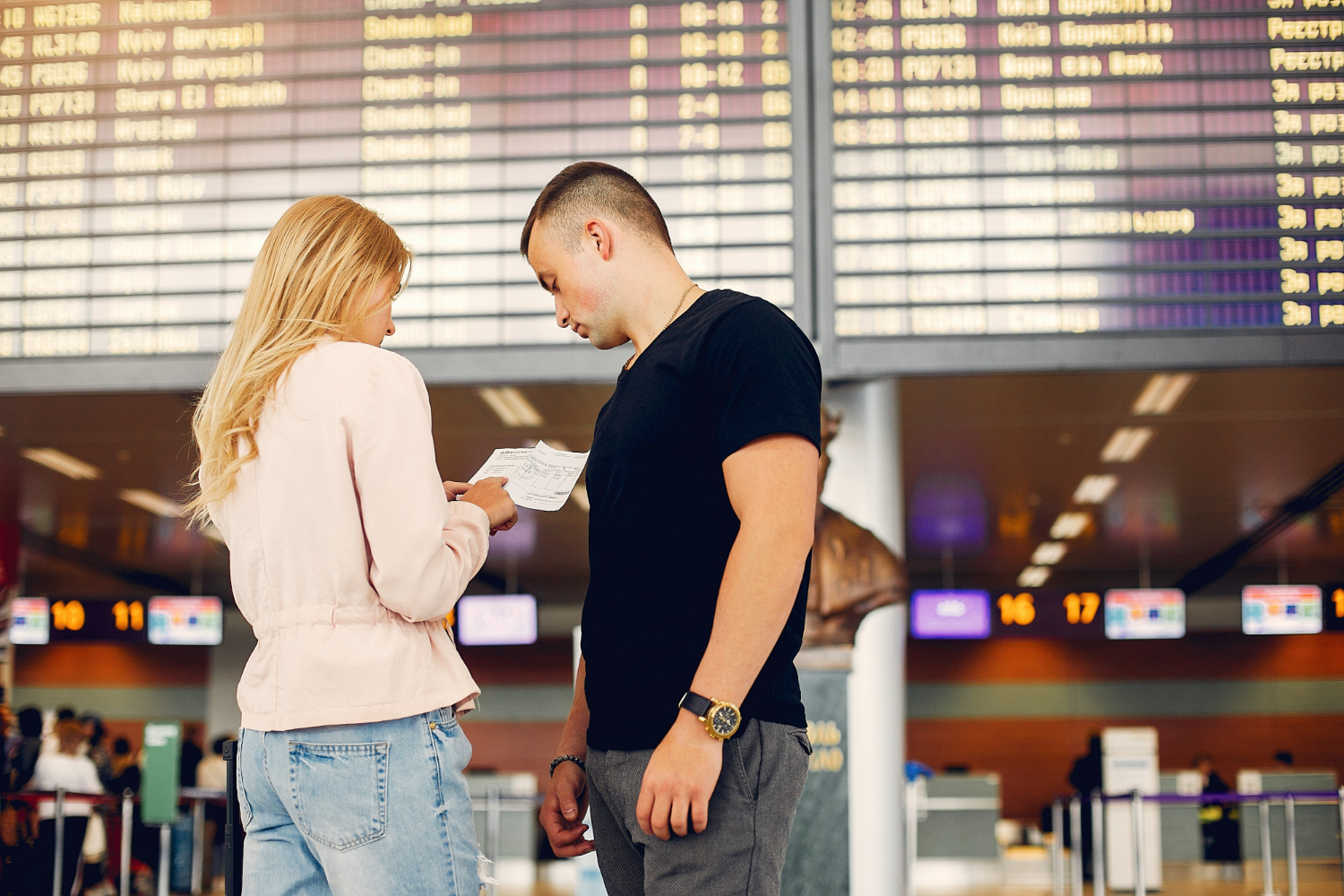

Getting back on a plane has become a decision that involves much more than just logistics for many travelers. These days, it involves comfort, trust, and an increasing need for predictability. Sensing this change, airlines have begun to subtly but significantly alter the experience of flying.
These days, it’s not just about the cost. Experiences that feel more seamless, secure, and less taxing are attracting more and more passengers. First-class and business-class seats are being added by airlines in response, not only to long-haul flights but also to domestic and low-cost routes. Beyond just being opulent, these additions provide psychological comfort.
| Strategy Area | Key Focus |
|---|---|
| Comfort Enhancements | More first-class seats and quieter aircraft like the Airbus A321XLR |
| Boarding Efficiency | Facial recognition tech for faster, touchless check-in |
| Route Adjustments | Fewer long-haul flights, more domestic and regional frequency |
| Predictability Focus | Tech investments for delay reduction and schedule reliability |
| Passenger Protections | Airlines lobbying to reduce refund and pricing transparency rules |
| Traveler Behavior | Rise in flexible bookings and safety-conscious route planning |
| Economic Adaptation | Domestic travel prioritized amid reduced international demand |
| Tech Integration | Streamlined processes through apps and automated systems |
Carriers are providing quieter cabins with significantly better fuel efficiency and improved onboard environments by integrating aircraft such as the Airbus A321XLR. A more comfortable flight may be the decisive factor for passengers who are still debating whether the anxiety of flying is worthwhile.
Additionally, boarding is being rethought. Travelers can now move from curb to gate with fewer touchpoints thanks to the expansion of facial recognition systems for security and check-in at major airports. Even though privacy is still a legitimate concern, the convenience is incredibly alluring, especially for business and solo travelers with busy schedules.
I’ve observed that even regular travelers are changing their expectations over the last few seasons. Instead of saving money, a friend who used to take monthly international flights now opts for domestic flights with shorter layovers in order to avoid the hassle. It’s a subtle but significant shift.
This emphasis on practicality goes beyond appearances. In order to provide more predictable flights—something that passengers are beginning to value more than traditional benefits—airlines are making significant investments in operational technology. The goal is to lessen delays and cancellations, which continue to be among the most upsetting aspects of any trip, through smart aircraft scheduling and dynamic staffing.
In the background, numerous carriers are advocating for deregulation. Companies are attempting to weaken consumer protections like required refunds, all-in pricing transparency, and family seating guarantees through lobby organizations like Airlines for America. They believe that relaxing these regulations would help stabilize prices and lessen operational burdens.
However, from the perspective of a traveler, the suggested modifications indicate caution. Travelers are starting to think strategically. They are using airline apps not only to check in but also to foresee issues, making reservations with cards that come with built-in travel protections, and carefully reading the terms.
Airlines such as United and Delta are redistributing their aircraft to shorter, high-frequency routes between U.S. cities in response to the growing demand for domestic travel. Families and regional travelers benefit most from this change, as there are now more flights available, particularly in popular vacation destinations like Denver, Phoenix, and coastal Florida.
Conversely, there are fewer international routes, particularly those that have been unstable over the past year. Schedules for some long-haul destinations in Asia and the Middle East are becoming less frequent, as more reliable transatlantic and regional options take their place.
Travel psychology as a whole is also reflected in this route rebalancing. Proximity is becoming more important to many Americans than prestige; they prefer locations that feel comfortable, are easier to get to, and are less vulnerable to geopolitical unpredictability. The message for the airline industry is clear: one route at a time, trust must be regained.
Subtle improvements have been made onboard. Wi-Fi is finally becoming more useful rather than annoying, tray tables are cleaner, and the lighting is warmer. Although these modifications are not drastic, they are especially creative in the way they address common frictions.
By the time most passengers buckle up, they want peace and quiet, not champagne. The new luxury is a smooth, punctual flight.
Airlines are surprisingly adapting to this change. For example, American Airlines now prioritizes “predictability” as a value proposition. Although that language may sound businesslike, it speaks to a very human need: the desire to arrive without any surprises.
However, there is still conflict between control and convenience. Security may be streamlined by facial recognition, but consent and surveillance are also called into question. Although deregulating refund policies might make things easier for airlines, it puts each passenger at greater risk.
I heard a man telling his daughter why their rescheduled flight did not offer a cash refund during a recent connection at O’Hare. He sighed, “They changed the rules again.” It made me realize how brittle trust still is, particularly when laws change more quickly than aircraft.
However, beneath it all lies optimism. Travel is increasing. Once more, planes are filling up. Even though not everyone feels prepared to take to the skies, those who do are experiencing a markedly better experience. Despite their shortcomings, airlines are paying more attention to the needs of cautious passengers now than they did a few years ago.
The dance is still delicate. Airlines need to figure out how to stay profitable without offending the very customers they are attempting to attract back. However, many of them are now starting to achieve that balance through improved cabins, more efficient procedures, and improved communication.
The best course of action for travelers is awareness. Make sensible reservations. Make use of resources that safeguard your finances and time. Recognize the benefits of technology and the areas where it may go too far. Above all, anticipate more in terms of peace of mind as well as cost.
It’s possible that flying will never be exactly the same. However, in its subtle metamorphosis, it’s turning into something remarkably similar to what many had hoped it could be—less about getting through it and more about getting somewhere better.
