
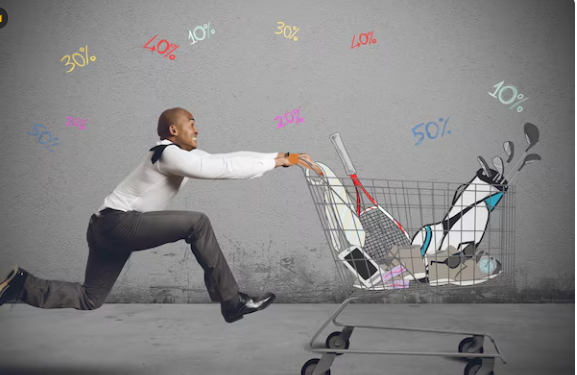

The mall parking lot was packed on a recent Saturday afternoon. Full, not just busy. Couples arguing about footwear in front of dazzling window displays, families with shopping bags, and youngsters with iced coffee. The nation didn’t appear to be certain that it was bankrupt. Nevertheless, when you ask folks how their finances are going, they frequently sigh.
This is the current puzzle. Despite stretched personal financial feeling, consumer confidence indexes continue to rise. According to the data, optimism is rising. There is more to the chats. Both could well be true.
Key Economic Snapshot
| Category | Details |
|---|---|
| Indicator | U.S. Consumer Confidence Index |
| Tracked By | The Conference Board |
| Current Trend | Rising confidence levels |
| Inflation Trend | Slowing rate of increase |
| Labor Market | Low unemployment, steady job growth |
| Key Pressure Points | High price levels, debt, elevated interest rates |
| Psychological Factor | Adaptation, “animal spirits” |
| Reference | https://www.conference-board.org |
Let’s start with inflation. Headlines celebrate the slowing rate of price hikes. However, compared to just a few years ago, the overall level of prices—the price of groceries, rent, and insurance—remains high. Prosperity does not always equate to relief from price increases. It is more akin to avoiding drowning. Not quite sailing, though.
Higher food costs, higher auto insurance rates, and rent payments that hardly ever go down are nevertheless part of the ordinary household budget. Purchase power hasn’t entirely recovered despite pay rise in several industries. In reality, a paycheck that appears larger on paper may feel less.
Despite this, measures of consumer confidence continue to rise. The most obvious explanation is the labor market. The unemployment rate is quite low. Even though it has slowed from post-pandemic highs, job growth is still occurring. Job security is more important to many people than daily misery.
One gets the impression that the future is doable as long as the employment is secure. Questions like “Do you expect business conditions to improve?” are frequently asked in confidence polls. “Do you anticipate more employment?” Instead of focusing on present tension, those inquiries evoke expectations for the future. It’s possible to feel overburdened this month and still have hope for a better year.
It may be referred to as adaption by psychologists. It is referred to as animal spirits by economists. Consumers seem to be adjusting to rising prices after years of inflation concern. The sticker shock subsides. The new baseline becomes established.
It’s difficult to ignore how rapidly people recalibrate when you watch this happen. At one point, three-dollar gas seemed ridiculous. In certain areas, four bucks now just causes mild annoyance.
The paradox is reinforced by spending trends. Travel reservations are still strong despite cost-related complaints. On weekends, restaurants are busy. Subscriptions to streaming services silently renew. A YOLO mentality—spend now, figure it out later—is even hinted at.
Meanwhile, debt levels are rising. Interest rates are still high, and credit card balances have grown. The cost of borrowing has not decreased in line with inflation. Monthly payments are higher for households with revolving debt. There is actual pressure.
The subtle twist is that consumer confidence is merely ordinary. People with higher incomes who own stocks and profit from asset gains are more likely to express optimism. Surveys reflect the resiliency of the stock market. In many industries, corporate profits are still strong. Although lower-income households could feel pressured, the measure is not dominated by their sentiment.
Perception is subtly distorted by income disparity. The sustainability of this disparity is currently unknown. Eventually, confidence may crumble if debt loads keep increasing while incomes stagnate. In the past, as credit tightens or layoffs increase, mood frequently shifts rapidly.
However, the labor market serves as a psychological anchor for the time being. You will hear people complaining about the pricing when you walk through a grocery shop. Rent-related annoyance can be seen on social media. However, there aren’t too many people in unemployment offices. Many people are unaware of how much that contrast influences mood.
Additionally, there is a cultural component. A peculiar resilience has emerged following years of economic instability and epidemic upheaval. People have had to live with uncertainty. They have taken on side jobs, changed brands, and modified their budgets. The “normal” baseline has changed.
It’s likely that surveys record a minor alleviation of emotional exhaustion rather than financial comfort. Similar paradoxes can be seen in the overall economy. In other industries, including technology and services, corporate profits are still strong. However, margin pressure is reported by small businesses. The cost of housing is still high. Rates for mortgages are higher than most people anticipated.
It appears that consumers are simultaneously thinking, “This is hard,” and “We’ll be okay.” The true tale may lie in that duality. Affluence is not necessary for confidence. Belief is necessary. faith in employment. confidence in upcoming hikes. conviction that inflation won’t spike once again. Even when people’s finances are tight, survey numbers can increase as long as those ideas persist.
It’s difficult to ignore the distinction between data and casual chat around the dinner table. The data indicates stability. Caution is advised at the dinner table. The truth resides somewhere in the middle of those two realities.
Households may still experience financial strain even if the macroeconomic environment improves. Recovery and relief are not the same thing. Furthermore, increasing familiarity does not always equate to increasing confidence.
For the time being, Americans are managing that conflict by making thoughtful purchases, borrowing sparingly, and moaning aloud, yet they still go to the mall on Saturday afternoons.
