
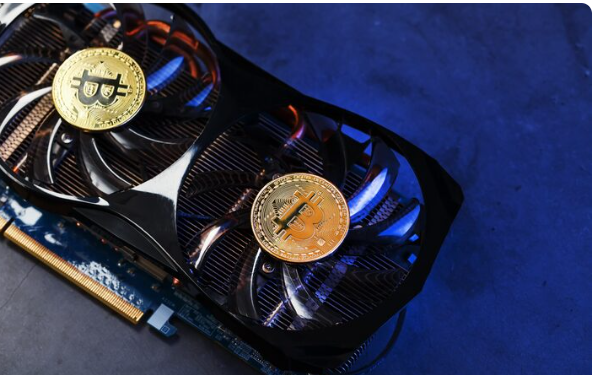

The GPU shelf in a suburban electronics store was oddly familiar on a recent afternoon: it was partially packed, the price tags were angled slightly upward, and a few eager customers were inquiring about the arrival time of the next shipment. The atmosphere was uncannily reminiscent of 2021, when players would visit websites at three in the morning in the hopes of obtaining a graphics card before bots did. However, the lack feels different this time.
Jensen Huang, the CEO of Nvidia, noted calmly on the company’s most recent earnings call that there would be a “very tight” supply of gaming GPUs for a few quarters. He sounded unconcerned. He sounded calculated. That difference is important.
Industry Snapshot
| Category | Details |
|---|---|
| Company | Nvidia Corporation |
| CEO | Jensen Huang |
| Key Issue | Constrained supply of gaming GPUs |
| Likely Duration | “A couple of quarters” (per earnings call) |
| Possible Causes | AI chip prioritization, memory constraints |
| Gaming GPU Revenue (FY2026) | $16.042 billion (GeForce) |
| Architecture | RTX 50-series (Blackwell) |
| Reference | https://www.nvidia.com |
The GPU scarcity was disastrous during the pandemic. Supply chains faltered. Miners of cryptocurrency hoarded cards. Offshore, shipping containers sat. Nobody appeared to be in complete control. The limitations now seem more intentional, or at least more foreseeable.
Nvidia still has a sizable gaming division. GeForce GPUs alone brought in nearly $16 billion in sales during the previous fiscal year, a 41% increase from the previous year. There is still demand. According to industry estimates, Nvidia actually shipped more desktop GPUs in the first three quarters of 2025—roughly 30.4 million—than it did in the entire year of 2024.
Artificial intelligence, not games, is the real gold rush of our time. Data center GPUs fetch much larger margins because they are designed to execute and train large AI models. Tens of thousands of dollars can be made with each AI accelerator. A few hundred dollars per game card starts to seem… small in comparison.
Nvidia might be doing sensibly in its business choices. At TSMC, wafer capacity is limited. The math is simple when deciding how much silicon to allocate between a $25,000 AI accelerator and a $500 gaming GPU. It appears that investors think this prioritizing makes sense.
However, the rationale provides little solace to players who are witnessing price increases. For months, the cost of desktop GPUs has been steadily increasing. Based on Nvidia’s Blackwell architecture, the RTX 50-series is strong but pricey.
The memory question is another. High-bandwidth memory, such as HBM3E, is necessary for advanced AI devices but is costly and limited in supply. There will be less capacity left for GDDR7 memory used in gaming cards if DRAM makers concentrate their production on those parts. In other words, the bottleneck may not be an accident.
The attitude varies from frustration to resignation when browsing gaming forums. Some users make jokes about AI businesses currently “mining GPUs.” Others hypothesize that this is just the new normal, where the focus of the graphical universe is no longer gaming gear. It’s difficult to ignore the change in cultural priorities.
Gaming was a major force behind graphics advancement for many years. Frame rates were driven up by titles. As GPU technology advanced, more realistic environments could be rendered. These days, training language models and picture generators is where silicon design has advanced the most. Server farms have replaced virtual arenas as the battlefield.
There are further ramifications to that change. PC hardware culture is still accessible through gaming GPUs. Sales of motherboards, power supplies, and full upgrade cycles are all impacted when costs increase or supply becomes scarce.
Nevertheless, Nvidia’s stock speaks for itself. Its AI turn has been well rewarded by the market. Belief in the long-term market for AI accelerators—rather than just gaming cards—is reflected in the company’s price. Gaming seems to be relegated to a supporting role in Nvidia’s corporate narrative.
But is this shortfall structural or transient?
There is space for ambiguity in Huang’s phrasing. He hinted at limited visibility into the second half when he said, “If things improve by the end of the year.” That ambiguity implies that there are still actual supply limits. Manufacturing semiconductors is a complicated process. Yields vary. Expansions of capacity take years.
Nevertheless, the word “strategic” casts a shadow over the circumstance. This isn’t hoarding motivated by cryptocurrency. Allocation is what it is. It’s setting priorities. Capital is moving in the direction of the use case with the largest margin.
Although gamers might feel excluded, Nvidia’s strategy makes sense from a financial perspective. Spending on AI infrastructure keeps rising. Cluster deployment is a race among cloud providers. Sovereign AI capacity is being invested in by governments.
Gaming GPUs vie for leftovers in that setting. It’s hard not to notice similarities to previous transitions as you watch this play out. Hardware roadmaps changed in the early 2000s as a result of enterprise IT spending. AI is now changing them once more.
How long players will put up with increased costs and scarce supply before switching platforms or postponing updates is yet unknown. Although PC gaming has endured numerous cycles, loyalty has its limits. The shelves are still thinner than anticipated for the time being.
