

It doesn’t appear that the next technological revolution will originate in the desert outside of Phoenix. There are long rows of steel beams catching the afternoon sun, dusty construction roads, and cranes slowly rotating above concrete slabs. Beneath the sand and heat, however, something strange is taking place. After decades of allowing semiconductor manufacturing to shift abroad, the United States is quietly reconstructing a significant portion of the industry here.
The approach isn’t as ostentatious as the news stories about electric vehicles or artificial intelligence. It focuses on a more obscure topic: sophisticated chip packaging. However, there’s a growing perception that this phase of chip manufacturing could become as significant as chip design as the investments come to Arizona.
| Category | Details |
|---|---|
| Policy Initiative | CHIPS and Science Act |
| Key Administration | Joe Biden Administration |
| Main Industry Partner | Taiwan Semiconductor Manufacturing Company |
| Additional Partner | Amkor Technology |
| Location | Phoenix and Peoria |
| Proposed Federal Funding | Up to $6.6 billion for TSMC facilities |
| Packaging Facility Investment | ~$2 billion from Amkor |
| Jobs Expected | 6,000 manufacturing jobs + thousands of construction jobs |
| Industry Focus | AI chips, high-performance computing, 5G/6G systems |
| Reference | https://www.commerce.gov |
America was a leader in semiconductor design for many years. Strong processors were developed by firms like Nvidia, AMD, and Apple, but production was mostly shifted to Asia. It took a while. The last phases, assembly and packaging, were moved overseas after the initial stages of fabrication. In the end, only a small portion of the world’s chips were produced in the United States.
During the pandemic, that imbalance began to feel risky. Chains of supply stalled. Automakers halted production. It became difficult to locate even basic electronics. It was an odd time when minuscule elements, no bigger than a fingernail, started controlling the speed of the world economy.
The CHIPS and Science Act, a comprehensive legislative initiative aimed at rebuilding domestic semiconductor capacity, was Washington’s response. At first, fabrication plants received a lot of attention. Silently, though, another link in the supply chain was beginning to take shape.
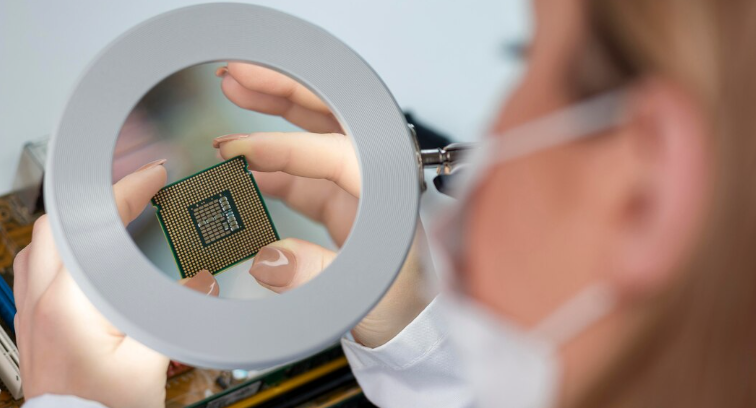
This stage involves connecting, stacking, cooling, and integrating silicon dies into the final chip systems that run defense equipment, smartphones, and AI servers. It sounds technical, perhaps even uninteresting. However, engineers are aware that a chip’s potential speed and efficiency are frequently determined by its packaging.
It’s difficult to ignore the scope when standing in Phoenix’s new construction zones. More than $65 billion has been committed by Taiwan Semiconductor Manufacturing Company to construct three fabrication facilities in Arizona. Some of the most cutting-edge chips in the world, including future 2-nanometer technology, are anticipated to be produced at the facilities.
However, fabrication isn’t the whole story. Before a chip can power a smartphone or data center, it still needs to be packaged and tested. In the past, those actions took place abroad, frequently in Taiwan, South Korea, or Malaysia.
With federal assistance, Amkor Technology is constructing a $2 billion advanced packaging facility in Peoria, which is close to Phoenix. According to commerce officials, the project may result in an additional wave of construction work and about 2,000 manufacturing jobs.
The future seems half-built as you pass the location today. Under the unrelenting Arizona sun, workers move between scaffolding frames as concrete pads cover the desert floor. Whether the United States can actually replicate the dense semiconductor ecosystems that developed over decades in Asia is still up for debate. However, the attempt itself marks a change.
Modern economies rely heavily on semiconductors, which power military systems, autonomous cars, AI models, and satellites. Because of this reality, the production of chips now resembles a strategic competition between countries.
It is rarely stated directly by Washington officials. Nevertheless, it is difficult to overlook the subtext. The supply chain is still vulnerable if cutting-edge chips are created in the United States but packaged abroad.
Arizona may develop into a sort of semiconductor cluster, according to investors. Nearby suppliers are relocating. Engineering programs at universities are growing. Programs for training technicians connected to these factories are even being introduced by nearby community colleges.
As this develops, it seems as though the United States is making an ambitious but somewhat uncertain attempt to rebuild an industrial ecosystem that has covertly moved overseas over the previous thirty years.
It remains to be seen if it is successful.
The production of chips depends on thousands of suppliers, specialty chemicals, extremely accurate machinery, and highly skilled engineers. It took time for Asia to establish that network. Decades passed.
Nevertheless, momentum is increasing. Businesses are being pushed in the same direction by geopolitical pressure, private investment, and federal subsidies. Arizona, which was formerly primarily recognized for its retirement communities and desert suburbs, is now at the epicenter of a technological experiment.
The fact that it’s happening so quietly may be the most unexpected aspect. While the world argues about AI regulation and tech monopolies, bulldozers keep moving outside Phoenix—digging foundations for factories that may shape the next generation of computing. It’s unclear if the tactic will ultimately succeed.
However, it’s difficult to ignore the feeling that something important is happening as you stand in the Arizona heat and watch steel frames rise against the mountains.
