

There is a particular kind of frustration that sets in when you’re trying to book a hotel through any of the major loyalty program apps and the list of brands just keeps going. Marriott has roughly forty. Hyatt has more than thirty. Hilton sits at somewhere north of two dozen. Most frequent travelers have quietly given up trying to distinguish between them all, developing a personal shortlist of three or four names they trust and largely ignoring the rest. It’s a reasonable coping strategy. The hotel industry has created so many brands in the last decade that even dedicated points enthusiasts can’t keep up.
Which is why it’s worth pausing on Signia by Hilton — not because new hotel brands are inherently interesting, but because this one is doing something slightly different from the standard playbook. Launched as Hilton’s answer to the growing appetite for upscale but not alienating luxury, Signia sits alongside Waldorf Astoria, Conrad, LXR, and NoMad in the company’s top tier. It is the newest of those five, and also the most accessible on price — what Hilton itself describes as approachable luxury, a phrase that can sound like marketing softness until you actually look at what the brand is built around.
“Signia isn’t trying to out-Waldorf Waldorf Astoria. It’s going after a different kind of traveler entirely — one who arrived with a conference badge and stayed for the rooftop pool.”
Key Information: Signia by Hilton
| Brand Name | Signia by Hilton — Hilton’s newest luxury brand |
|---|---|
| Brand Category | Approachable luxury — part of Hilton’s five top-tier brands |
| Parent Company | Hilton Worldwide Holdings — 24+ brands globally |
| Current Properties | 5 open locations — 7 more under development |
| Portfolio Target | At least double current size by 2028 |
| Next Opening | The Diplomat Resort, Fort Lauderdale, Florida — May 2026 (largest hotel in Broward County) |
| Core Focus | Meetings, events, weddings — significant function space at every property |
| Brand Standards | Hilton Honors eligible — Nespresso machines, premium linens, in-room Peloton bikes, large spas |
| Dining Philosophy | Destination dining — restaurants positioned for local audiences beyond hotel guests |
The defining characteristic of every Signia property is that it was purpose-built for events. Not in the apologetic way that many business hotels claim events capability while quietly delivering beige carpets and folding chairs — but genuinely, structurally designed around the needs of meeting planners, wedding coordinators, and corporate gatherings of real scale. Each property carries significant function space, and the brand’s entire positioning is built on the idea that the hotel experience before and after the event matters as much as the event itself. That’s a bet on the meetings and events market recovering fully from the pandemic-era collapse, and based on booking trends over the past two years, that bet appears to be paying off.
There are currently only five Signia properties open — a small footprint by any major brand’s standards. But the locations are deliberate: gateway cities and resort destinations where convention business and leisure travel overlap. Seven more are in development, and Hilton has stated plans to at least double the portfolio by 2028. The next one to open is the Diplomat Resort in Fort Lauderdale, coming online in May. The Diplomat has a long history in South Florida — nearly a thousand rooms, making it the largest hotel in Broward County — and its arrival under the Signia name will be the clearest test yet of whether the brand’s event-forward philosophy can work at genuine resort scale.
The amenity profile across existing Signia properties is consistent and clearly calibrated for a traveler who wants luxury markers without having to navigate the sometimes exhausting formality of a traditional five-star stay. In-room Peloton bikes have become something of a brand signature. Fitness centers are notably well-equipped. Spas tend toward the larger end. Nespresso machines and premium bath amenities are standard rather than optional upgrades. It’s a list that reads like it was assembled by someone who surveyed frequent travelers about what they’d actually use, rather than what would photograph well in a brochure. That’s not a bad instinct.
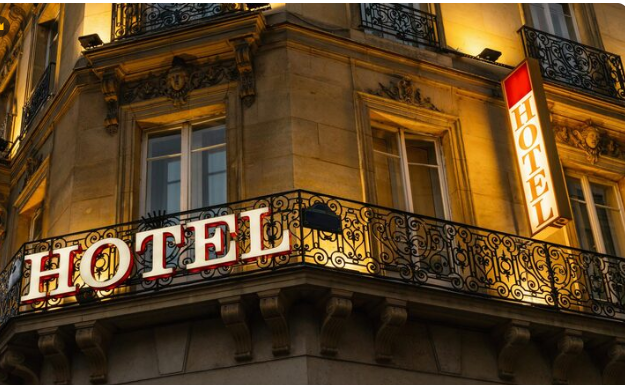
The culinary approach is where Signia seems most genuinely ambitious. Rather than positioning the food and beverage operation as something guests tolerate before escaping to a neighborhood restaurant, each property is being pushed as a dining destination in its own right — targeting local residents alongside hotel guests. It’s a strategy that a handful of major hotel brands have been experimenting with for years, with mixed results. Done well, it generates revenue and energy that the property couldn’t otherwise sustain. Done poorly, it’s an expensive restaurant that empties at nine. It’s still unclear whether Signia has cracked that particular equation at scale, but the intent is there.
Watching the brand take shape across its early properties, there’s a feeling that Hilton is being more patient with Signia than it has been with some of its newer, faster-growing brands. Five properties is a deliberate pace. It allows the brand standards to actually mean something before the footprint expands far enough to dilute them. Whether that discipline holds as the development pipeline grows through 2028 is the real question — luxury hotel brands have a long history of launching with conviction and gradually softening at the edges as the pressure to scale takes over. Signia hasn’t hit that point yet. The next few years will say a lot about whether it ever does.
