

Traveling in your 30s is rather different. The frame has evolved into a sort of online acronym for something that the majority of people who have really traveled through both their twenties and their thirties acknowledge as being true. Although it plays a role, the change is not only related to discretionary income.
It’s about how, once you stop trying to cover as much land as possible and start focusing on what you truly want from a vacation, the entire experience of being somewhere new begins to function differently. In addition to becoming physically more difficult in your thirties, the hostel-hopping, three-cities-in-five-days, party-until-4am travel paradigm that characterized travel in the 1920s for a lot of individuals also loses its appeal. According to most accounts, travelers in their thirties have sacrificed volume for depth in ways that alter which locations truly deliver.
| Travel in Your 30s — Key Information | Details |
|---|---|
| Defining Trait | Intentional, curated travel over crowded itineraries |
| Common Lodging Shift | Boutique hotels and design-led Airbnbs |
| Top Wildlife Destination | South Africa |
| Best Cultural Mix | Japan (Tokyo and Kyoto) |
| Top Adventure Destination | Peru |
| Quiet Cultural Capital | Tbilisi, Georgia |
| Best US Wine Region | Santa Barbara, California |
| Solo-Travel Friendly Region | Yogyakarta, Indonesia |
| Best for Affordable Adventure | Thailand |
| Classic Mediterranean Pick | Greece |
| Travel Style Shift | From partying to wellness, slow mornings, active days |
| Travel Resource | Lonely Planet |
| Common Trip Length | 7 to 14 days |
| Common Travel Driver | Burnout recovery and meaningful experiences |
| Prevailing Mindset | Quality over quantity |
The improvements in comfort receive more emphasis than the intentionality aspect of this change. By definition, a traveler in their thirties has taken enough travels to know what they truly enjoy. The “I should see Paris because everyone says you have to see Paris” logic that motivated many travelers in the 1920s vanishes.
Travels are organized around particular interests, such as the cuisine, wildlife, architecture, local history, or the type of landscape that provides the rest you truly need rather than the rest you thought you wanted. As a result, there are fewer destinations per trip, more time spent at each one, and a willingness to spend three days in a location that a twenty-something who is trying to maximize their schedule would have given an afternoon.
One of the travel locations that most embodies this change is South Africa. The nation provides safari experiences that satisfy the allure of nature and wildlife that many tourists in their thirties are drawn to. The tour takes on a slower, more reflective quality in the wine areas surrounding Stellenbosch and Franschhoek. The urban-cultural complexity is increased by Cape Town.
The combination of excitement, comfort, and a range of landscapes that don’t demand frequent migration is exactly what tourists in their thirties are looking for. For tourists who are ready to pay more than they did in their twenties but aren’t attempting to spend like they’re sixty, the cost structure is also fairly affordable when compared to several similar safari sites in East Africa.
Japan is now practically the standard destination for travelers in their 30s. The nation provides everything that the modern world seems to require. Travelers who wish to experience Tokyo’s nightlife can still do so. The country as a whole rewards precisely the kind of mixed-pace travel that tourists in their thirties tend to plan—the Kyoto temples, the Hokkaido onsen towns, the rural Shikoku villages, and the Shinkansen links that make traveling between regions nearly frictionless.
It’s not contradictory to have a tea ceremony in Kyoto at six in the morning two days after karaoke at midnight in a Shibuya basement. It’s the epitome of the trip from the 1930s. The nation accepts the paradox without forcing visitors to make a decision.
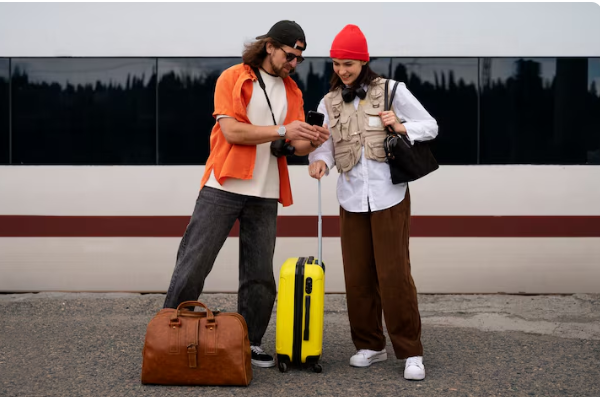
Tbilisi and Peru are situated at different ends of the same larger spectrum. Peru provides what travelers of the 1930s often refer to as “meaningful adventure”—the Sacred Valley and the Inca Trail, for example, are offered with better accommodations, greater preparation, and a pace that allows the experience to truly land rather than be condensed into the brochure version. In recent years, Tbilisi has become one of the truly unexpected travel locations for the 30s.
The Georgian capital combines a rich culinary culture, easily accessible ancient mountain landscapes, a wine industry that predates most European wine regions by several millennia, and the kind of low-key urban energy that travelers in their thirties typically find more intriguing than the more well-known European capitals. In ways that don’t necessarily apply to the larger region, lone female tourists have found Tbilisi to be exceptionally hospitable.
Observing how travelers in their thirties have been scheduling vacations over the past few years gives the impression that the millennial travel industry as a whole has been subtly restructuring. 2018 saw the emergence of boutique hotels. Ten-day wellness retreats, as opposed to year-long sabbaticals, are intended for working professionals. small-group travel companies that emphasize cultural immersion over mass-market tourism in places like Santa Barbara and Yogyakarta. like tourists weary of Instagram-driven tourism destinations, Greek islands offer calmer, less crowded substitutes like Santorini and Mykonos.
Slower mornings, nicer cuisine, more really fascinating chats with locals, and the kind of cozy lodgings that make a 14-day trip restorative rather than draining are all examples of what this time of life truly desires from travel. Questions about generational economics and the flow of disposable income over the next ten years will determine whether the tourism industry as a whole continues to invest in these patterns.
By using every available signal, the present trip pattern has created a more engaging mode of transportation than the one it replaced. Destinations that meet tourists in their thirties where they are—between the vigor of their twenties and the slower pace they properly believe is somewhere in their future—tend to be the ones that truly demonstrate this.
