
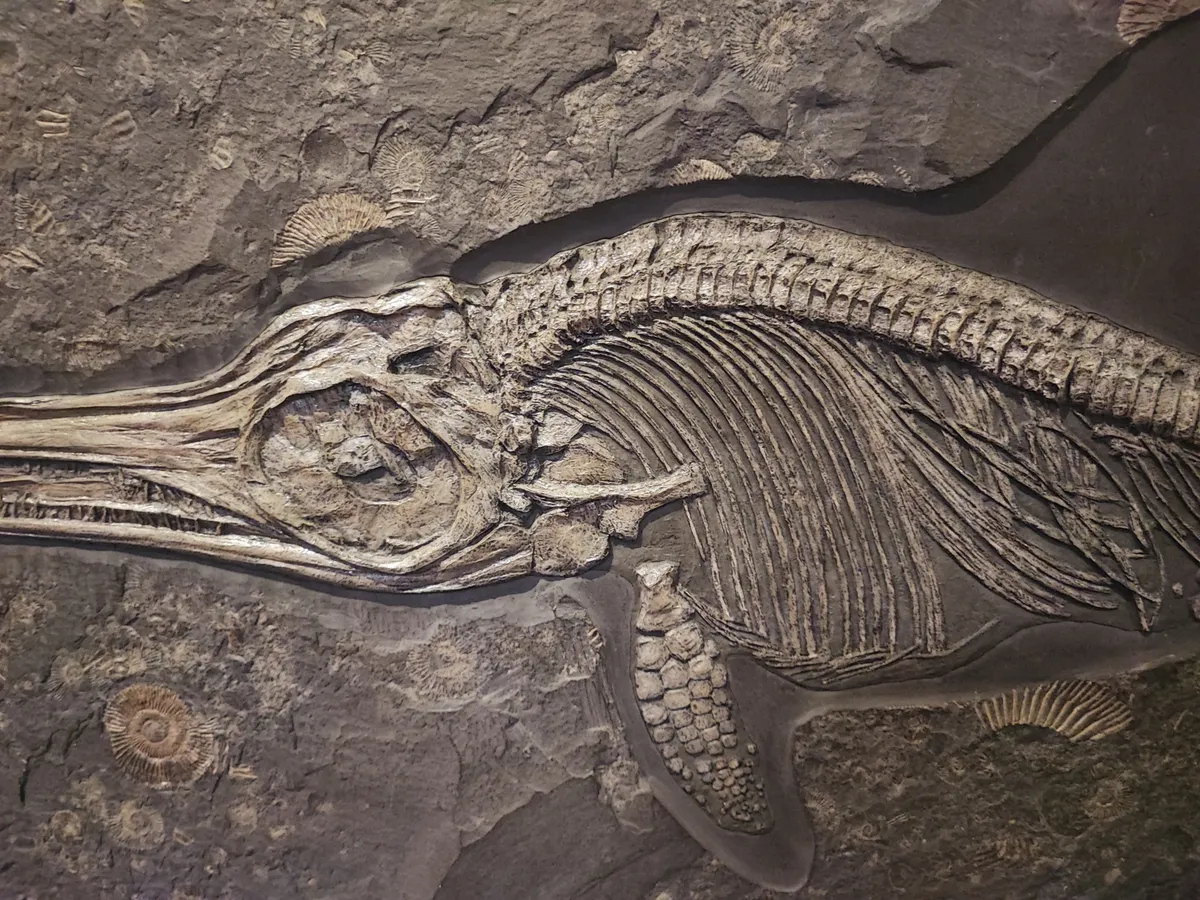

The Tylosaurus rex mosasaur discovery has formally added a new apex predator to the Late Cretaceous record, with researchers identifying a previously unrecognised species of giant marine lizard that reached up to 43 feet in length and dominated the prehistoric inland sea that once covered much of present-day Texas. The findings, published in the Bulletin of the American Museum of Natural History, draw on fossils that had sat in museum collections for decades before yielding their secrets.
Institution Collaboration Behind the Tylosaurus Rex Mosasaur Discovery
The research was led by scientists from the American Museum of Natural History, the Perot Museum of Nature and Science in Dallas, and Southern Methodist University, according to ScienceDaily. Much of the investigative work was carried out by paleontologist Amelia Zietlow, who began examining the fossils while working as a Ph.D. student in comparative biology at the American Museum of Natural History’s Richard Gilder Graduate School.
Zietlow and her colleagues reanalysed large mosasaur specimens that had long been classified as Tylosaurus proriger, a species first described in the 19th century. For years, the biggest of these specimens were assumed to be unusually large individuals of that same species. Closer examination revealed a different picture: consistent anatomical traits across the largest specimens, including more powerful jaws, reinforced skull and neck structures, and finely serrated teeth, that did not match T. proriger.
The Texas fossils were also found in rock layers roughly four million years younger than those associated with T. proriger, and detailed measurements of modern lizard species confirmed the differences could not be explained by normal growth or ageing. Southern Methodist University paleontologist Mike Polcyn spent years tracking down unusually large Tylosaurus specimens from Texas, work that fed into the broader dataset the team assembled. The researchers built one of the most comprehensive mosasaur anatomical databases yet constructed, enabling them to identify patterns that had previously gone undetected.
A 43-Foot Predator in the Western Interior Seaway
During the Late Cretaceous period, roughly 80 million years ago, much of what is now Texas lay beneath the Western Interior Seaway, a vast inland sea that stretched from the Gulf of Mexico to the Arctic Ocean and divided North America into two landmasses. Tylosaurus rex, at up to 43 feet long, occupied the apex of that ecosystem’s food chain. Its streamlined body suited efficient movement through open water, while its powerful jaws gave it a clear advantage over prey. Researchers believe it likely fed on fish, smaller marine reptiles, and other inhabitants of the seaway.
Mosasaurs are not dinosaurs. They were giant marine lizards, more closely related to modern monitor lizards and snakes, and they dominated the world’s oceans during the final chapter of the dinosaur age. The newly named species belongs firmly within that group, but its scale and anatomy set it apart from previously known members.
The name Tylosaurus rex translates roughly to ‘king of the Tylosaurs.’ The parallel with Tyrannosaurus rex is not coincidental: both predators possessed robust skulls, sharp serrated teeth, and crushing bites adapted for hunting large prey. Fossil evidence also suggests both may have engaged in aggressive encounters with members of their own kind. One specimen, nicknamed ‘The Black Knight,’ shows damage to the jaw and snout that researchers believe was likely inflicted by another Tylosaurus, pointing to violent encounters between rivals.
Texas paleontologist John Thurmond proposed a name for an unusually powerful mosasaur in the 1960s that roughly translated to ‘sea tyrant,’ though the idea was never formally published. The formal announcement of Tylosaurus rex in a peer-reviewed journal now closes that decades-long gap.
Museum Collections as a Research Resource
None of the key fossils underpinning the Tylosaurus rex mosasaur discovery were newly excavated. The specimens had already been housed in museum collections for years, and in some cases decades, before researchers recognised their significance. Among the most important is the Heath Mosasaur, held at the Perot Museum of Nature and Science in Dallas and identified as one of the key specimens linked to the new species. Other fossils associated with the study are held in museums across the United States.
The case illustrates a broader methodological point for the palaeontological community: major taxonomic breakthroughs do not always require new fieldwork. Improved analytical methods, larger comparative datasets, and the willingness to re-examine archived material can be just as productive as fresh excavation. The research team’s mosasaur anatomical database made it possible to detect patterns in existing specimens that earlier studies had missed, demonstrating the continuing scientific value of collections built up over more than a century.
The study was published in the Bulletin of the American Museum of Natural History, and the Perot Museum’s Dallas site provides a public point of access to specimens central to the Tylosaurus rex mosasaur discovery.
