

There is a building on Santa Monica Boulevard in West Hollywood that has been making the same fundamental promise since 2007: come in, get warm, cool down, and leave much less tense than when you entered. It is located just far enough away from the bustle of the Strip to feel like a completely different zone.
Voda Spa is not a wellness brand that just emerged on a trendy wave, nor is it a short-lived concept launch. For almost twenty years, it has served the same core sequence of banya heat and cold plunge and peaceful recuperation at this place. That kind of resilience is worth investigating in a city that constantly reinvents itself.
| Category | Detail |
|---|---|
| Location & Contact | Voda Spa — 7700 Santa Monica Blvd, West Hollywood, CA 90046; phone: +1 323-654-4411; established 2007 |
| Hours | Wednesday–Friday: 1–11 pm; Saturday–Sunday: 11 am–11 pm; Monday: 1–11 pm; Tuesday: Closed |
| Core Spa Experience | Russian banya (steam sauna) → cold plunge → Jacuzzi soak → optional massages and facials; the sequence follows traditional Eastern European bathing culture adapted for a California setting |
| Massage Services | Custom 50 & 80 min, Couples 50 & 80 min, Hot Stone 80 min; crafted by expert therapists for individual needs ranging from relaxation to deep tissue |
| Food & Drink | Voda Café — menu by local chef Adel Chagar, focused on fresh Californian cuisine; Juice Bar and V Room Lounge offering signature cocktails and champagne; designed for post-treatment dining |
| Membership Pricing | Monthly: $75/month (unlimited daily access, complimentary chair massage); Annual: from $3,500/year; day pass savings available for frequent visitors |
| Scale | Over 100,000 customers served since opening; 50+ trained staff members on site |
| Further Reference | West Hollywood wellness guide at Visit West Hollywood |
The banya, a steam sauna that is significantly more intense than its Finnish cousin, is followed by a shock of cold water, followed by rest, in cycles that the regulars describe as genuinely addictive once you have done it enough times to stop fighting the cold. The underlying logic of the spa is derived from Russian and Eastern European bathing culture.
Although the physiological argument for the hot-cold contrast has been extensively studied in wellness circles for many years, Voda was developing around it before it gained widespread attention. These features—the sauna rooms, the cold plunge pool, and the Jacuzzi as a transitional area—were not created to follow a fad. The original architecture is what they are.
The multi-layered structure of the experience is what distinguishes a whole day at Voda from a simple spa visit. The banya sequence serves as the cornerstone, but it is surrounded by massage and facial services, a cafe with a menu created by local chef Adel Chagar that emphasizes Californian freshness over standard hotel fare, and a V Room lounge with a cocktail program that makes light of the spa’s name and the purported qualities of vodka.
Spas with a European culture have long recognized the benefits of combining physical recuperation with leisurely eating and drinking in the same place, as opposed to changing and departing right away after treatment. However, American wellness companies have been slower to embrace this concept. Here, it seems like the afternoon—rather than just the massage—is what matters.
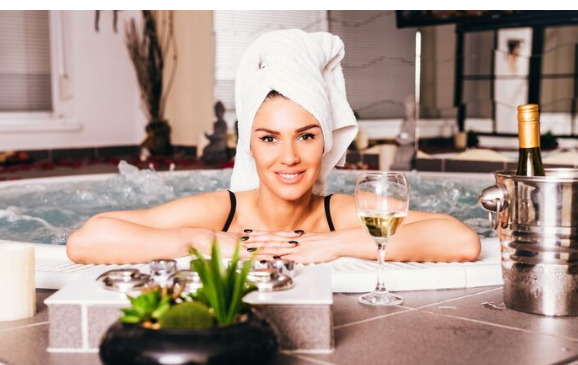
A company that has worked out how to turn day visitors into regulars is reflected in the membership structure. To eliminate the hassle of determining if an impromptu visit is warranted, a $75 monthly membership with unrestricted daily access and a free chair massage is offered. For those who have truly integrated this into a weekly routine, the annual choices scale up with improved per-visit economics.
The pricing is not obviously out of line with comparable services in the market, and the fact that more than 100,000 customers have been served since 2007 indicates that the value proposition has connected with a significant portion of the neighborhood. However, the economics may appear differently in the context of West Hollywood’s cost of living than they would in a mid-sized city.
Voda doesn’t try to be everything. It is not a yoga studio, a medical spa, a gym, or a beauty parlor. With a cafe and a drink program for those who would choose to prolong the afternoon rather than driving directly home, it is a setting centered around water, warmth, and the particular kind of stillness that follows true physical relaxation.
Depending on what you are searching for, this tight concentration can either be a drawback or an asset. It reads as a virtue to the regulars who cycle through the banya and the chilly plunge, then settle into the Jacuzzi before heading to a table in the cafe. For a few hours, neither of those truths demands your whole attention as the West Hollywood afternoon drags on and the metropolis outside proceeds at its regular pace.
