
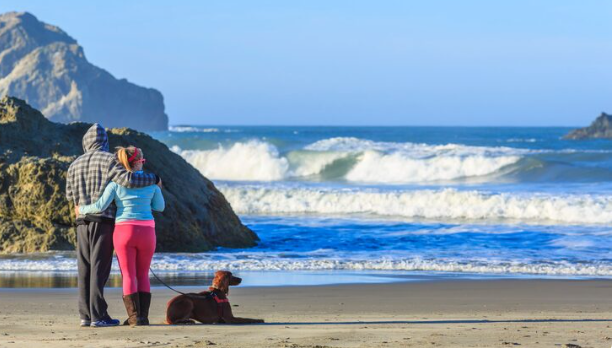

The morning I arrived, the tide had just rolled out, leaving behind streaks of foam that curved like brushstrokes across the sand. A local was already waist-deep in the surf, board underarm, eyes fixed on the next set. It felt unhurried, even intentional.
Dee Why doesn’t announce itself. There are no garish signs, no scramble for attention. Instead, it drifts into view softly—folded between more famous names like Manly and Palm Beach—yet offering something strikingly similar in appeal, only without the crush of tourism.
| Feature | Details |
|---|---|
| Location | Dee Why, Northern Beaches, Sydney, NSW |
| Distance from Sydney CBD | Approximately 18 kilometres north-east |
| Known for | Surf beach, local festivals, relaxed coastal lifestyle |
| Popular Events | Australia Day, New Year’s Eve Fireworks, Ocean Thunder, Beachley Classic |
| Notable Outdoor Spots | Ted Jackson Reserve, James Meehan Reserve, The Strand promenade |
| Surf Highlight | Dee Why Point – famous for strong winter swells and experienced surfers |
| Local Government Area | Northern Beaches Council |
| Parking Info | Free with permit or pay-and-display at James Meehan Reserve |
| External Reference | Northern Beaches Council |
Stretching along Sydney’s Northern Beaches, Dee Why is a town that feels content in its own rhythm. The Strand, its gently curving beachside promenade, is lined with cafés where flat whites come with the hum of conversation rather than the snap of selfies. Families gather by the playground in Ted Jackson Reserve, and just beyond that, the ping of a paddleball marks the location of an outdoor table tennis table that somehow never feels out of place.
For surfers, Dee Why Point has long been a badge of honor. When the southern swells come roaring in during winter, only the brave paddle out. The wave breaks with a clean, hollow power—beautiful to watch, punishing to mistime. This is not a beach for showboating. It’s a beach for returning, again and again, always a little bit better than the last time.
During the pandemic, I remember seeing photos of this beach completely empty, the horizon untouched, the sky wider than usual. Somehow, that quiet image stayed with me longer than all the crowded travel reels that followed.
By integrating natural preservation with understated development, Dee Why has remained particularly resistant to the kind of overbuilt pressure other suburbs endure. The James Meehan Reserve offers parking without squeezing every inch for revenue, and its nearby path leads smoothly onto the sand without fanfare. There’s a kind of design minimalism at play—everything functional, nothing excessive.
For the children, the reserve’s playground is enclosed and shaded. It’s not the kind of park that makes architectural headlines, but it’s remarkably effective in doing what it’s supposed to—keep kids safe while parents sip takeaway coffee a few metres away. By embedding leisure into public design, the area becomes highly efficient without becoming clinical.
Over the years, Dee Why has become a preferred site for local events that thrive on intimacy rather than scale. Australia Day festivities here feel celebratory but contained. The New Year’s Eve fireworks don’t rival those over the harbour, but that’s precisely their charm. Locals set up picnic blankets by dusk, and the show begins with just enough wonder to feel like something shared, not broadcast.
Getting here is straightforward. Buses run frequently from Sydney’s city centre, and once you arrive, you rarely feel lost. The orientation of the beach, promenade, and parklands are intuitively laid out. This isn’t a maze of tourist traps—it’s an open hand.
In recent years, “quiet luxury” has become a trend in travel marketing—an ironic phrase that seems to describe places like Dee Why before anyone thought to brand them that way. Here, quiet isn’t curated. It just exists. It’s in the slower walks, the nods between locals, and the unhurried closing of café tabs long after the last sip.
What’s notably improved over time is the sense of balance between community space and visitor attraction. While new residential buildings have crept up along Pittwater Road, the beach itself feels unchanged. That tension—growth without noise—feels rare and commendable.
For medium-sized suburbs like Dee Why, the challenge often lies in being noticed without being consumed. It is, remarkably, doing both. Hosting events like the Beachley Classic and Ocean Thunder shows its ability to handle spotlight moments without unraveling the daily texture of its quieter hours.
There’s no high-rise that blocks the sun. No theme-park branding. Just regular routines brushing against salty air. For early-morning joggers and late-afternoon walkers, the tides create natural timekeeping. The beach tells you when to pause and when to move. That natural cadence, repeated daily, reshapes what it means to experience a coastal suburb.
By preserving its identity through measured development, Dee Why offers a blueprint that’s particularly innovative in its simplicity. Rather than chasing attention, it earns admiration.
And when you finally sit on the grassy edge of Ted Jackson Reserve, shoes off, eyes on the water, you might quietly think—this is exactly enough.
