
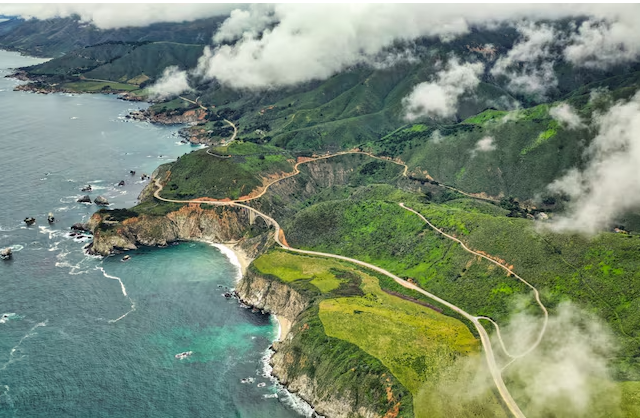

Long before the aircraft touches down, Jeju Island can be seen via the glass. From above, the island appears to be a dark green disk floating in the Pacific, surrounded by an unending field of sea and bordered by pale beaches. Mount Hallasan, a dormant volcano that subtly shapes the island’s topography, rises in the center.
Jeju is frequently referred to as the most popular vacation destination in South Korea. And it’s easy to understand why. The pace of cities on the mainland, such as Seoul or Busan, seems a little slower on the island. Sea salt and citrus from the island’s well-known tangerine groves blend in the air. Even the light appears to be altered, seeming softer as it reflects off ocean waves and lava rocks.
| Information | Details |
|---|---|
| Location | Jeju Island, South Korea |
| Geographic Feature | Volcanic island with Mount Hallasan at the center |
| UNESCO Status | Jeju Volcanic Island and Lava Tubes (World Heritage Site) |
| Key Cities | Jeju City (north), Seogwipo (south) |
| Famous Natural Sites | Hallasan Mountain, Seongsan Ilchulbong, Manjanggul Lava Tube |
| Cultural Tradition | Haenyeo female divers |
| Reference Website | https://www.visitjeju.net |
In actuality, Jeju Island is the biggest island in South Korea and one of the most popular tourist destinations there. However, the sense of being there is not fully captured by statistics.
Cafés open slowly on a normal morning in Jeju City, the northern center of the island, as delivery trucks drive through streets with walls made of basalt stone and palm trees. Due in part to the airport’s proximity to the city core, many visitors start their trip here. Weekend visitors arrive in waves because flights from Seoul just take an hour. However, Jeju City is just the beginning.
After around forty minutes of driving south, the scenery shifts. The road winds past peaceful villages and countryside with orderly rows of bright orange Hallabong tangerines. The landscape eventually opens up toward Seogwipo, a seaside city renowned for its striking waterfalls and cliffs. It’s difficult to ignore how different this area of the island feels.
Seogwipo travels more slowly. Early in the morning, fishermen congregate close to the waterfront, and tiny seafood eateries open long before the majority of visitors awaken. You may see anything from freshly caught squid to abalone that has been picked from the nearby waters if you stroll through the market. The Haenyeo, one of Jeju’s most intriguing cultural customs, gather some of that fish.
Without the use of oxygen tanks, the Haenyeo are female divers who gather seaweed and shellfish from the ocean floor. Many of them, who are in their sixties or seventies, calmly plunge into the chilly water. Observing them get ready for a dive—tightening wetsuits, adjusting goggles, joking quietly—provides an insight into a way of life that has endured for centuries. Despite the physical demands of their profession, they are highly esteemed on the island.
The surrounding natural environment is just as unique. Volcanic activity is the reason Jeju exists, and its geological source can be seen everywhere. The coast is lined by black basalt rocks. Beneath the island are tubes of lava. Manjanggul Cave, a seven-kilometer lava tunnel that is nearly unreal to go through, is one of the most well-known examples.
The temperature abruptly decreases within the cave. Long structures of cooled lava rise from the ground like frozen waves, and moist air hovers in the darkness. The island’s volcanic past has left some places with nearly cinematic splendor. Sunrise Peak, also known as Seongsan Ilchulbong, is a huge crater that rises out of the ocean. Hikers watch the sun rise over the horizon as they ascend the steep trail to the summit at dawn. There’s a reason the vista is well-known.
At about 2,000 meters above sea level, Hallasan Mountain dominates the island’s center. A crater lake close to the summit is reached by hiking trails that meander through forests and volcanic slopes. On clear days, the entire island is visible from above, with farmland, settlements, and the coastline creating a mosaic below. Hallasan might be Jeju’s peaceful center.
The peak, which was formed by past eruptions that changed everything around it, stands in the center of the island as a reminder of its beginnings. These eruptions created healthy soil throughout time, which helps to explain why agriculture is so successful in this area. Naturally, the island’s identity is influenced by its cuisine.
One of the most well-known dishes on the island is Jeju’s black pork, which is roasted over charcoal and served with regional veggies. The sound of sizzling meat and talk frequently fills restaurants that specialize in it. With families and tourists sharing dishes at packed tables, those dinners have an unmistakable communal quality. The tangerines come next.
During harvest season, hallabong citrus fruits can be found everywhere: pressed into fresh juice sold at little kiosks, stacked in roadside stalls, or packed as gifts. The fruit’s deliciousness seems to be a metaphor for the island itself.
Observing tourists come and go gives the impression that Jeju holds a unique place in South Korea’s consciousness. For many, it stands for romance, leisure, or just a respite from the hectic pace of city life.
At the same time, portions of the island are still changing due to tourists. Along the Jungmun coast, upscale resorts with elegant hotels facing the ocean have emerged. The economic advantages are welcomed by some residents. Others are secretly concerned about the island’s capacity to absorb more growth. It’s a slight but genuine tension.
Nevertheless, Jeju reverts to its more subdued pace when dusk falls over the shoreline and waves crash against dark volcanic cliffs. Fishermen prepare their equipment. Narrow streets are illuminated by café lights. The Haenyeo boats float gently toward beach somewhere offshore.
For a brief time, the island appears to have been sculpted by lava, wind, and the constant presence of the sea, just as it must have been ages ago.
