

The Carnival Encounter refurbishment strategy is drawing close attention across the cruise trade after Carnival Cruise Line unveiled the converted vessel in February 2026, following a three-year transformation at a Singapore dry dock facility. The ship, formerly the P&O Australia Pacific Encounter, has been rebuilt to Carnival specification rather than replaced with a new-build, raising questions about whether refurbishment and fleet acquisition will become the dominant model for capacity growth.
How the Carnival Encounter Refurbishment Strategy Took Shape
P&O Australia officially ceased operations in March 2025 and was absorbed into the Carnival brand. That absorption was substantial in scale: according to a Carnival Corporation announcement reported by StockTitan, the move added 8 ships to the group’s portfolio and boosted overall capacity by 50%. Rather than retire the Pacific Encounter outright or order a replacement new-build, Carnival opted to dry-dock the vessel and refit it to its own brand standard.
The resulting ship carries 2,600 guests and measures 108,865 gross tonnage, making it a relatively compact unit by Carnival’s current standards. The new Carnival Jubilee, for comparison, accommodates up to 5,374 guests at double occupancy and over 6,000 at maximum capacity. The size gap is intentional: the Encounter was never meant to compete with the mega-ship programme, but to broaden Carnival’s footprint in the Asia-Pacific market at a fraction of the capital cost.
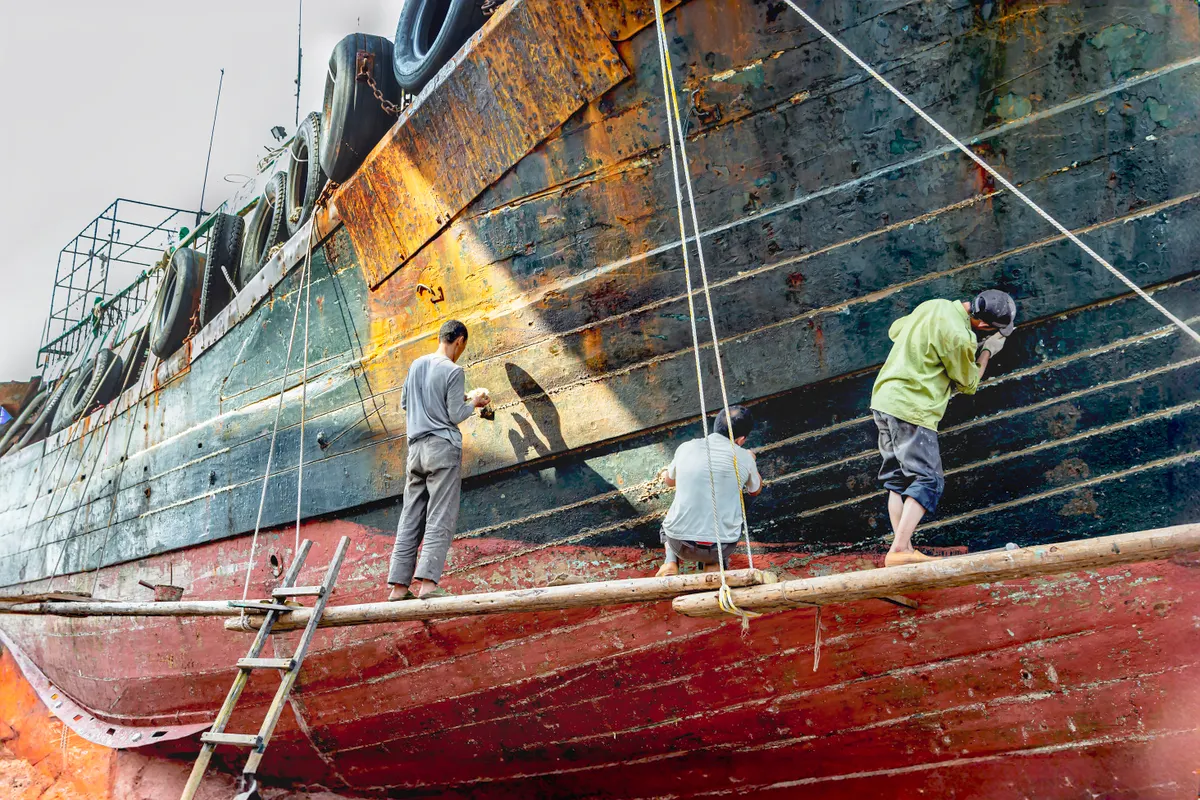
Designing and constructing a new vessel typically takes four or five years. Refurbishing an existing ship compresses that timeline considerably, allowing a line to add capacity and enter new itinerary markets faster. With new-build costs potentially exceeding $1 billion, the economics are straightforward. According to Saint-Gobain, refurbishing a mid-sized vessel costs between $25 million and $40 million, rising to $80 million to $150 million for larger ships (roughly 20 to 30% of new construction costs) while extending service life by 10 to 15 years.
What Carnival Encounter Offers the Trade and Its Passengers
The Carnival Encounter refurbishment strategy was not purely about cost containment. The ship now blends Carnival’s standard product, Twin Racer water slides, Bonsai Sushi Express, Fahrenheit 555, revitalised pools, and a resurfaced basketball court, with features retained from its P&O Australia configuration. The Edge Adventure Park, combining ziplining and climbing, remains aboard. So does the adults-only Oasis pool area, a tiered deck space with day beds, hot tubs, and a dedicated bar. New thermal suites have been added inside the Cloud 9 Spa.
‘We’re excited to be providing our guests with a whole new spa experience and transformed spaces onboard Carnival Encounter. Queenslanders are going to love the luxury of lying on a heated lounge while at sea, whether they choose to sail in summer, autumn, winter or spring,’ said Anton Loeb, Carnival Cruise Line Assistant Vice President Sales and Marketing, in a statement on the Carnival website.
For travel agents and tour operators selling the product, the hybrid configuration is a differentiation point. Amenities normally spread across a vessel carrying twice the passengers are concentrated on a ship with 2,600 berths, which in practice means lower utilisation pressure on shared spaces and a less congested on-board experience than the mega-ship product.
A Broader Industry Pattern, Not a One-Off
Carnival is not the only operator working this model. Fred. Olsen Cruise Lines, which operates a fleet built largely from refurbished tonnage, has acquired vessels from brands including Crown Cruise Lines. Ambassador Cruise Line operates ships originally built for other operators, including one that previously sailed under Princess Cruises. Within Carnival’s own portfolio, the Carnival Venezia was formerly the Costa Venezia, with the brand retaining the ship’s original name in both cases.
Older vessels enter dry dock every three years on average, compared with every five years for newer ships, a cycle that gives operators more frequent windows to update interiors, add new dining concepts, and adapt the product to shifting passenger expectations. Cruise ships are generally expected to remain in service for up to 40 years with a regular dry-dock schedule, meaning a well-maintained refurbished vessel carries considerable remaining life.
The financial logic is clear enough. Whether cruise lines can execute fleet expansion through acquisition and refurbishment without diluting brand consistency is the operational question the Carnival Encounter refurbishment strategy will help answer, with the ship now actively sailing and generating load data in the Asia-Pacific market.
