
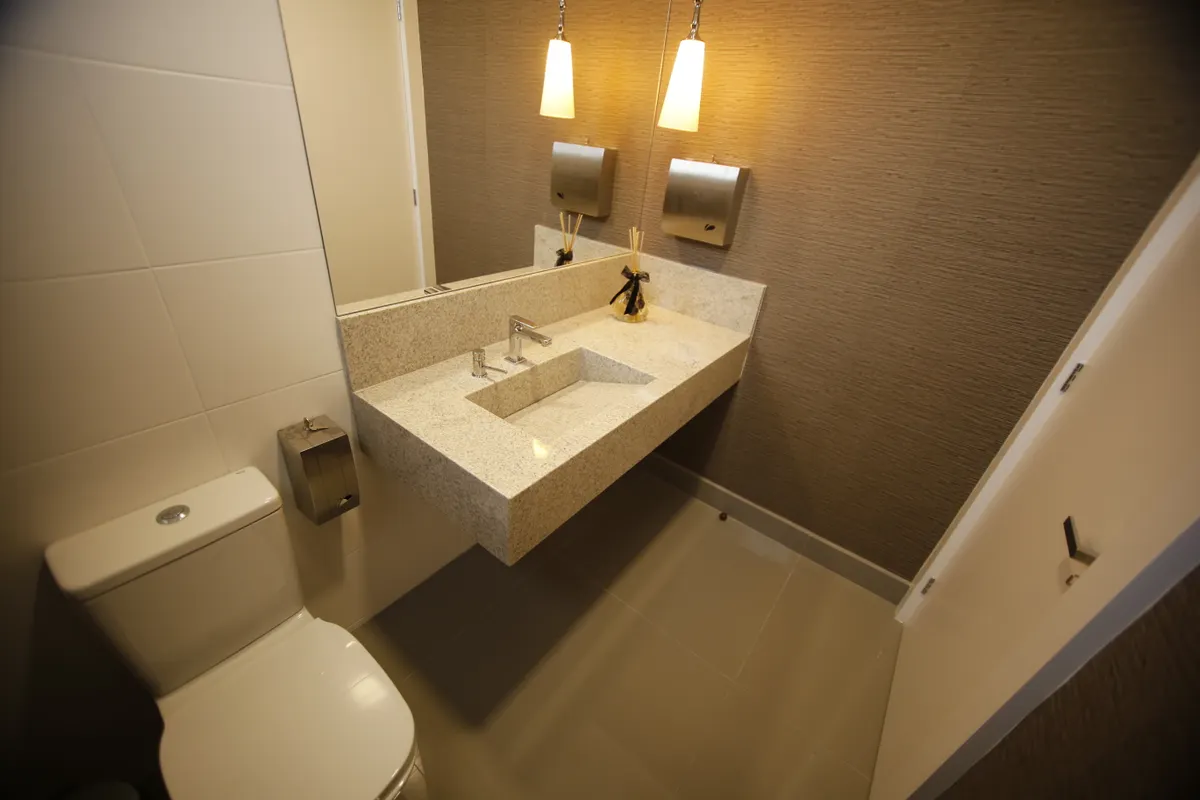

DFW Airport ablution stations for Terminal D remain unapproved, with the project still under internal evaluation, even as a filing with the Texas Department of Licensing and Regulation (TDLR) has attracted widespread attention and conflicting cost figures. A filing initially registered on 31 July cited a project value of $300,000, but the Houston Chronicle reports that the TDLR filing has since been updated to list an estimated cost of $115,000.
The filing describes a 170-square-foot renovation that would add one men’s and one women’s ablution station to existing Terminal D restrooms, on the pre-security side of the terminal. The work is listed as privately funded, with a proposed start date of 31 August and a completion target of 31 December.
Project Remains in Evaluation, Airport Confirms
Heath Montgomery, a spokesperson for Dallas-Fort Worth International Airport (DFW), told The Dallas Morning News by email that the proposal has not been formally sanctioned. ‘The airport is evaluating an internal proposal to expand that service to one additional set of restrooms on the pre-security side of the same terminal,’ Montgomery said. ‘While the proposal was brought forward for evaluation to support safe and sanitary access for customers, and to support the airport’s growing operations, it remains in the evaluation phase and has not been approved.’
Montgomery also noted that the airport has ‘offered an ablution washing station on the post-security side of its international terminal for years without concerns.’ According to the Houston Chronicle, those two existing stations have been in place since 2019, when DFW relocated and expanded its interfaith chapel near Gate D40. The proposed expansion would therefore add pre-security provision alongside the post-security facilities that have operated without incident for several years.
The practical rationale behind the installations centres on passenger safety as much as religious accommodation. Low-level Wudu ablution basins are designed to prevent the soaked, slippery floors and countertop damage that result when travellers wash their feet at standard bathroom sinks. Several major US airports, including Chicago O’Hare International Airport and George Bush Intercontinental Airport in Houston, already incorporate such stations into their facilities.
DFW Airport Ablution Stations in a Wider Interfaith Context
Wudu is the ritual purification performed by Muslims before daily prayers, involving the washing of hands, mouth, nose, face, arms, head, and feet in a prescribed sequence. Having dedicated fixtures at airports enables Muslim travellers to fulfil prayer obligations during transit without creating hazards in shared bathroom facilities.
DFW connects to several destinations with large Muslim populations via non-stop routes across the Middle East, Europe, and Asia. The airport records more than 86 million passengers annually, of whom around 13 million are international travellers, and almost all of its major foreign flag carriers operate from Terminal D, the terminal targeted by the proposed renovation.
The airport’s interfaith infrastructure extends well beyond ablution facilities. DFW operates five interfaith chapels across its terminals, open around the clock to passengers of all faiths. The programme traces its origins to 1977, when it was envisioned by Braniff Airlines Captain Fred P. Griswold, and was formally incorporated as a non-profit organisation in 1978. The chaplaincy programme has since grown to include a dedicated app, digital outreach, and partnerships with military support organisations.
Conservative activist Ryan Fournier, commenting on social media, framed the proposal in operational rather than ideological terms: ‘This isn’t about pushing an ideology, it’s basic airport management. Low-level wudu basins keep the restrooms dry and safe for everyone. Standard Infrastructure: DFW is one of the busiest travel hubs on the planet. Major US airports like Chicago O’Hare and Indianapolis have had these and interfaith rooms for years to handle international traffic cleanly.’
Until DFW confirms whether the proposal has been formally approved, the TDLR filing (with its now-revised cost figure of $115,000) represents the clearest available indication of scope. The airport has not given a revised timeline for a final decision.
