
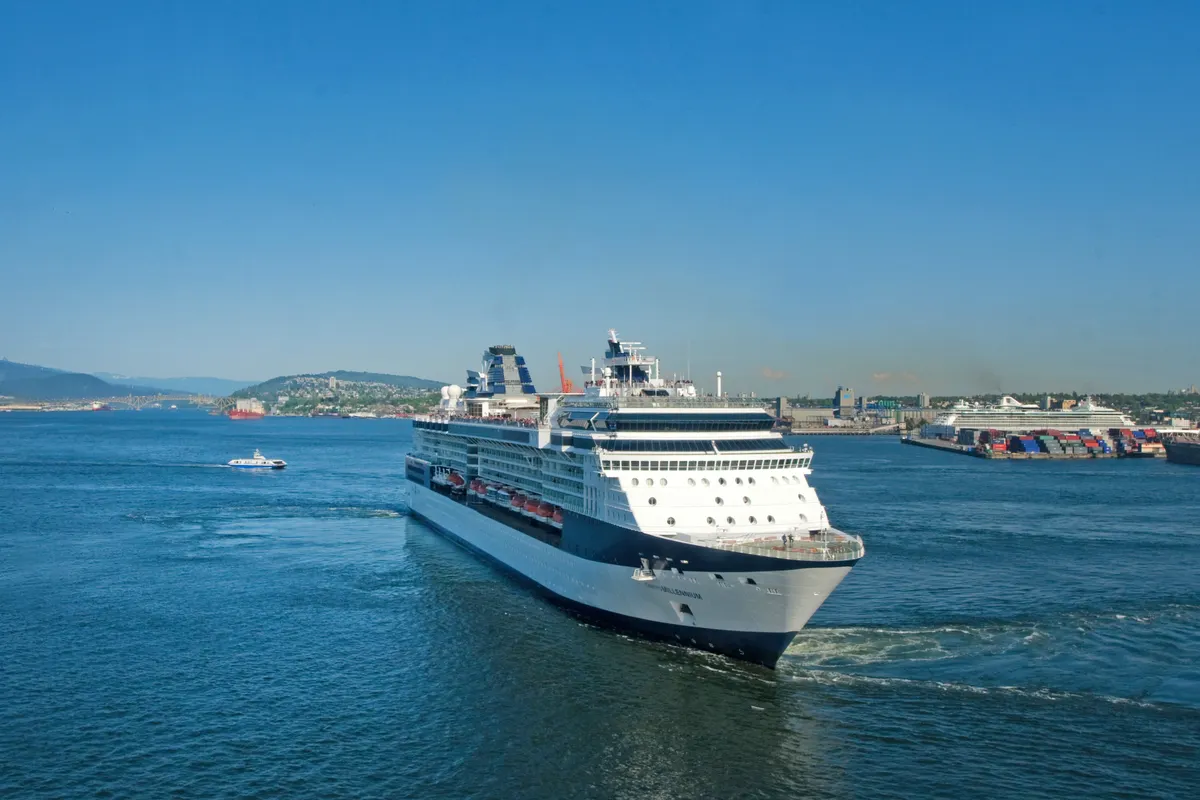

A medical emergency triggered the Harmony of the Seas diversion to Bermuda during a 13-day transatlantic crossing from Barcelona to Port Canaveral, with the ship expected to reach Royal Naval Dockyard at King’s Wharf on the morning of 5 August, according to CruiseMapper.
The diversion was prompted by a passenger requiring evacuation, after the ship’s crew broadcast an ‘alpha alpha’ code, the standard maritime signal for a medical emergency. Royal Caribbean had not responded to a request for comment at the time of publication.
Harmony of the Seas Diversion: What Passengers Reported
Accounts from passengers on board, shared on social media including Reddit, filled in much of the detail that Royal Caribbean had not publicly confirmed. One passenger wrote that the captain made a shipwide announcement: ‘Today the captain confirmed that we were diverting to Bermuda to evacuate a passenger with a medical emergency. Supposedly we’re not docking, and it isn’t expected to delay our arrival in Florida. Interesting to see how things like this work on transatlantic cruises so far from land. Hope things work out okay for the passenger and his/her family.’
Others on board echoed that sentiment. ‘I hope the person/family are OK. Their health and safety are more important than an itinerary,’ one commenter wrote.
A fellow passenger reported receiving a brief update from crew. ‘I’m on this ship too,’ the commenter said. ‘The suite concierge confirmed the patient is stable.’ Royal Caribbean has not independently confirmed that account.
Medical Evacuations at Sea: The Broader Context
Incidents like the Harmony of the Seas diversion are uncommon, even on vessels carrying thousands of passengers. Data published in the CDC Yellow Book: Health Information for International Travel puts the scale of genuine emergencies in perspective: roughly 10% of all conditions reported to cruise ship medical centres are classed as a medical emergency or require urgent care.
Of those cases, approximately 95% are treated or managed on board, with the remainder requiring evacuation and shoreside consultation for dental, medical or surgical issues. The most frequently reported health problems during cruising are respiratory illnesses, accounting for 30% to 40% of cases, followed by injuries from slips, trips or falls at 12% to 18%, and gastrointestinal illness and seasickness each at roughly 10%. Cardiovascular conditions represent around 3% of medical centre visits but account for 80% of on-board cruise ship deaths, according to the same CDC data.
Passenger accounts from previous transatlantic sailings suggest that well-handled diversions rarely derail overall itineraries. One Reddit user recalled a similar situation on a crossing from New York to Southampton: ‘The captain sped the ship up, and we sailed to Ponta Delgado and dropped the passenger off in the middle of the night and still made it to our first stop in Madeira on time.’ Another traveller reported a diversion to Halifax, Nova Scotia, during a transatlantic crossing: ‘Absolutely no delay and didn’t even realise it had happened.’
The CDC advises passengers with chronic conditions to inform their cruise line before sailing, verify health insurance cover and consider purchasing additional cover for medical evacuations. On board, frequent handwashing, maintaining fluid intake and avoiding excessive alcohol are among the measures recommended to reduce health risks at sea.
The Harmony of the Seas diversion is the latest in a series of incidents across the industry in recent weeks. Separately, a Carnival Cruise Line passenger was arrested after striking two children on board in July, and the Lindblad Expeditions vessel National Geographic Sea Bird recorded its fourth gastrointestinal illness outbreak within eight weeks.
Royal Caribbean’s Harmony of the Seas was sailing a 13-day transatlantic itinerary at the time of the incident. CruiseMapper’s tracking placed the expected Bermuda call at Royal Naval Dockyard on the morning of 5 August, with the ship’s Port Canaveral arrival not reported to be affected.
