
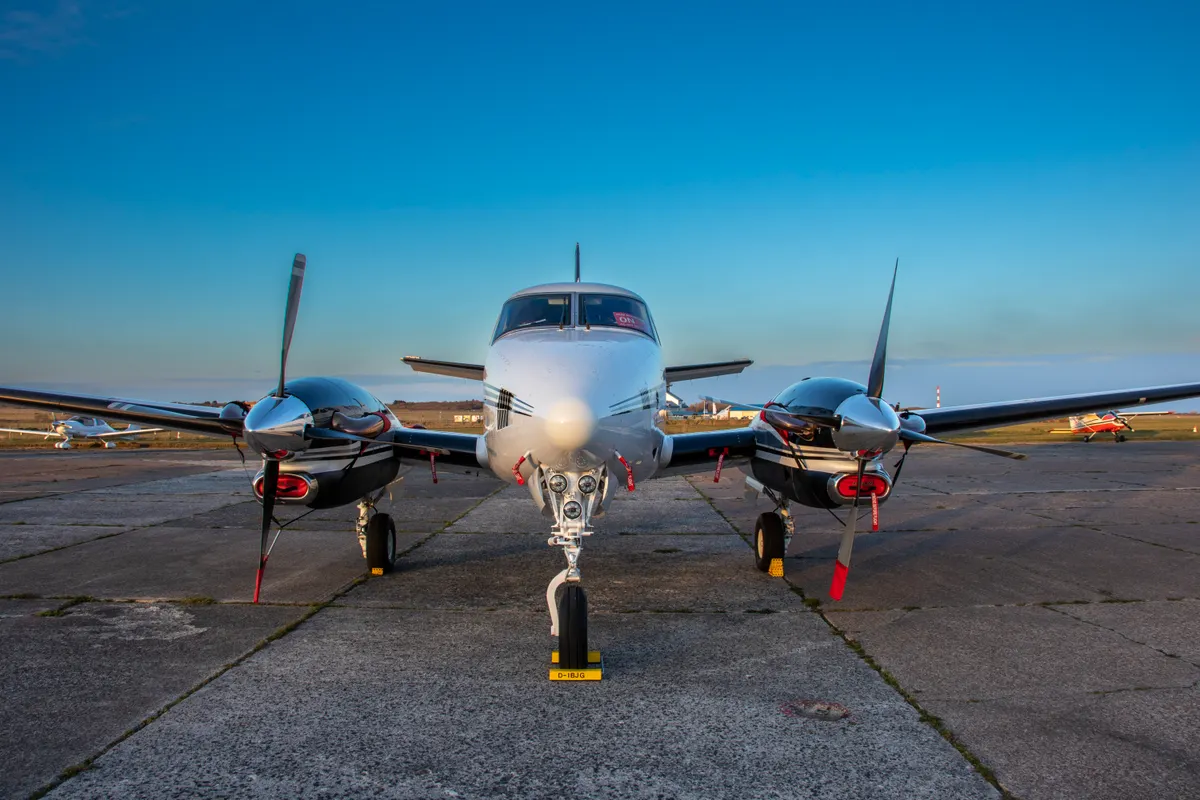

Piper Aircraft is displaying the flying prototype of the Seminole DX diesel twin at EAA AirVenture Oshkosh 2026, with the aircraft having completed its maiden flight on 2 July and now accumulating the performance and reliability data required for type certification.
The development aircraft is fitted with two DeltaHawk DHK4A180 engines, each rated at 180 horsepower and certificated by the FAA to burn Jet A or Jet A-1. The prototype arrived at Oshkosh less than three weeks after its first flight, during which it completed four traffic-pattern circuits.
Flight-test data and the STC pathway for the Seminole DX diesel twin
Preliminary figures presented at a press conference on 20 July by Piper president and chief executive officer John Calcagno show a climb rate of about 1,700 feet per minute and fuel consumption roughly 35% lower than the standard avgas-powered Seminole. Published data place fuel burn at 15.1 gallons per hour at 75% power and 6,000 feet, against 23.3 gallons per hour for the avgas variant. Piper also projects a 32% improvement in single-engine climb performance and a 70% increase in single-engine absolute ceiling.
According to AVweb, DeltaHawk is collecting performance and reliability data specifically to support a supplemental type certificate (STC) covering installation of its engines in the PA-44. The companies are working to expand the flight envelope as that data set grows.
DeltaHawk states on its product page that the conversion delivers a 40% reduction in total cost of ownership when improved fuel efficiency and simplified maintenance are combined, a claim it says redefines expectations for general aviation training aircraft. That figure sits alongside Piper’s own trip-cost modelling: Calcagno said a 700-nautical-mile mission would see estimated trip fuel cost fall from about $670 to around $320, cutting the fuel cost of a training flight by more than half.
Market demand and orders driving the programme forward
Piper introduced the Seminole DX at AirVenture 2025 and at the time indicated certification was expected during the third quarter of 2026, with deliveries of 2027-model-year aircraft expected to begin in late 2026 or early 2027. The manufacturer has said the Jet-A-powered aircraft is drawing enquiries from flight schools in markets where avgas is expensive or difficult to obtain.
‘Interest in the Seminole DX has been very good since its announcement at last year’s AirVenture,’ Calcagno said. ‘Inquiries have been especially strong in the European and Asia-Pacific flight training markets.’
Skyborne Airline Academy placed the first US order for the type in September 2025, signing for five aircraft for its training operation in Vero Beach, Florida. DeltaHawk, which is based in Racine, Wisconsin, also manufactures a certified four-cylinder DHK engine family producing between 180 and 235 horsepower, and is developing smaller two-cylinder engines aimed at light trainers, unmanned aircraft and military applications. The company adds that its engine architecture is being adapted for hybrid-electric propulsion systems.
Beyond the Seminole DX programme, Piper announced at Oshkosh a fleet agreement with ATP Flight School covering a firm order for six aircraft and options on 25 more in 2027. The firm order comprises three Archer TX aircraft scheduled for delivery within 30 days and three conventional Seminoles due in 2027. ATP uses the Archer for single-engine instruction and the Seminole for multi-engine training across more than 85 training centres.
New factory service centre planned for Vero Beach
Piper separately announced plans to build a new factory service centre at its Vero Beach headquarters. The facility will include more than 33,000 square feet of indoor space and 11,000 square feet of outdoor service area across two floors, with seven indoor aircraft bays and four outdoor bays. It is intended to serve customers across the eastern United States, the Caribbean, Mexico and Central America.
Construction is scheduled to begin later in 2026, with the centre expected to open during the fourth quarter of 2027, by which point the STC data collection now under way on the Seminole DX diesel twin is expected to have long cleared the certification threshold.
