
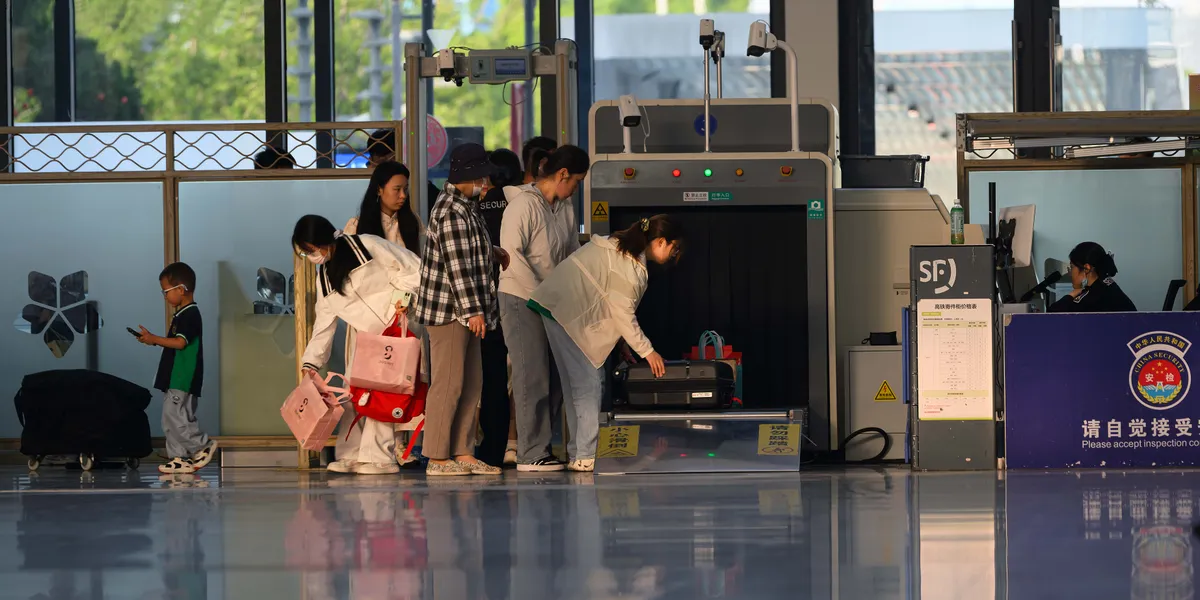

The Transportation Security Administration (TSA) has reaffirmed that the TSA 3-1-1 liquids rule does not apply to medically necessary liquids, following a series of passenger inquiries prompted by fears that liquid medications could be confiscated at US airport checkpoints.
The reminder came via the TSA’s dedicated social media team, @AskTSA, which confirmed in a reply on X that liquid medications in containers exceeding 3.4 ounces (100 ml) are permitted in carry-on baggage. The clarification follows reports from travellers who were unsure whether the long-standing carry-on restriction would be enforced against their prescription or over-the-counter medicines.
What the TSA’s Medication Exemption Covers
‘You may bring medically necessary liquids in carry-on bags,’ the TSA wrote. ‘The containers can be over 3.4 ounces each. Although they don’t need to be packed in your liquids bag, please let our officers know you have these items and place them in a separate bin for X-ray screening.’
The exemption extends beyond the liquid medication itself. Ice packs, gel packs, syringes, and pumps required to administer medically necessary liquids are all permitted under the same provision. The core requirement is declaration: passengers must inform a TSA officer before screening begins and place the items in a separate bin for X-ray.
Travellers who do not wish their medication to pass through X-ray may request a manual inspection. In that case, the TSA advises that additional procedures will apply, including Advanced Imaging Technology (AIT) screening, a pat-down, and further carry-on inspection for the passenger or their travelling guardian.
For travel agents and tour operators advising clients, the practical guidance is straightforward: keep medications in their original pharmacy-labelled containers, declare them proactively at the checkpoint, and carry supporting documentation where possible. While the TSA does not strictly require original packaging or a medical letter, prescription travellers carrying large quantities of liquid medication may face additional questioning, particularly if they are carrying over-the-counter products that are widely available without a prescription.
Why the TSA 3-1-1 Liquids Rule Still Triggers Screening Issues
Passenger reports suggest security officers occasionally perform additional screening or, in some cases, confiscate liquid medications. The TSA’s own guidance points to two main triggers: failure to declare the items before the screening process begins, and failure to place them in a separate bin. Both are straightforward procedural steps that can be communicated clearly to travellers ahead of departure.
Excessive quantities relative to trip duration can also draw scrutiny. The TSA warns that officers may test exempted liquids for explosives or other prohibited substances regardless of exemption status. Where screening technology cannot clear an item, passengers may be asked to submit to Vapour Analysis of the container’s contents.
International travellers face an additional layer of complexity. Country-specific rules on liquid medications vary, and for non-English-speaking destinations, a translated version of any supporting medical letter is advisable. The TSA exemption applies at US checkpoints only; it does not bind foreign security authorities.
The same week as the medication reminder, @AskTSA also posted about a separate, less expected exemption: live fish. Live fish in clear containers, along with the water they swim in, are permitted in carry-on baggage, though additional screening of both the fish and the water may be required. The post, which referenced Dr Seuss’s One Fish, Two Fish, Red Fish, Blue Fish, drew attention to the fact that the 3-1-1 rule carries a broader set of carve-outs than many travellers realise. Beyond medications and live animals, the exemptions cover infant formula, breast milk, baby food and toddler drinks (including cooling packs), as well as duty-free liquids purchased at the airport in secure tamper-evident bags, accompanied by a receipt, on US-bound flights.
The Origins of the 3-1-1 Rule
The TSA 3-1-1 liquids rule was introduced in September 2006, a response to a foiled terrorist plot the previous month in which operatives planned to detonate peroxide-based liquid explosives concealed in plastic bottles aboard transatlantic flights from the UK to the US and Canada. Both US and UK authorities initially imposed an emergency blanket ban on all liquids, gels, and aerosols in carry-on luggage, with narrow carve-outs for baby formula and essential medical supplies.
The 3-1-1 framework replaced the blanket ban as a workable compromise. Container size limits allow officers to visually inspect items quickly, keep any single liquid below the volume required to cause a large explosion, and prevent a passenger from consolidating enough components to construct an improvised explosive device. Those operational principles remain unchanged, and they explain why even exempted liquids are subject to separate screening rather than a simple wave-through.
For trade professionals advising leisure and corporate clients, the message from the IATA-era of heightened checkpoint awareness remains consistent: pre-declaration, original labelling, and supporting documentation are the practical tools that keep medical travellers moving through security without delay.
