
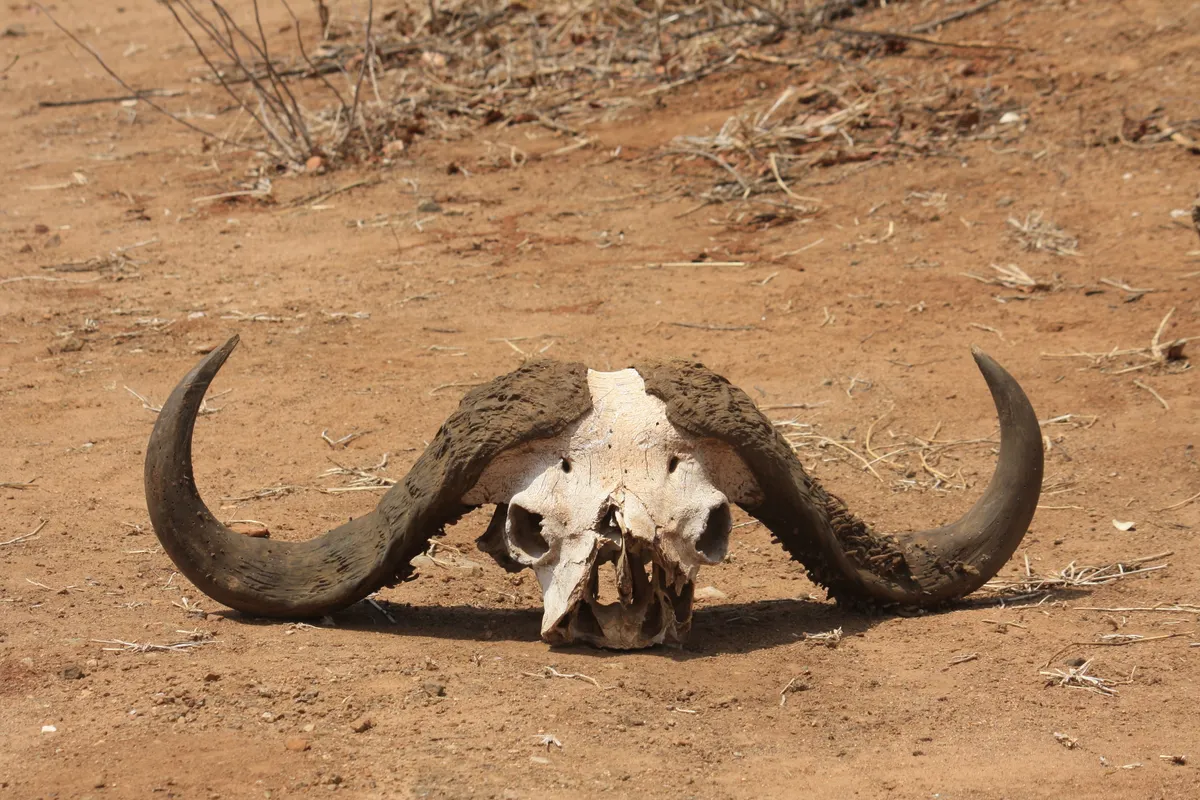

Yellowstone bison carcass management came into public view on 10 August when park bear management staff quartered a dead female bison in Lamar Valley while approximately 30 tourists looked on, an episode that has since prompted questions about ranger technique, equipment choice, and the broader safety logic behind moving large animal remains in the park.
The bison, which died of natural causes, was found 220 yards from the road, according to Kaul of The Travel‘s source, Kaul of The Wild Yellowstone Tour, who was present during the operation. The carcass’s proximity to hikers and fly fishermen created what Kaul described as a ‘possibly chaotic’ situation, prompting rangers to intervene and redistribute the remains rather than leave them intact in a single location.
How Rangers Carried Out the Yellowstone Bison Carcass Operation
Bear management staff severed all four legs at the joint and dragged them to separate locations, each roughly 100 to 150 yards from the main carcass. Staff then opened the animal’s abdomen and rear to expose flesh and blood, maximising scent dispersal for predators. ‘They cut off all four of her legs at the joint, and dragged them to four different areas, probably about 100 to 150 yards away from the main carcass,’ Kaul told Cowboy State Daily. ‘Then, they opened up her belly and backside to expose more flesh and blood for the predators to smell. There were around 30 people there, and I explained that they were doing everything they could to allow us to enjoy this.’
Observers on social media questioned the use of what appeared to be small kitchen knives for such a large carcass. It was subsequently clarified that rangers were using butcher knives. The choice is deliberate: sharp blades allow precise cuts through joints and the abdominal cavity without scattering heavy fragments across the habitat. Heavier mechanical equipment, such as front-end loaders or winches, can move large carcasses more quickly but are restricted to road-accessible locations, as Yellowstone historian and veteran employee Jeff Henry noted. Henry, who has evaluated between 1,500 and 2,000 winter kills across 48 winters working and living in the park, also pointed out that rangers consistently return carcass pieces to the same spots, conditioning bears and other scavengers to seek food in predictable areas away from high-traffic zones.
Bear Safety Drives Yellowstone Bison Carcass Management Policy
The safety rationale behind the practice is straightforward. Kerry Gunther, the park’s Lead Bear Management Biologist, explained that a dead bison functions as a powerful bear attractant. Left undisturbed, a single carcass can draw large numbers of grizzlies to one spot, creating serious hazards along campsites, trails, and roads. Gunther stated that bear management has recorded up to 23 bears feeding off a single bison carcass in the park’s Hayden Valley. ‘We move those carcasses, so tourists don’t stumble upon a lot of bears feeding [off] a carcass,’ he said.
The team moves about a hundred large carcasses annually under this management framework. Kaul, who watched the Lamar Valley operation in full, concluded that what rangers did represented the ‘best case scenario’ given that the animal had not died on or near the road.
Visitor Behaviour Compounds Safety Challenges This Summer
The Lamar Valley episode sits within a broader pattern of bison-related incidents at Yellowstone this summer. A 65-year-old tourist was flung eight feet into the air in one encounter, and a child narrowly avoided a similar outcome in another. The park has attributed a rise in dangerous encounters partly to visitors ignoring ranger warnings and closing the distance to animals for photographs.
The annual bison rut, which runs from late June to September, raises the risk profile further. During the rut, bulls become highly unpredictable as testosterone levels surge and competition for females intensifies. Yellowstone National Park advises visitors to maintain a minimum distance of 25 yards from bison at all times and to retreat immediately if an animal charges. Bulls may appear calm but can escalate rapidly, exhibiting dominance through bellowing, wallowing, and fighting.
With the rut running through September and large carcass numbers remaining a constant feature of the park’s management calendar, rangers are likely to repeat operations similar to the one witnessed in Lamar Valley before the summer season closes.
