
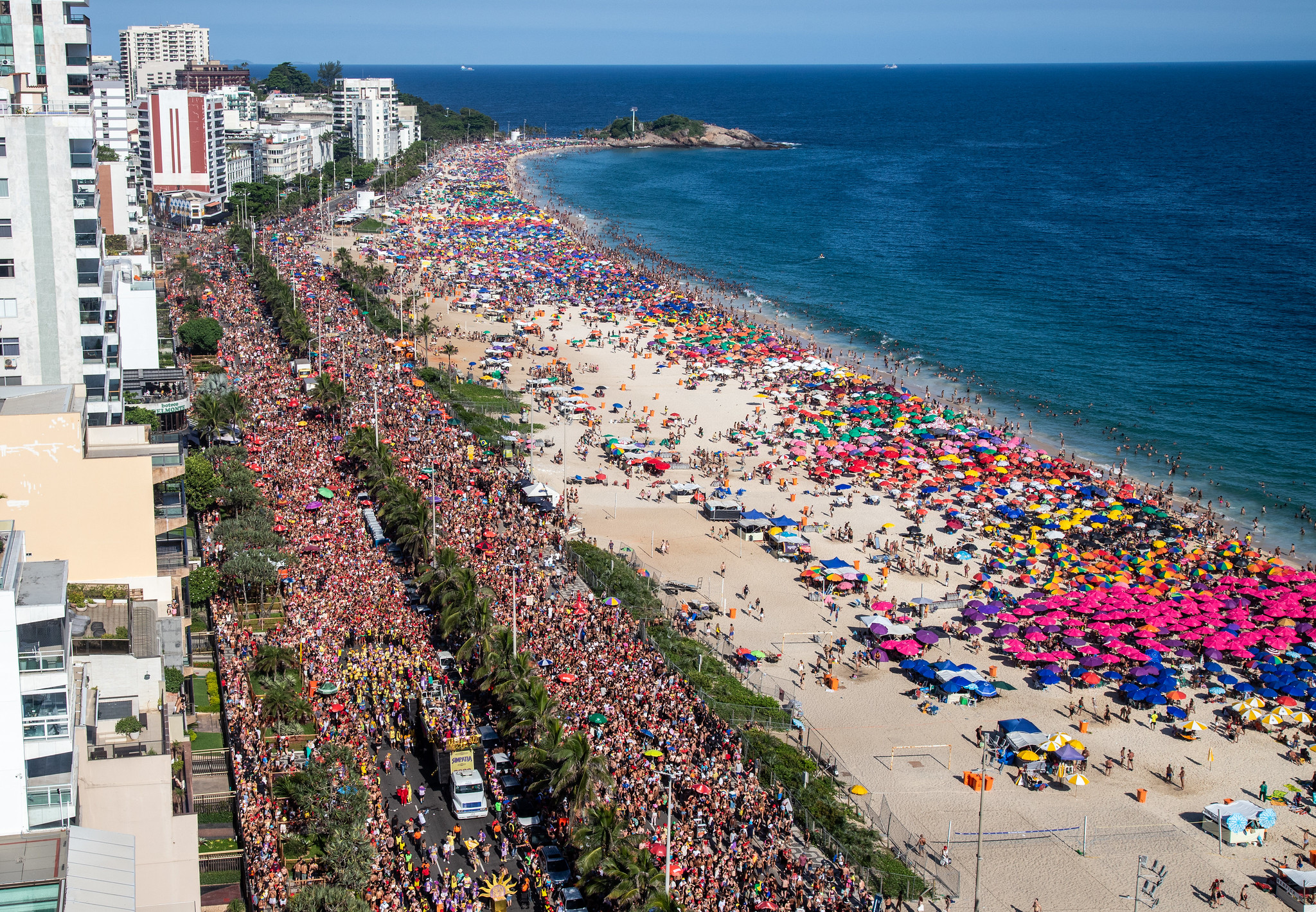

Seven days. That’s how long it took Brazil to attract 30% of an entire month’s worth of international tourists during Carnival 2026, a compression of demand that saw 300,000 foreign visitors flood into the country between late February and early March.
The influx marked a 17% jump from 2025’s figures and generated US$186 million in revenue across Brazilian states, according to data released by Embratur, the nation’s international tourism promotion agency. The economic velocity was striking: nearly a fifth of a billion dollars changing hands in a single week of parades, street parties, and samba school competitions.
The city absorbed 110,000 of those arrivals—36% of the total—cementing its position as Brazil’s primary Carnival gateway. That’s four out of every ten international tourists who chose Brazil specifically aiming for Rio’s Sambadrome and beach-adjacent blocos. The city’s international visitor count climbed 9% year-on-year, translating to roughly US$67 million in spending within the capital alone.
“We are reaping the rewards of an active international promotion policy,” said Marcelo Freixo, Embratur’s president. “Carnival is our greatest cultural showcase, and today it is also consolidating itself as a strategic engine for generating revenue, jobs, and development. The world has once again chosen Brazil.”
Yet Rio’s gravitational pull, while dominant, wasn’t absolute. São Paulo captured approximately 23.5% of international arrivals, positioning itself as the second-most-popular destination during the festival period. The distribution suggested tourists were increasingly willing to explore beyond the postcard-famous beaches and parade routes.
Bahia drew about 7.5% of foreign visitors. Pernambuco accounted for 4.9%. Minas Gerais registered 1.5%. The remaining 26.6% scattered across other Brazilian states, from the colonial streets of Olinda to the Afro-Brazilian rhythms of Salvador’s Pelourinho district.
The geographic spread reflects what Freixo described as cultural diversity becoming an economic asset—different regional expressions of Carnival attracting different visitor profiles. Salvador’s street-level trios elétricos pull different crowds than Rio’s ticketed grandstands or São Paulo’s alternative street parties.
The figures arrive as Brazil seeks to position itself within the upper tier of global festival tourism destinations, competing against the likes of Mardi Gras in New Orleans or Germany’s Oktoberfest. The US$186 million revenue figure doesn’t capture indirect spending—hotels booked months in advance, connecting flights through São Paulo’s Guarulhos airport, or post-Carnival beach extensions in the northeast.
Timing mattered. Carnival 2026 fell during a period when international flight capacity to Brazil had recovered to pre-pandemic levels, and currency fluctuations made the real relatively favourable for dollar and euro holders. The seven-day window—from Friday through Ash Wednesday—created a compressed travel season that airlines and hotels could optimise around.
For Rio, the 110,000 arrivals represented both opportunity and infrastructure test. The city’s public transport system, beaches, and historic centre absorbed the surge alongside domestic tourists, who weren’t counted in Embratur’s international figures but swelled the total considerably. By the time Ash Wednesday arrived, sanitation crews were clearing an estimated 400 tonnes of waste from street party routes.
The regional distribution pattern—with more than a quarter of tourists bypassing the Rio-São Paulo axis entirely—suggested promotional efforts highlighting Brazil’s lesser-known Carnival traditions were gaining traction. Pernambuco’s frevo dancers and Bahia’s axé music offered alternatives to the samba school competitions that dominate international media coverage.
Embratur’s strategy, according to Freixo, hinged on leveraging cultural assets and natural landscapes to drive economic returns through tourism. The agency operates with a mandate to promote Brazilian destinations in international markets, a task that intensifies in the lead-up to Carnival each year when global interest in Brazilian culture peaks.
The 17% growth rate outpaced Brazil’s overall tourism growth for 2025, which hovered in the low double digits. Whether that acceleration continues depends partly on factors beyond Embratur’s control—airline routes, visa policies, economic conditions in key source markets.
What’s clear from the 2026 figures: Carnival has solidified its position as more than cultural expression. It’s economic infrastructure—a week when Brazil converts global fascination with its music, dance, and street culture into measurable revenue and international arrivals.
The question now is whether the 26.6% who explored destinations beyond Rio and São Paulo will return, and whether those secondary markets can build year-round tourism off their Carnival week momentum. For now, the confetti has been swept away, but the economic impact will ripple through hotel, restaurant, and transport sectors for months.
