

Around half past five in the evening, a certain kind of patience takes hold on Aldeburgh’s high street. Locals are familiar with it.
Travelers pick it up fast. Nobody seems to mind as the line outside the fish and chip shop bends down the pavement past the pebble-colored cottages and the windows of antique vendors. The fact that waiting has become a part of the meal may be the most British aspect of the entire process.
| Information | Details |
|---|---|
| Establishment | Aldeburgh Fish and Chip Shop |
| Location | 226 High Street, Aldeburgh, Suffolk, IP15 5DB |
| Founded | 1967 (acquired by Horace & Celia Cooney from Mr Cooper) |
| Current Owners | The Cooney family — Peter, Susan, Alan and Zuzana |
| Sister Shops | The Golden Galleon (1997) and The Upper Deck restaurant (2000) |
| Frying Method | Beef dripping — unchanged since 1967 |
| Equipment | 6-pan High Efficiency ranges with advanced oil filtration (installed 2016) |
| Specialities | Haddock, cod, locally-caught rock eels (a Suffolk delicacy) |
| Staff | Over 25 employees, several with 25+ years of service |
| Notable Recognition | Ranked 9th by Enjoy Travel; previously praised by The Guardian and The Times |
| Live Queue Webcam | Available on the official site to time your visit |
| Family Service Record | Peter Cooney still frying after more than 50 years |
The store has been frying since 1967, when Horace and Celia Cooney purchased it from Cooper, a Yorkshireman who taught them the beef dripping technique that has come to define the establishment. Not sunflower oil, not vegetable oil, and not the contemporary concessions that the majority of chippies have gravitated toward. The old-fashioned method of dripping beef results in a batter that crackles in a way you won’t soon forget. Peter, their son, was eleven years old at the time. Over fifty years later, he’s still there, still frying.
When you wait in line long enough, you start to notice things. The scent, of course, the warm note of fat and vinegar that permeates the middle of the road. The gulls, who are more familiar with the local rhythms than most locals. And the employees, who move with the calm assurance of those who have done this thousands of times.
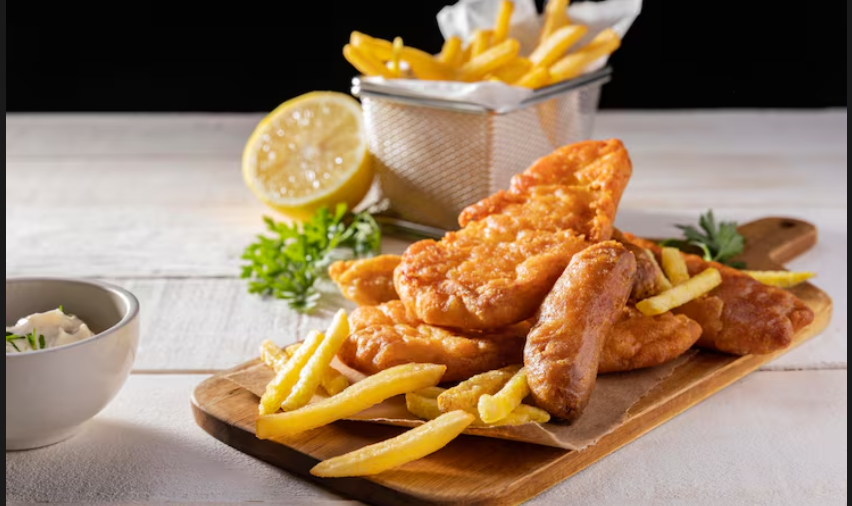
Since 1981, Susan Burns has been employed there. Since 1997, Katy Curling and Alison Bailey have been together. Observing them gives the impression that this is more of a slowly expanding family than a place of employment, where a person’s sister-in-law or cousin eventually works behind the fryer.
With the addition of an oil filtration system in 2016, what was once a two-pan range now has six high-efficiency ones. The approach hasn’t changed, but the technology has. That is the place’s quiet boast. The fish is fresh enough from the east coast that the haddock still has a hint of its original sea flavor. The menu also includes rock eel, a Suffolk specialty that has been quietly vanishing from English coastlines for decades. Rock eel is slightly chewy and slightly oily.
It was once described as possibly the world’s greatest fish and chip shop by The Guardian. The Times made a similar statement. These are the kinds of statements that typically elicit skepticism, but it’s difficult not to wonder if they might be onto something when you’re standing on the sea wall with a package of chips warming your hands. Last year, Enjoy Travel ranked it ninth in the nation. It’s among the best, according to Love Food. The shop itself stubbornly stays the same—the same recipe, the same dripping, the same paper—despite the mounting praise.
In 1997, the Cooneys eventually opened The Golden Galleon, a second store down the street. The Upper Deck, a sit-down restaurant for those who would prefer to eat their fish supper at a table rather than balance it on a sea wall while dodging gulls, was added above it three years later. Commercially, the expansion makes sense. However, the queue still forms, the webcam is still there, and the little ritual takes place in the original store.
Observing this develop over time gives me the impression that Aldeburgh Fish and Chips has succeeded where most family-run businesses fall short. It didn’t grow to the point where it lost its hands. Peter continues to fry. Beef dripping is still the recipe. There is still a long line. You suspect that the real reason the Guardian wrote what it did is hidden somewhere in that stubbornness.
